Commodity Futures: Storage and Convenience Yield
Storage costs, convenience yield, and financing charges determine whether a commodity futures curve slopes upward (contango) or downward (backwardation)—yet most traders treat the forward curve as a price forecast rather than a cost-of-carry equation they can decompose and exploit. On April 20, 2020, WTI crude oil futures settled at −$37.63 per barrel because traders who ignored storage economics had nowhere to put 1,000 barrels of oil per contract (CME Group; CFTC Interim Staff Report, November 2020). The practical antidote: understand the cost-of-carry model, monitor storage capacity, and size positions around margin requirements—not price predictions.
TL;DR: Commodity futures prices embed storage costs, financing charges, and convenience yield. Learning to decompose these components tells you whether a futures spread is cheap, expensive, or a trap—before you put capital at risk.
The Cost-of-Carry Equation (What Actually Drives Futures Prices)
The relationship between spot and futures prices follows a formula, not intuition. The continuous-time cost-of-carry model:
F = S × e^((r + s − c) × t)
Where:
- F = futures price
- S = spot price
- r = risk-free rate (4.25–4.50% Fed funds target range, early 2025)
- s = annualized storage cost rate
- c = convenience yield
- t = time to delivery in years
The point is: when you buy a commodity futures contract, you're not simply betting on price direction. You're implicitly taking a position on the net cost of carry—the balance between what it costs to store the commodity and what benefit physical holders get from having inventory on hand.
Storage cost → Financing cost → Insurance → Convenience yield → Net carry → Futures price
If net carry is positive (storage and financing exceed convenience yield), the curve slopes upward: contango. If convenience yield dominates, the curve inverts: backwardation. Neither structure is inherently bullish or bearish for the commodity's price level (a common misconception).
Storage Costs (The Concrete Numbers)
Storage costs vary dramatically across commodities. Two examples from CME-listed contracts:
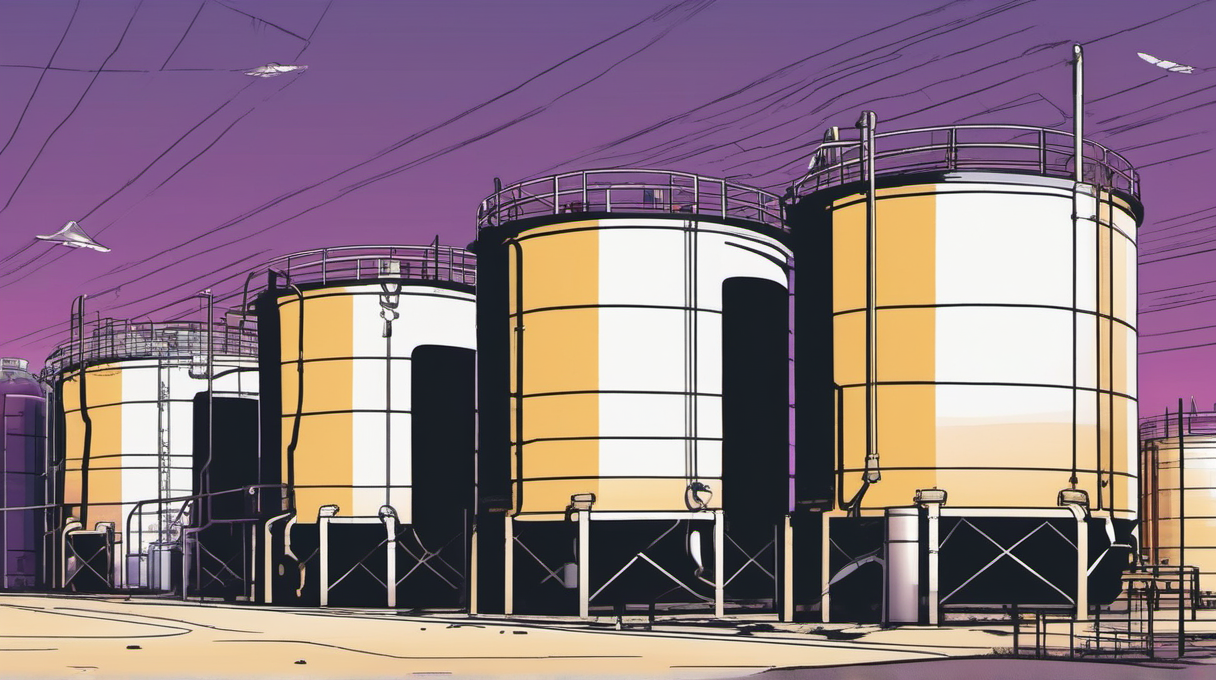
Crude Oil (WTI at Cushing, Oklahoma):
- Contract size: 1,000 barrels per contract (CL)
- Storage cost: approximately $0.30–$0.60 per barrel per month at Cushing
- Annual storage cost: roughly $3.60–$7.20 per barrel
- At $70/barrel spot, that's 5.1–10.3% annually before financing
CBOT Corn:
- Contract size: 5,000 bushels per contract
- Minimum storage rate: 16.5/100 of one cent per bushel per day (~$0.05/bushel/month)
- CME's Variable Storage Rate (VSR) system increases this rate when nearby calendar spreads average ≥80% of financial full carry
- VSR increment: 10/100 of one cent per bushel per day (~$0.03/bushel/month increase)
- Hard red spring wheat maximum: 36.5/100 of one cent per bushel per day (~$0.11/bushel/month)
Why this matters: storage costs set the ceiling on how much futures can trade above spot in a well-supplied market. When the futures premium equals financing + storage + insurance, the market is at full carry—and convenience yield is approximately zero.
Convenience Yield (The Invisible Premium)
Convenience yield is the non-monetary benefit of holding physical inventory rather than a futures contract. You can't observe it directly. You infer it from the cost-of-carry equation: rearrange the formula and solve for c.
Physical holders—refiners, grain elevators, manufacturers—benefit from inventory because it lets them:
- Meet unexpected demand without waiting for delivery
- Avoid production shutdowns from stock-outs
- Capture spot price spikes during supply disruptions
The test: if a refiner could shut down operations for two months and wait for cheaper futures delivery, convenience yield is low. If shutting down would cost millions in lost throughput and restart expenses, convenience yield is high (and the refiner will pay a premium for physical barrels today).
Low inventories → High convenience yield → Backwardation High inventories → Low convenience yield → Contango
This isn't theoretical. In March–June 2022, WTI spot surged above $120/barrel following the Russia-Ukraine conflict. The front-month to 12-month backwardation reached approximately $15–$20 per barrel. Global commercial petroleum inventories fell to approximately 2.6 billion barrels, well below the five-year average (IEA Oil Market Reports Q1–Q2 2022). Convenience yield was enormous because physical barrels were scarce and operationally critical.
Worked Example: Decomposing a WTI Crude Oil Futures Spread
Here's how to break down the cost of carry for a specific trade. All figures use research data—no invented numbers.
Setup:
- WTI spot price: $70.00/barrel
- Contract size: 1,000 barrels (notional value: $70,000)
- Risk-free rate: 4.50% annualized
- Storage cost at Cushing: $0.45/barrel/month ($5.40/barrel/year, or ~7.7% annualized)
- Time to delivery: 3 months (0.25 years)
- Initial margin requirement: $11,664 per contract (~16.7% of $70,000 notional)
Step 1 — Calculate theoretical full-carry futures price (assuming zero convenience yield):
F = $70.00 × e^((0.045 + 0.077 − 0) × 0.25) F = $70.00 × e^(0.0305) F = $70.00 × 1.031 F = $72.17
The full-carry premium is $2.17/barrel over three months, or $2,170 per contract.
Step 2 — Compare to actual futures price:
If the 3-month futures contract trades at $71.00 (a $1.00 premium to spot), the implied convenience yield is the difference:
Full-carry premium ($2.17) − Actual premium ($1.00) = $1.17/barrel implied convenience yield over three months.
Annualized, that's roughly 6.7%—meaning physical holders value their inventory enough to absorb $1.17/barrel in foregone carry.
Step 3 — Evaluate cash-and-carry arbitrage:
A cash-and-carry trade (buy physical, sell futures, deliver at expiration) profits only if the futures premium exceeds your total cost of carry. At $1.00 premium versus $2.17 total carry cost, the trade loses $1.17/barrel. No arbitrage opportunity exists (the market is pricing meaningful convenience yield).
The practical point: when the 3-month contango exceeds approximately $2.00–$3.00/barrel for crude oil, cash-and-carry arbitrage typically becomes viable. Below that threshold, convenience yield is eating into the spread.
| Component | Per Barrel (3-mo) | Per Contract | Annualized Rate |
|---|---|---|---|
| Financing cost (4.50%) | $0.79 | $790 | 4.50% |
| Storage cost | $1.35 | $1,350 | 7.71% |
| Insurance (est.) | $0.03 | $30 | ~0.17% |
| Total carry cost | $2.17 | $2,170 | 12.38% |
| Actual futures premium | $1.00 | $1,000 | 5.71% |
| Implied convenience yield | $1.17 | $1,170 | 6.67% |
Margin and Settlement Mechanics (What Secures Your Position)
Futures positions require margin—a performance bond, not a down payment. For WTI crude oil:
- Initial margin: $11,664 per contract (as of March 2025)
- Micro WTI (MCL): $1,372 per contract (100 barrels, one-tenth the size)
- Maintenance margin: typically 70–80% of initial margin (~$9,300 for CL)
- Margin-to-notional ratio: approximately 5–12% depending on price level and volatility
A margin call triggers when account equity drops below maintenance margin. At $11,664 initial margin and ~$9,300 maintenance, a move of roughly $2.36/barrel against you ($2,364 per contract) triggers a call (assuming no excess equity).
The point is: margin amplifies both gains and losses. A $70,000 notional position controlled by $11,664 in margin gives you roughly 6:1 leverage. A 3.4% adverse price move wipes out your entire margin deposit.
Settlement occurs two ways: physical delivery at an exchange-approved facility (Cushing, Oklahoma for WTI) or cash settlement based on a reference price. Most speculators offset positions before delivery—but if you don't, you're obligated to take or make delivery of 1,000 barrels of crude oil (the April 2020 debacle in sharp focus).
The CFTC's margin adequacy rule (effective March 24, 2025; FCM compliance date July 21, 2025) codifies separate-account treatment for margin calculations, tightening how futures commission merchants handle customer funds.
Historical Stress Tests (When Storage Economics Break)
Three episodes illustrate how storage costs and convenience yield drive extreme outcomes:
April 2020 — The Negative Price Event. Cushing storage capacity reached approximately 80% utilization. With nowhere to store oil, the cost of carry effectively went to infinity for the front month. The May 2020 contract settled at −$37.63/barrel—a decline of over $55 in a single session. The June–May spread widened to over $60/barrel. Traders holding long front-month positions without storage access were forced to pay others to take delivery (CME Group; CFTC).
2014–2015 — Sustained Contango and Floating Storage. WTI spot fell from ~$80 to ~$44/barrel between November 2014 and January 2015. The 12-month contango widened to approximately $8–$10/barrel, making floating storage in tankers economically viable at VLCC rates of ~$0.75–$1.00/barrel/month. U.S. crude inventories rose to over 490 million barrels by April 2015 (EIA Weekly Petroleum Status Reports).
2022 — Acute Backwardation. WTI spot above $120/barrel, backwardation of $15–$20/barrel across 12 months. Convenience yield was so high that physical holders would not release inventory at anything less than an enormous premium to deferred futures.
The pattern that holds: storage economics are not stable background conditions. They shift violently during supply dislocations, and positions sized without accounting for these shifts face catastrophic outcomes.
Basis Risk (The Hedge Imperfection You Can't Eliminate)
Basis = Spot − Futures. Even a "perfect" hedge carries basis risk because the local spot price and the futures reference price rarely converge exactly.
Basis risk arises from:
- Location differentials (your crude is in Houston, the contract delivers at Cushing)
- Quality differentials (your crude is heavier or lighter than the WTI spec)
- Timing mismatches (your exposure window doesn't match the delivery month)
Basis moves of >5% of the hedge notional can materially impair hedge effectiveness, triggering review under accounting standards like FASB ASC 815 or IFRS 9. A backwardation signal—spot exceeding the 3-month futures price by >3%—often indicates low inventories and elevated convenience yield, a condition where basis can shift rapidly.
Checklist: Commodity Futures Storage and Carry Assessment
Essential (high ROI) — prevents 80% of carry-related losses:
- Decompose the spread using the cost-of-carry formula before initiating any futures position
- Know your margin math: calculate the price move that triggers a margin call at your current equity level
- Check storage capacity utilization for the relevant delivery point before entering front-month positions
- Identify whether the curve is in contango or backwardation and understand what that implies about convenience yield—not price direction
High-impact (workflow and monitoring):
- Track the nearby calendar spread as a percentage of full carry (the 80% threshold signals potential VSR adjustments for grains)
- For crude oil positions, monitor Cushing inventory reports weekly (EIA data, released Wednesdays)
- Set alerts for basis moves exceeding 5% of hedge notional
- Review CFTC position limits—WTI spot-month limit is 6,000 contracts net; begin compliance review at 4,800 contracts (80% proximity)
Optional (good for active roll management):
- Model roll cost scenarios across 3-month, 6-month, and 12-month horizons under current carry structure
- Compare implied convenience yield to historical percentiles for the commodity
- Evaluate micro contracts (e.g., Micro WTI at $1,372 margin) for smaller position sizing
Next Step: Calculate Implied Convenience Yield on Your Watchlist Commodity
Pick one commodity futures contract you follow. Pull the spot price and the nearest futures price from CME Group's website. Plug both into the cost-of-carry equation using the current Fed funds rate and published storage costs for the delivery point. Solve for convenience yield. If it's near zero, the market is at full carry and well-supplied. If it's elevated, physical supply is tight—and you should understand why before taking a directional position.
For related mechanics, see Interest Rate and Treasury Futures Primer (financing cost parallels) and Currency Futures for Hedging FX Risk (basis risk in a different asset class).
References: CME Group contract specifications and margin data; CFTC margin adequacy rule (Federal Register, January 2025); Gorton & Rouwenhorst, NBER Working Paper 13249; IEA Oil Market Reports; EIA Weekly Petroleum Status Reports.
Related Articles

Calendar Spreads and Roll Strategies
Every quarter, more than 4 million E-mini S&P 500 contracts change hands during a single roll week as traders migrate from the expiring front month to the next contract. If you're holding futures a...

Spread Margining Rules
Spread margining is where most futures traders leave money on the table—not by losing on trades, but by tying up two to ten times more capital than necessary in outright margin requirements. Calend...

Credit Support Annex and Collateral Terms
The Credit Support Annex is the document that determines whether you actually get paid when an OTC derivatives counterparty owes you money. It bolts onto the ISDA Master Agreement and governs every detail of collateral exchange: who posts, when they post, what they post, and what happens when the...