Seasonality Considerations in Futures Markets
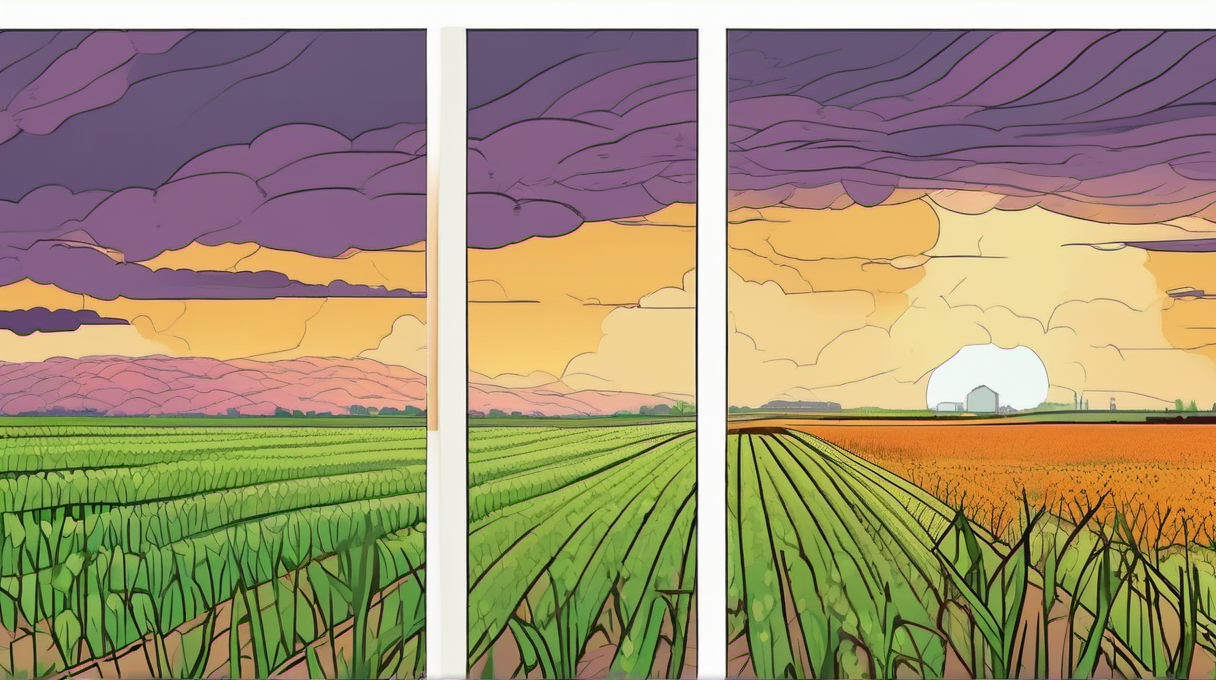
Seasonal patterns drive predictable volatility spikes across commodity futures—corn volatility doubles from ~15% to ~30% during summer weather markets (CME Group), natural gas surges an average of +7.8% from August to November, and gasoline crack spreads widen $3–$8/barrel above winter levels every driving season (EIA). Yet the CFTC explicitly warns that these patterns are already priced into the forward curve—meaning the opportunity isn't in betting on seasonality, but in managing the risk it creates. The disciplined response: understand which seasonal dynamics affect your contracts, when margin requirements will shift, and how basis risk compounds during seasonal transitions.
TL;DR: Seasonal patterns in commodity futures are real and recurring, but they're priced into the curve. The edge comes from managing margin, volatility, and basis risk around seasonal inflection points—not from treating seasonal tendencies as guaranteed trades.
What Seasonality Actually Means in Futures (And What It Doesn't)
Seasonality in futures markets refers to recurring, calendar-driven price patterns caused by three forces: biological cycles (planting and harvest), weather (heating and cooling demand), and consumer behavior (driving season). These patterns repeat annually but vary in magnitude—sometimes dramatically.
The point is: seasonality isn't a trading signal. It's a risk calendar. The forward curve already reflects expected seasonal shifts. What catches traders off guard is when seasonal patterns arrive stronger, weaker, or earlier than the market has priced.
Here's how the three major commodity complexes exhibit seasonality:
Agricultural futures follow crop cycles. Corn delivery months—March, May, July, September, December—map directly to planting, pollination, and harvest windows. Prices tend to reach annual highs around July (weather uncertainty during pollination) and annual lows in October–November (harvest pressure). The spread between old-crop months (representing grain from the previous harvest still in storage) and new-crop months (representing the upcoming harvest) can widen 20–50 cents/bushel during weather stress.
Natural gas futures follow the storage injection/withdrawal cycle. During April–October, excess supply is injected into underground storage facilities (U.S. working capacity: approximately 4.7 Tcf). During November–March, gas is withdrawn to meet heating demand. This creates a structural winter premium—Nov–Mar contracts consistently trade above Apr–Oct contracts. The curve shifts into contango during injection season and can flip to backwardation during acute winter demand.
Petroleum futures follow refinery output and consumer demand cycles. Gasoline crack spreads typically peak May–August during summer driving season (April–September), while distillate crack spreads peak October–February. Refiners also switch to more expensive summer-blend gasoline (lower Reid vapor pressure), adding production costs that flow into futures pricing.
How Seasonal Volatility Hits Your Margin (The Part Most Traders Underestimate)
CME Clearing calibrates initial margins using volatility lookback windows that account for seasonal conditions. The typical initial margin range for commodity futures is 3–12% of contract notional value (CME Group). But that range isn't static—it shifts with seasonal volatility.
Consider a corn futures contract: 5,000 bushels at $4.50/bushel = $22,500 notional value. The typical initial margin runs approximately $1,500–$2,000 per contract, or roughly 7–9% of notional. During February, when one-week new-crop corn volatility averages ~15%, that margin feels comfortable.
Then June arrives. Volatility doubles to ~30% as the market enters weather-market conditions. CME recalibrates margins upward. A trader holding the same position suddenly faces higher margin requirements—and if the account doesn't have excess equity, forced liquidation at the worst possible time (during peak volatility, when bid-ask spreads are widest).
Seasonal volatility → Higher margins → Margin calls → Forced liquidation during peak volatility
Why this matters: the margin increase isn't the problem—it's the timing. Margins rise precisely when positions are most likely to move against you. Traders who size positions based on winter margin requirements get caught.
The test: Can your account absorb a 50–100% margin increase on existing positions without liquidating? If not, you're oversized for the seasonal calendar.
Worked Example: Corn Futures Through the 2012 Weather Market
This example uses documented data from the 2012 U.S. Midwest drought to illustrate how seasonality amplifies risk.
Phase 1: The Setup (May 2012)
You hold a long position in July 2013 corn futures. The contract is trading around $5.25/bushel. Contract notional: 5,000 bushels × $5.25 = $26,250. Your initial margin is approximately $1,800 (about 7% of notional). Volatility is near the seasonal baseline of ~15%. The crop is planted, and conditions look normal.
Phase 2: The Trigger (June–July 2012)
Drought conditions develop across the Midwest. The market enters weather-market conditions—annualized corn volatility exceeds 25%, well above the ~15% winter baseline. Corn futures begin rising sharply as the market prices in crop damage.
From June 18 to August 29, 2012, corn futures rose 35%. July 2013 corn peaked at $8.24/bushel on August 10—nearly $3.00/bushel above the June low. The PPI for corn spiked 20.5% in July 2012 alone. Export corn prices rose 32.5% from June to August (Bureau of Labor Statistics).
Phase 3: The Outcome
If you were long, the move was profitable—but only if you survived the margin increases along the way. CME raised margins multiple times during the rally. A trader who entered with minimal excess margin in May would have faced margin calls by late June, potentially getting liquidated before the largest portion of the move.
If you were short (perhaps hedging expected production), the losses compounded rapidly. A producer who hedged at $5.25 and faced a $3.00/bushel adverse move on 5,000 bushels absorbed $15,000 in variation margin per contract.
The practical point: The seasonal pattern (summer weather risk in grains) was well-known. The magnitude wasn't. Your edge isn't predicting drought—it's sizing positions so that a 35% move in 10 weeks doesn't force you out.
Mechanical alternative: Enter the weather-market window (June–August) at 50–60% of normal position size. If volatility exceeds 25% annualized, reduce further. This preserves the ability to hold through the seasonal peak without margin-driven liquidation.
The Natural Gas Seasonal Playbook (And Why It's Already Priced In)
Natural gas exhibits the most pronounced seasonality of any major futures market. The August 15 to November 30 pre-season rally averages +7.8% historically. The spring rally pattern shows a 73% win rate (11 of 15 years from 2009–present), with an average gain of +20.3% in winning years versus an average loss of -6.7% in down years.
Those numbers look attractive. But the CFTC warns explicitly: seasonal patterns in energy commodities are already priced into futures. The winter premium in the forward curve reflects expected heating demand. You're not getting paid for knowing winter is cold—you're getting paid for bearing the risk that winter is colder or warmer than expected.
The 2014 polar vortex illustrates the upside tail. Henry Hub natural gas rose 67% from November 2013 to March 2014, peaking at $7.90/MMBtu on February 5, 2014—the highest since 2008 (FERC 2014 State of the Markets Report). March futures settled at $6.149/MMBtu after an 11% single-day gain. Regional spot prices were far more extreme: next-day delivery at the Transco Zone 6 NY hub hit $90/MMBtu. Nebraska regional prices rose over 300%.
The pattern that holds: seasonal patterns create a distribution of outcomes, not a single outcome. The forward curve prices the expected case. Profits and losses come from the deviation—and those deviations can be extreme.
Natural gas storage below 5-year average → Tighter supply cushion → Amplified winter premium → Elevated basis risk at regional delivery points
A useful threshold: natural gas storage levels more than 10% below the 5-year average entering winter (November 1) signal elevated seasonal upside risk. In 2014, below-average storage entering winter contributed to the extreme price response when the polar vortex hit.
Basis Risk Compounds During Seasonal Transitions (The Hidden Exposure)
Basis risk—the risk that the price difference between a futures contract and the underlying spot commodity moves unexpectedly—intensifies during seasonal transitions. Seasonal shifts in local supply and demand can cause basis to deviate from historical norms by 10–30%.
This matters most for hedgers. A natural gas producer hedging with Henry Hub futures may find that their local basis (the difference between their wellhead price and Henry Hub) widens sharply during winter. During the 2014 polar vortex, Henry Hub reached $7.90/MMBtu—but Transco Zone 6 NY reached $90/MMBtu. A producer delivering into that regional market and hedging with Henry Hub futures experienced massive basis blowout (favorable, in that case, but equally capable of being adverse).
For agricultural hedgers, harvest-season basis (the difference between local elevator prices and futures) can shift dramatically based on local yield, transportation costs, and storage availability. Two counties apart can have meaningfully different basis during harvest.
The point is: futures hedge price level risk, not basis risk. Seasonal transitions are when basis risk is highest, and hedgers need to understand their local basis history, not just the futures curve.
Seasonal Spreads: Lower Margin, Different Risk Profile
Seasonal spreads—simultaneous long and short positions in different delivery months of the same commodity—offer one structural advantage: margin requirements are typically 25–75% lower than outright futures positions (CME Group). The exchange recognizes that intra-commodity spreads carry less directional risk.
However, lower margin doesn't mean lower risk. Seasonal spreads are concentrated bets on calendar-specific supply and demand shifts. The old-crop/new-crop corn spread can widen 20–50 cents/bushel during weather stress—a $1,000–$2,500 move per contract on a position that might require only $500 in margin.
Why this matters: the leverage on seasonal spreads can be higher than outright positions precisely because margin requirements are lower. A 20-cent adverse move on a $500 margin position is a 200% loss on margin. (Position sizing matters more than margin math.)
Detection Signals: You're Likely Mismanaging Seasonal Risk If
- You size positions the same way in February and July (ignoring the volatility doubling during weather markets)
- You treat seasonal patterns as "guaranteed" moves rather than priced expectations
- You hold outright futures through seasonal transitions without checking basis history
- You enter seasonal trades on the historical start date rather than 2–3 weeks before the typical move begins
- You're surprised by margin increases during peak seasonal volatility windows
Seasonal Risk Management Checklist
Essential (High ROI)
- Map your contract's seasonal calendar before entering any position—identify planting/harvest windows, storage cycles, or demand seasons
- Size positions for peak seasonal volatility, not current volatility (if corn vol is 15% in February, size for 30% in July)
- Maintain 50–100% excess margin above initial requirements during seasonal transition months
- Monitor basis history for your specific delivery point, not just the benchmark futures contract
High-Impact (Workflow)
- Track natural gas storage levels relative to the 5-year average entering November 1—below 10% flags elevated risk
- Set volatility alerts at 25% annualized for grain contracts to identify weather-market entry
- Review margin requirements weekly during June–August (grains) and November–February (natural gas)
Optional (For Active Spread Traders)
- Use seasonal spread positions for reduced margin exposure, but size them based on potential spread move, not margin requirement
- Enter seasonal positions 2–3 weeks before the historical seasonal move typically begins
- Track old-crop/new-crop spreads as a leading indicator of weather-market stress
Your Next Step
Pull up the seasonal volatility chart for whichever commodity you trade most frequently (CME Group publishes these in their education section). Identify the two months with the highest historical volatility. Then check your current position sizing: could your account absorb a margin increase of 50–100% during those months while also sustaining an adverse price move equal to two standard deviations at peak seasonal volatility? If the answer is no, you're carrying more seasonal risk than you realize. Adjust your position size now—before the calendar does it for you.
Related Articles

Block Trades and Exchange for Physical
Block trades and exchange for physical (EFP) transactions let institutional participants move large positions off the public order book—avoiding market impact on size, customizing execution timing,...

Backtesting Futures Trading Systems
Most futures traders build strategies that look brilliant on a spreadsheet—perfect entries, clean exits, smooth equity curves—then watch them bleed money in live markets. The gap between backtested...

Regulation Best Interest and Derivative Sales
Regulation Best Interest (Reg BI)—the SEC's standard for broker-dealer recommendations since June 30, 2020—hits derivative sales desks harder than vanilla equity or bond businesses because every de...