Yield on Cost vs. Current Yield: The Debate
Dividend investors argue endlessly about which yield metric matters more. Some celebrate their 57% yield on cost from stocks bought decades ago. Others insist only current yield matters because that's what new money earns today. Both sides have a point—and both sides miss something important. The real question isn't which metric is "right." It's which metric helps you make better decisions in your specific situation. Understanding the difference prevents two costly mistakes: holding deteriorating stocks because your yield on cost looks impressive, or ignoring dividend growers because their current yield looks modest.
The Two Yields (Definitions That Matter)
Current Yield: The dividend divided by today's stock price.
The calculation: Current Yield = Annual Dividend per Share / Current Stock Price
If a stock pays $2 annually and trades at $50, its current yield is 4%. This is what shows up on stock screeners, what brokers display, and what new investors would earn if they bought today.
Yield on Cost (YOC): The dividend divided by what you originally paid.
The calculation: Yield on Cost = Annual Dividend per Share / Your Purchase Price
If that same stock pays $2 but you bought it years ago at $20, your yield on cost is 10%. This reflects your personal return on your specific investment.
The point is: Current yield tells you what the stock offers today. Yield on cost tells you what your specific position earns. They answer different questions.
The Buffett Example (Why YOC Gets Celebrated)
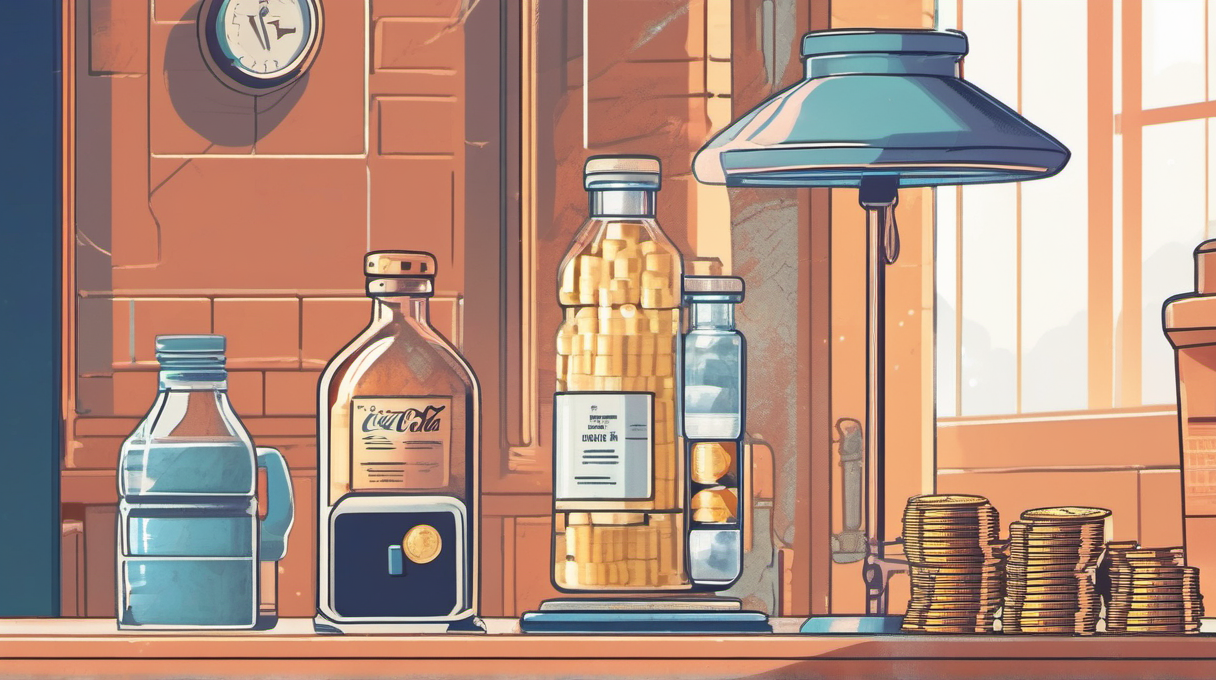
The most famous yield-on-cost story involves Berkshire Hathaway's Coca-Cola position:
- Buffett completed his $1.3 billion purchase over seven years, finishing in 1994
- That year, Coca-Cola paid Berkshire $75 million in dividends
- By 2023, the same position generated $736 million annually
- That's a 57% yield on cost on the original investment
If you invested $1.3 billion with Buffett in 1994 and did nothing else, you'd now receive $736 million per year—more than half your original investment returned annually in dividends alone. The stock's current yield (around 3%) looks pedestrian. But Buffett's yield on cost is extraordinary.
The lesson worth internalizing: Dividend growth compounds over time. A stock yielding 2% today but growing dividends at 10% annually will generate massive yield on cost eventually. Focusing only on current yield causes investors to miss this compounding effect.
When Current Yield Matters More (The Opportunity Cost Question)
Here's where the YOC celebration goes wrong: yield on cost is backward-looking.
Consider this scenario:
You bought Stock A at $20. It now trades at $100 and pays $4 annually. Your yield on cost is 20%. Impressive! But the current yield is only 4%.
Now imagine Stock A's fundamentals are deteriorating. Earnings are declining. The dividend might get cut. Stock B, meanwhile, offers 5% current yield with better fundamentals and a growing dividend.
The question: Should you hold Stock A because your YOC is 20%?
The answer: No. Your cost basis is irrelevant to future returns.
What matters is: What would $100 (the current value) earn if redeployed? If Stock A's $100 position earns $4, and Stock B's $100 position would earn $5 (with better growth prospects), holding Stock A purely for YOC is an emotional decision, not a rational one.
The practical point: Yield on cost measures your history, not your opportunity. Never hold a stock purely because YOC looks good—always evaluate whether current price represents best use of capital.
When Yield on Cost Matters More (The Dividend Growth Case)
Despite its limitations, YOC provides real insight in one critical scenario: evaluating your dividend growth strategy.
If you buy dividend growers specifically for long-term income, YOC tracks whether your strategy is working. Consider:
Year 1: You buy a stock at $50, paying $1.50 (3% current yield) Year 5: Dividend has grown to $2.25, your YOC is now 4.5% Year 10: Dividend has grown to $3.50, your YOC is now 7% Year 20: Dividend has grown to $6.00, your YOC is now 12%
Current yield on this stock might still be 3% (if price rose proportionally). But your YOC tells the income story: your original investment now generates 12% annual income, four times what it started at.
Why this matters: For retirees living on dividend income, YOC reveals whether purchasing power is growing. If your portfolio's aggregate YOC rises from 3% to 6% over a decade, your income has doubled without selling shares.
The Trap: Emotional Attachment to High YOC
The most dangerous YOC pattern: holding deteriorating stocks because yield on cost is high.
Example scenario:
You bought Telecom Company at $30. It now trades at $15 and pays $1.20. Your YOC is 4%. Current yield is 8%. The high current yield happened because the stock crashed—not because dividends increased.
Now the company announces a 50% dividend cut (like AT&T in 2022). Your $1.20 becomes $0.60. Your YOC drops to 2%, and current yield drops to 4%.
The mistake: Holding through the cut because "I bought at $30 and my YOC was so good." Your cost basis didn't protect you from the cut. Your paper YOC disappeared when fundamentals caught up.
What the data confirms: YOC only stays high if dividends stay high. When you spot deteriorating fundamentals, don't let historical YOC blind you to future risk. The market doesn't care what you paid.
The Test: Which Metric to Use When
Use this decision framework:
Use Current Yield when:
- Comparing investment opportunities (new money deployment)
- Evaluating whether a stock is attractively priced
- Assessing income available to new buyers
- Deciding whether to add to existing position
Use Yield on Cost when:
- Tracking personal dividend growth over time
- Evaluating whether dividend growth strategy is working
- Measuring how much income your portfolio generates relative to original investment
- Celebrating (privately) the power of long-term compounding
Use Both when:
- Deciding whether to hold vs. sell an existing position
- Comparing your YOC growth rate to what current yield could earn if redeployed
The Calculation: YOC Growth Projection
Here's how to project future yield on cost (useful for dividend growth investing):
Formula: Future YOC = Current Yield x (1 + Dividend Growth Rate)^Years
Example:
- Stock yields 2.5% today
- Dividend grows at 8% annually
- In 10 years: 2.5% x (1.08)^10 = 5.4% YOC
- In 20 years: 2.5% x (1.08)^20 = 11.7% YOC
- In 30 years: 2.5% x (1.08)^30 = 25.2% YOC
Compare to a high-yield, no-growth alternative:
- Stock yields 5% today
- Dividend doesn't grow
- In 10 years: 5% YOC (unchanged)
- In 20 years: 5% YOC (unchanged)
- In 30 years: 5% YOC (unchanged)
The crossover: The 2.5% grower catches the 5% stagnant stock around year 9 and dramatically outperforms thereafter.
Why this matters: High dividend growth factor has outperformed high dividend yield factor persistently since 2010, according to S&P Dow Jones Indices research. The math above shows why.
Common Mistakes (Avoid These)
Mistake 1: Celebrating YOC while ignoring fundamentals A 15% YOC means nothing if the company is about to cut. Walgreens holders had great YOC before the 290% payout ratio caught up.
Mistake 2: Dismissing low-yield growers A 1.5% current yield with 12% dividend growth will generate more income than a 4% yield with 0% growth—just not immediately. Patience required.
Mistake 3: Confusing YOC with return on investment YOC measures income return, not total return. Your stock might have doubled (100% gain) while yielding 3% on cost. Total return includes both.
Mistake 4: Using YOC to justify holding losers If a stock has crashed and your YOC is now high because the denominator (your purchase price) is low, that's not success—that's capital loss with income.
The Reconciliation (Both Metrics Together)
The most useful approach: track both metrics, but use them for different decisions.
Monthly/Quarterly: Check current yield to assess valuation and compare opportunities.
Annually: Calculate YOC to track dividend growth strategy effectiveness.
At every sell decision: Ask whether the capital would earn more elsewhere. Your cost basis is sunk; only future returns matter.
Next Step (Put This Into Practice)
Calculate yield on cost for your three largest dividend positions.
How to do it:
- Find your original purchase price (check brokerage statements)
- Find current annual dividend per share
- Divide: Dividend / Purchase Price = YOC
Interpretation:
- YOC higher than current yield: Dividend growth is working
- YOC equal to current yield: Stock price rose with dividends (good)
- YOC lower than current yield: You bought at a premium (or dividends were cut)
Action: If any position shows YOC below current yield combined with deteriorating fundamentals, research whether holding is justified—or whether capital should be redeployed. The goal isn't maximizing YOC; it's maximizing future income growth from every dollar invested.
Related Articles

Handling Foreign Dividend Withholding as a US Investor
Recover up to 15-30% of foreign dividends lost to withholding taxes by understanding treaty rates, Form 1116, and optimal account placement
Dividend Reinvestment Plans (DRIPs): Automate Your Compounding
Set up automatic dividend reinvestment to capture the 32.7% compounding advantage over 20 years - no trading required
Valuing Negative Earnings or Early-Stage Companies
How to value unprofitable companies using revenue multiples, unit economics, path-to-profitability analysis, and probability-weighted DCF scenarios