Short-Term Goal Funding Plans
Definition and Key Concepts
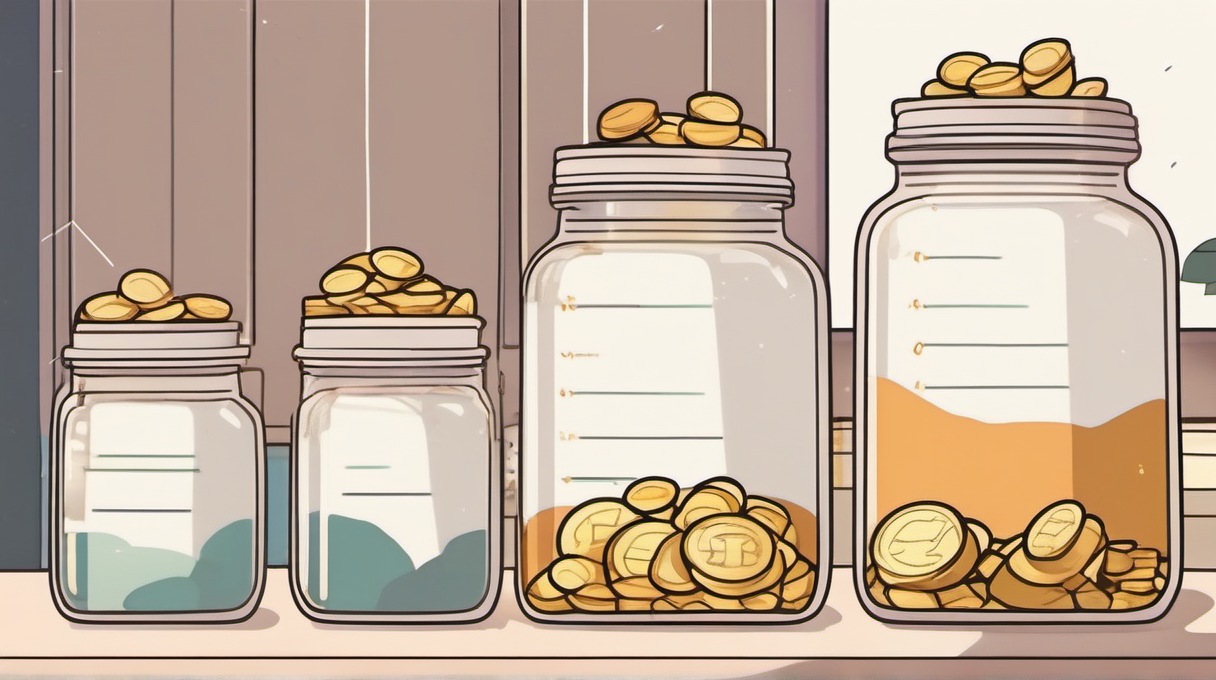
Short-term goal funding refers to the systematic accumulation of capital for specific financial objectives with time horizons between 1 and 5 years. These goals require different investment vehicles than long-term retirement savings because the shorter time frame limits recovery time from market losses.
Characteristics of short-term goals:
| Feature | Implication |
|---|---|
| Fixed deadline | Cannot delay if markets decline |
| Defined target amount | Known savings requirement |
| Limited recovery time | Volatility creates sequencing risk |
| High certainty required | Principal preservation prioritized over growth |
Common short-term goals with typical funding requirements:
| Goal | Typical Timeline | Typical Amount | Monthly Savings (at 4.5% APY) |
|---|---|---|---|
| Emergency fund | 6-12 months | 3-6 months expenses | Variable |
| Vehicle purchase | 1-3 years | $15,000-$45,000 | $380-$1,200 |
| Home down payment | 2-5 years | $40,000-$100,000 | $600-$1,550 |
| Wedding | 1-2 years | $15,000-$35,000 | $600-$1,400 |
| Vacation | 6-18 months | $3,000-$10,000 | $150-$550 |
| Home renovation | 1-3 years | $20,000-$75,000 | $500-$2,000 |
The primary risk for short-term goals is needing funds during a market downturn. A portfolio with 60% equity exposure can decline 30%+ during recessions. A $50,000 home down payment saved over 3 years would have been worth $35,000 in March 2020 if invested in stocks, potentially derailing the purchase entirely.
Appropriate Funding Vehicles
High-Yield Savings Accounts (HYSA)
Current rates (December 2024): 4.00-5.00% APY at online banks FDIC insurance: Up to $250,000 per depositor, per institution Liquidity: Same-day to 1-2 business days for transfers Minimum balance: Typically $0-$100
Best for: Goals within 12 months, emergency funds, amounts under $250,000
Rate comparison by institution type:
| Institution Type | Typical Rate Range |
|---|---|
| Online banks (Ally, Marcus, Discover) | 4.25-5.00% APY |
| Credit unions | 3.50-4.50% APY |
| Traditional banks (Chase, BofA, Wells) | 0.01-0.50% APY |
The rate differential between online and traditional banks is substantial. On a $30,000 balance over 2 years:
- Online bank at 4.50% APY: $2,791 in interest
- Traditional bank at 0.10% APY: $60 in interest
- Difference: $2,731
Certificates of Deposit (CDs)
Current rates (December 2024):
| Term | Typical Rate Range |
|---|---|
| 3-month | 4.50-5.00% APY |
| 6-month | 4.50-5.10% APY |
| 12-month | 4.25-5.00% APY |
| 24-month | 3.75-4.50% APY |
| 60-month | 3.50-4.25% APY |
FDIC insurance: Up to $250,000 per depositor, per institution Liquidity: Penalty for early withdrawal (typically 3-12 months of interest) Minimum deposit: $500-$1,000 at most institutions
Best for: Goals with fixed dates 6+ months away, funds not needed for emergencies
CD ladder strategy: For a $24,000 down payment needed in 2 years:
- Deposit $6,000 in 6-month CD
- Deposit $6,000 in 12-month CD
- Deposit $6,000 in 18-month CD
- Deposit $6,000 in 24-month CD
As each CD matures, either reinvest or hold in HYSA if goal date approaches. This provides quarterly liquidity access while capturing higher rates than savings accounts.
I-Bonds (Series I Savings Bonds)
Current rate (November 2024 - April 2025): 3.11% composite rate (1.20% fixed + variable inflation component) Purchase limit: $10,000 per person per calendar year (electronic) + $5,000 via tax refund Minimum holding period: 12 months (penalty-free after 5 years) Early withdrawal penalty: 3 months of interest if redeemed before 5 years
Best for: Goals 1-5 years away, inflation protection, amounts up to $10,000/year
I-Bond mechanics:
- Fixed rate component: Set at purchase, never changes
- Inflation rate component: Resets every 6 months based on CPI-U
- Composite rate: Fixed rate + (2 x inflation rate) + (fixed rate x inflation rate)
Tax advantages: Interest exempt from state and local income tax; federal tax deferred until redemption or maturity (30 years)
Treasury Bills (T-Bills)
Current rates (December 2024):
| Term | Approximate Yield |
|---|---|
| 4-week | 4.30-4.50% |
| 13-week | 4.35-4.55% |
| 26-week | 4.30-4.50% |
| 52-week | 4.20-4.40% |
Purchase method: TreasuryDirect.gov or through brokerage accounts Minimum purchase: $100 Liquidity: Can sell before maturity in secondary market (brokerage accounts)
Best for: Goals 3-12 months away, amounts above FDIC limits, state tax savings
Tax advantage: Interest exempt from state and local income tax
Money Market Funds
Current rates (December 2024): 4.50-5.20% 7-day SEC yield Insurance: Not FDIC insured (but invest in very low-risk securities) Liquidity: Same-day or next-day
Best for: Amounts above FDIC limits, brokerage account cash holdings
Types of money market funds:
| Type | Underlying Securities | Risk Level |
|---|---|---|
| Government | T-bills, agency debt | Lowest |
| Prime | Commercial paper, CDs | Low |
| Municipal | Tax-exempt municipal securities | Low |
Worked Example: Home Down Payment in 36 Months
Goal: $60,000 down payment for home purchase Timeline: 36 months Current savings: $0 Required monthly savings: Approximately $1,550/month
Funding strategy using multiple vehicles:
Months 1-12: Build HYSA base
- Deposit $1,550/month into HYSA at 4.50% APY
- Year-end balance: $19,118 (includes $518 interest)
- Rationale: Maintain full liquidity while rates remain high
Months 13-24: Add CD ladder
- Continue $1,550/month to HYSA
- At month 13, move $15,000 to 12-month CD at 4.75% APY
- Year-end balance: $38,950 (HYSA: $23,238, CD: $15,712)
- Rationale: Lock in rate on funds not needed for 12+ months
Months 25-36: Consolidate for closing
- Continue $1,550/month to HYSA
- Month 25: CD matures, deposit to HYSA ($15,712)
- Maintain full liquidity for closing costs flexibility
- Final balance: $61,200
Total interest earned over 36 months: $4,800 Versus traditional savings at 0.10% APY: $90 Benefit of optimized strategy: $4,710 additional toward down payment
Alternative allocation if I-Bonds purchased:
- Year 1: $10,000 to I-Bonds (each spouse), $8,600 to HYSA
- Year 2: $10,000 to I-Bonds (each spouse), $8,600 to HYSA
- Year 3: $18,600 to HYSA (I-Bonds past 12-month minimum)
- Benefit: Inflation protection and state tax savings
Vehicle Selection Framework
Time Horizon Decision Tree
0-6 months to goal:
- Primary vehicle: HYSA only
- Rationale: Maximum liquidity, no early withdrawal risk
6-12 months to goal:
- Primary vehicle: HYSA + short-term CDs (3-6 month)
- Rationale: Slightly higher yield with predictable maturity
12-24 months to goal:
- Primary vehicle: CD ladder + HYSA buffer (20% in HYSA)
- Consider: I-Bonds if purchased 12+ months ago
- Rationale: Balance yield optimization with liquidity needs
24-60 months to goal:
- Primary vehicle: I-Bonds (up to annual limit) + CD ladder
- HYSA buffer: 10-15% of target amount
- Rationale: Inflation protection becomes valuable over longer horizons
Risk Tolerance Adjustments
Conservative approach (0% equity):
- Use only FDIC-insured or Treasury-backed vehicles
- Accept lower returns for guaranteed principal
- Appropriate for: Non-negotiable deadlines (home closing, tuition due date)
Moderate approach (10-20% equity):
- 80-90% in HYSA/CDs/I-Bonds
- 10-20% in short-term bond fund or balanced fund
- Accept small principal fluctuation for potential higher return
- Appropriate for: Flexible deadlines (vacation, vehicle upgrade)
Equity allocation in short-term accounts is generally not recommended. A 20% equity allocation can decline 10% in a single month, potentially reducing $50,000 to $49,000 in bond losses and $47,000 in stock losses during market stress.
Rate Environment Considerations
Rising Rate Environment
- Favor shorter-term CDs (3-6 months) to capture higher rates at renewal
- Avoid long-term CDs that lock in lower rates
- HYSA rates typically adjust upward with 1-2 month lag
Falling Rate Environment
- Consider longer-term CDs (12-24 months) to lock in current rates
- I-Bond fixed rate becomes more valuable (locked at purchase)
- Expect HYSA rates to decline within 1-2 months of Fed cuts
Current Environment (December 2024)
Fed funds rate at 4.25-4.50% with expectations of gradual cuts through 2025. Consider:
- Locking in 12-month CDs at current rates
- Maximizing I-Bond purchases while fixed rate component is positive
- Maintaining HYSA for liquidity while rates remain elevated
Checklist: Short-Term Goal Funding
- Define specific goal amount and target date
- Calculate required monthly savings (goal / months, adjusted for expected interest)
- Open HYSA at online bank offering top-tier rates (currently 4.5%+ APY)
- Purchase I-Bonds annually if goal is 12+ months away (up to $10,000/person)
- Build CD ladder for portions not needed for 6+ months
- Review rates quarterly and reallocate as CDs mature
Related Articles

Cash Flow Stress Tests
Methods for testing household financial resilience against job loss, rate increases, and expense surges to identify vulnerabilities before crises occur.
Monitoring Subscriptions and Lifestyle Creep
Systematic methods for auditing recurring charges and preventing gradual expense inflation from eroding savings capacity.

Caregiver Financial Planning Considerations
A practical guide for those balancing caregiving responsibilities with their own financial security, covering income protection, retirement catch-up strategies, and available support programs.