Cross-Border and Multi-State Estate Issues
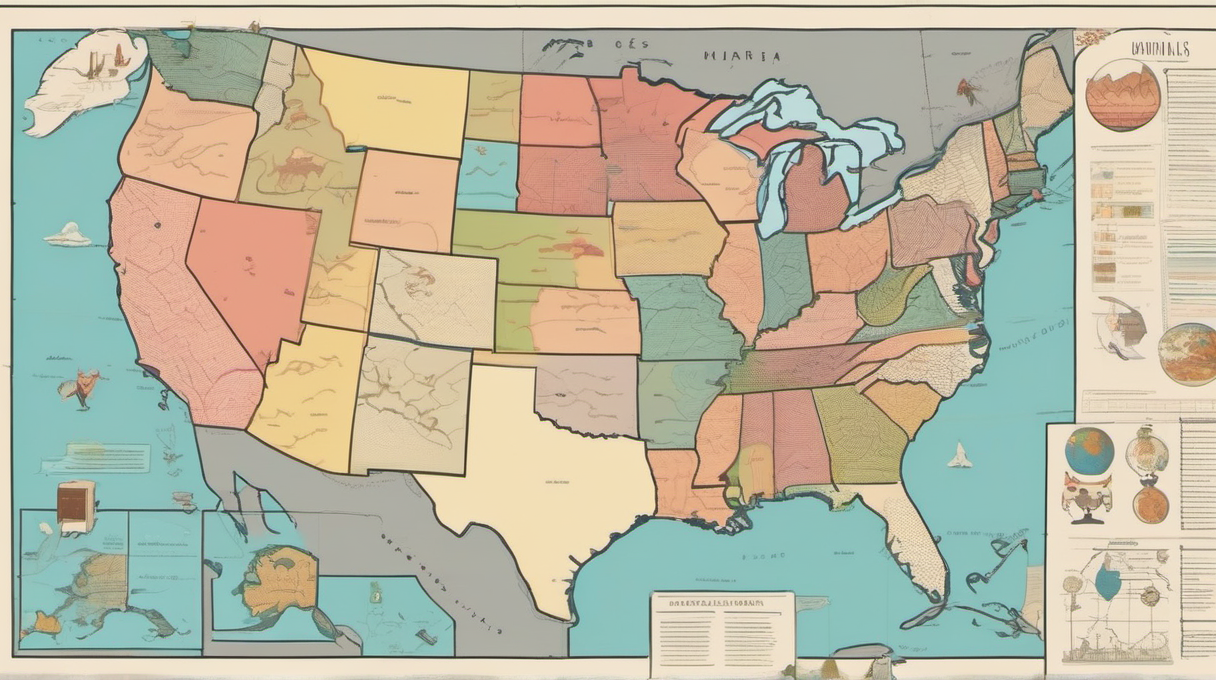
Estates that span multiple states or include foreign assets face additional tax obligations, reporting requirements, and administrative complexity. Understanding the distinction between domicile and residence, state-level estate taxes, and international considerations is essential for effective planning.
Domicile vs. Residence for Estate Tax Purposes
Domicile and residence are distinct legal concepts with different implications for estate taxation.
Residence refers to where you physically live at any given time. You can have multiple residences simultaneously—a primary home, a vacation property, and a city apartment, for example.
Domicile is your permanent legal home—the one place you intend to return to and remain indefinitely. You can have only one domicile at a time. Your domicile state has the right to tax your entire estate, including intangible assets like stocks, bonds, and bank accounts.
States examine multiple factors to determine domicile:
- Where you vote and hold a driver's license
- Where you file resident state income tax returns
- Where you maintain bank accounts and safe deposit boxes
- Where you spend the majority of your time
- Where your professional and social connections are strongest
- Declarations in your will and other legal documents
Disputes between states over domicile can result in an estate paying estate taxes to multiple jurisdictions on the same assets. Documenting your intent through formal domicile declarations and consistent behavior reduces this risk.
State Estate Taxes: The 12-State Landscape
As of 2024, twelve states and the District of Columbia impose their own estate taxes, separate from the federal estate tax. These jurisdictions are: Connecticut, Hawaii, Illinois, Maine, Maryland, Massachusetts, Minnesota, New York, Oregon, Rhode Island, Vermont, Washington, and the District of Columbia.
State exemption amounts vary significantly:
| State | 2024 Exemption |
|---|---|
| Oregon | $1,000,000 |
| Massachusetts | $1,000,000 |
| Rhode Island | $1,774,583 |
| Minnesota | $3,000,000 |
| New York | $6,940,000 |
| Illinois | $4,000,000 |
| Maine | $6,800,000 |
| Vermont | $5,000,000 |
| Maryland | $5,000,000 |
| Hawaii | $5,490,000 |
| Washington | $2,193,000 |
| District of Columbia | $4,710,800 |
| Connecticut | $13,610,000 |
Several states impose a "cliff" structure where exceeding the exemption by even a small amount subjects the entire estate to taxation, not just the excess. New York's estate tax, for example, applies to the full estate if the taxable value exceeds 105% of the exemption amount.
Six states also impose inheritance taxes (Iowa, Kentucky, Maryland, Nebraska, New Jersey, and Pennsylvania), which tax beneficiaries based on their relationship to the deceased rather than the estate's total value.
Real Property in Multiple States
Real property is taxed by the state where it is located, regardless of the owner's domicile. If you own real estate in multiple states, each state with property has jurisdiction to impose estate or inheritance taxes on that property.
A domiciliary state typically grants credit for estate taxes paid to other states on out-of-state real property, but this credit may not fully offset the liability. States calculate the credit differently, and some cap the credit amount.
For an individual domiciled in a state without an estate tax who owns property in a state with one, only the property in the taxing state is subject to that state's estate tax.
Foreign Assets: Reporting and Treaty Considerations
U.S. citizens and residents must report worldwide assets for federal estate tax purposes, regardless of where those assets are located. Foreign real estate, bank accounts, investments, and business interests are all includable in the gross estate.
Reporting requirements during life:
- FBAR (FinCEN Form 114): Required if aggregate foreign financial accounts exceed $10,000 at any point during the year
- Form 8938 (FATCA): Required for specified foreign financial assets exceeding $50,000 (single) or $100,000 (married filing jointly) at year-end
- Form 3520: Required for transactions with foreign trusts and receipt of large gifts from foreign persons
At death:
- Form 706 must include worldwide assets
- Schedule F specifically reports assets located outside the United States
- Foreign death taxes may generate a credit against U.S. estate tax under IRC Section 2014
Estate tax treaties between the United States and certain countries (including the United Kingdom, Germany, France, Japan, and others) may modify these rules. Treaties typically address:
- Which country has primary taxing jurisdiction over specific asset types
- Credit mechanisms to prevent double taxation
- Situs rules for intangible property
Non-resident aliens face different rules. The United States taxes non-resident aliens only on U.S.-situs assets (U.S. real estate, tangible personal property in the U.S., and certain U.S. securities), with a much smaller exemption of $60,000.
Worked Example: $5M Estate with Homes in New York and Florida
Facts:
- Margaret, age 78, has a $5,000,000 estate
- She owns a $1,200,000 home in New York (purchased in 1995)
- She owns a $800,000 home in Florida (purchased in 2018)
- Remaining $3,000,000 consists of investment accounts, retirement accounts, and personal property
- She spends approximately 7 months in Florida and 5 months in New York annually
Domicile Analysis:
Margaret should establish Florida domicile because Florida has no state estate tax. To do so effectively, she should:
- Register to vote in Florida
- Obtain a Florida driver's license
- File a Florida Declaration of Domicile with the county recorder
- Use the Florida address as her primary address for banking, investments, and correspondence
- Keep records showing majority time spent in Florida
Tax Implications if Domiciled in Florida:
Federal estate tax: With a 2024 exemption of $13,610,000, no federal estate tax applies.
New York estate tax: New York can tax the $1,200,000 property located within the state. However, because Margaret is not a New York domiciliary, only the real property is subject to New York taxation. For non-residents, New York calculates tax on the entire estate as if the person were a resident, then prorates based on New York property's percentage of the total estate.
Calculation:
- New York property: $1,200,000 / $5,000,000 = 24%
- Estate below New York exemption of $6,940,000, so no New York estate tax
Tax Implications if Domiciled in New York:
If Margaret were deemed a New York domiciliary:
- The entire $5,000,000 estate would be subject to New York estate tax
- New York exemption is $6,940,000, so no tax would apply in this case
- However, if the estate were $7,500,000 (exceeding 105% of exemption), the cliff provision would apply, potentially generating significant tax on the entire estate
Planning Recommendations for Margaret:
- Formalize Florida domicile with documented intent
- Maintain records of time spent in each state
- Update will to reference Florida domicile
- Consider whether New York property should be held in a revocable trust to avoid New York ancillary probate
Planning Strategies for Multi-State and Cross-Border Estates
For multi-state situations:
- Establish clear domicile in the most favorable state
- Consider holding out-of-state real property in LLCs or trusts to potentially avoid ancillary probate
- Review state-specific credit shelter trust planning when one spouse is domiciled in a state with estate tax
- Maintain documentation supporting domicile intent
For foreign assets:
- Ensure compliance with all reporting requirements during life
- Review applicable estate tax treaties
- Coordinate with advisors in both jurisdictions
- Consider whether foreign assets should be transferred to U.S. structures during life
Checklist: Multi-State and Cross-Border Estate Planning
- Determine your domicile state and document your intent
- Identify all states where you own real property
- Research estate and inheritance tax rules for each relevant state
- Review whether your domicile state provides credits for taxes paid to other states
- Inventory all foreign assets, including bank accounts, investments, and real estate
- Verify compliance with FBAR, FATCA, and other international reporting requirements
- Determine whether any estate tax treaties apply to your situation
- Consider revocable trusts to avoid ancillary probate in multiple states
- Coordinate with estate planning attorneys in each relevant jurisdiction
- Update beneficiary designations and ownership titling to reflect multi-state planning
- Review plan annually for changes in state tax laws and personal circumstances
Related Articles

Generation-Skipping Transfer Planning
How the GST tax works, who qualifies as a skip person, and strategies for using the GST exemption to benefit grandchildren and future generations.

Grantor Retained Annuity Trusts (GRATs)
An explanation of GRAT mechanics, zeroed-out structures, 7520 rate considerations, and a worked example of a $5 million GRAT with a 2-year term.

Debt Snowball vs. Avalanche at Scale
Comparing debt snowball and avalanche methods reveals that avalanche saves more money while snowball produces faster psychological wins—the optimal choice depends on total debt, rate spread, and personal discipline.