Market Makers, Specialists, and Wholesalers
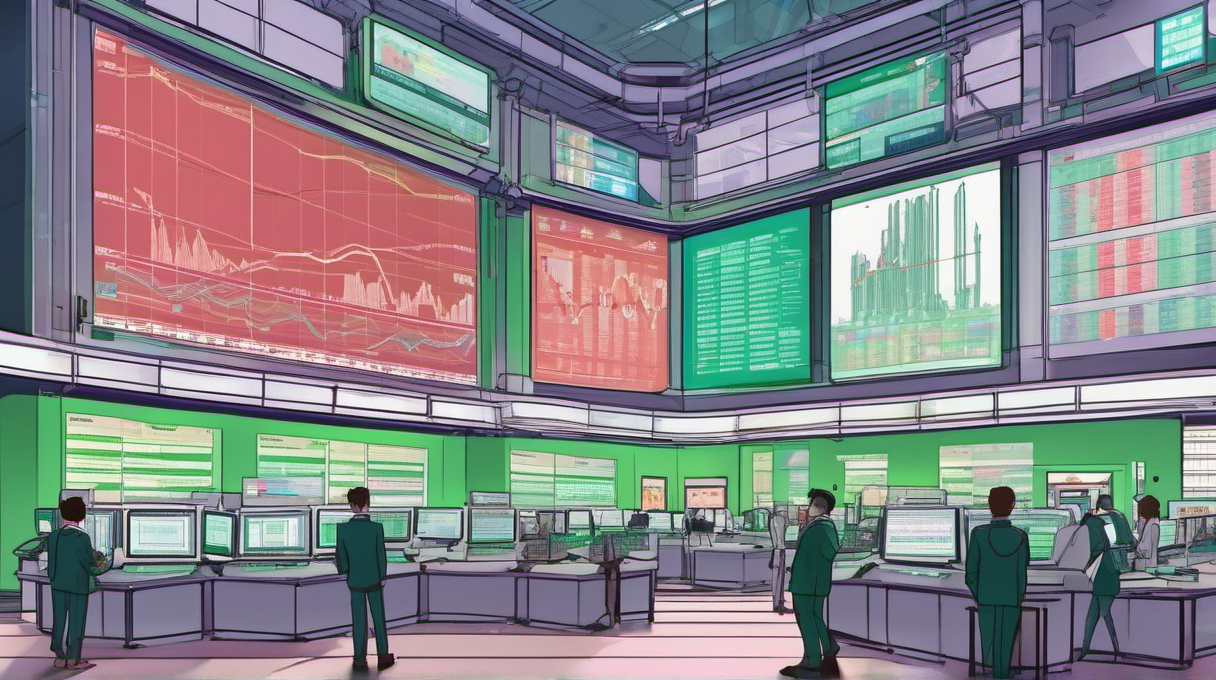
Market makers, specialists, and wholesalers form the invisible infrastructure behind every trade you place. They determine whether your 100-share buy order fills at $50.01 or $50.08, whether a pension fund's $5 million block trade moves the market by 0.1% or 1.5%, and whether the bid-ask spread you pay is a penny or a dime. Understanding these three roles is the difference between treating execution as a black box and actively managing your trading costs.
The data shows that execution quality varies meaningfully across brokers and order types. SEC Rule 605 reports reveal that retail orders routed to different venues can experience price improvement ranging from $0.001 to $0.015 per share (SEC, 2024). On a $10,000 trade, that's the difference between saving $2 and saving $30. The practical point isn't memorizing market microstructure theory. It's knowing enough about order flow to ask the right questions about where your broker sends your trades and why.
What Market Makers Actually Do (and How They Profit)
A market maker is a firm that commits capital to continuously quote both a bid price (what it will pay to buy) and an ask price (what it will accept to sell) for specific securities. The spread between those two prices is the market maker's primary revenue source.
Here's how it works in practice. A market maker for Apple (AAPL) might post:
- Bid: $192.30 (willing to buy at this price)
- Ask: $192.35 (willing to sell at this price)
- Spread: $0.05 per share
Every time the market maker buys at $192.30 and sells at $192.35, it captures $0.05 per share. Across thousands of trades per day, those nickels compound into significant revenue. Citadel Securities, one of the largest U.S. equity market makers, handles roughly 25-30% of all U.S. equity volume (by some estimates), processing millions of orders daily.
Why this matters: Market makers don't provide liquidity out of generosity. They provide it because the spread compensates them for the risk of holding inventory. When volatility spikes (and the risk of holding inventory increases), spreads widen. During the March 2020 COVID crash, bid-ask spreads on S&P 500 stocks widened by 3-5x their normal levels for several trading sessions. Your cost of trading went up precisely when you most wanted to trade.
Market makers also manage inventory risk actively. If a market maker accumulates too many shares of a stock (because more sellers than buyers are hitting its quotes), it will adjust its prices downward to attract buyers and discourage sellers. This constant price adjustment is part of how markets discover fair value.
The practical point: Every market order you submit crosses the spread and pays the market maker. Limit orders, by contrast, can sit on the same side as the market maker's quote (effectively competing with the market maker to provide liquidity rather than consuming it). For frequently traded stocks with tight spreads ($0.01-$0.02), market orders are fine. For anything with spreads above $0.05, limit orders save real money.
Specialists and Designated Market Makers (The Exchange's Traffic Controllers)
Specialists were the original human intermediaries on the New York Stock Exchange floor. Each specialist firm was assigned responsibility for specific stocks (sometimes dozens of them), managing the order book, matching buyers with sellers, and maintaining orderly markets.
The specialist's role included three distinct functions:
- Order matching: Maintaining the limit order book and executing trades when buy and sell prices crossed.
- Price stabilization: Stepping in as a buyer or seller when order imbalances threatened to cause disorderly price moves (particularly at market open and during volatile periods).
- Liquidity of last resort: Committing their own capital to fill orders when no other counterparty was available.
In 2008, the NYSE replaced the specialist system with Designated Market Makers (DMMs). The role is functionally similar (DMMs are still assigned specific securities and still have obligations to maintain fair and orderly markets), but the execution is now heavily electronic rather than human-driven. DMMs today use algorithms alongside human judgment, particularly during market opens, closes, and periods of extreme volatility.
Why this matters: DMMs have affirmative obligations that regular market makers don't. A standard electronic market maker can withdraw quotes during a flash crash (and many did during the May 2010 Flash Crash). A DMM is required to maintain quotes and provide liquidity even when conditions are chaotic. This obligation comes with privileges (DMMs get informational advantages from seeing the order book) but also real risk (they must buy when everyone else is selling).
The rule that survives: When you hear that a stock "halted trading" or experienced a "trading pause," DMMs are typically involved in the reopening process. They help establish a fair reopening price by collecting buy and sell interest during the halt. Circuit breakers and trading halts exist partly because even DMMs can't maintain orderly markets when order flow becomes completely one-sided.
The distinction between a specialist/DMM and a regular market maker matters most during stress. In calm markets, you won't notice the difference (your order fills quickly either way). In volatile markets, DMM obligations provide a backstop that purely voluntary market making doesn't.
Wholesalers and Block Trading (How Large Orders Get Filled)
Wholesalers (also called block traders or institutional execution firms) serve a fundamentally different function from market makers and DMMs. Their primary clients are institutional investors (pension funds, mutual funds, hedge funds) who need to execute trades too large for the regular market to absorb without significant price impact.
Consider the problem. A pension fund wants to sell 500,000 shares of Pfizer (PFE), currently trading at $28.00 with average daily volume of 20 million shares. That 500,000-share order represents 2.5% of a typical day's volume. If the fund simply submits a market sell order for the full amount, the selling pressure would push the price down well before the order finishes filling. The first 50,000 shares might fill at $28.00, the next 50,000 at $27.95, and so on (a phenomenon called market impact or slippage).
Wholesalers solve this problem through several mechanisms:
Dark pools: Private trading venues where large orders can execute without displaying quotes to the public market. The order doesn't signal selling pressure because other market participants can't see it. Dark pools now account for roughly 12-15% of total U.S. equity volume (FINRA ATS data).
Algorithmic execution: Breaking the large order into hundreds or thousands of smaller pieces, timed to execute across multiple venues over hours or days. Common algorithms include VWAP (Volume-Weighted Average Price, which spreads execution across the day proportional to historical volume patterns) and TWAP (Time-Weighted Average Price, which spaces orders evenly across a time window).
Block crossing: Finding a single counterparty willing to take the other side of the entire trade at a negotiated price. This is the cleanest solution (one trade, one price, minimal market impact) but requires finding a willing buyer for exactly that size.
The practical point: Wholesalers also interact with retail order flow in a way most individual investors don't realize. When your broker routes your 100-share order to a wholesaler like Citadel Securities or Virtu Financial (rather than to an exchange), the wholesaler often provides price improvement (filling your order at a price slightly better than the best publicly quoted price). The wholesaler profits from the spread between its execution price and the price it can obtain in the broader market. This is the core of the "payment for order flow" (PFOF) model that firms like Robinhood and other commission-free brokers rely on.
Whether this arrangement benefits you depends on the quality of price improvement. SEC Rule 605 data shows that price improvement for retail marketable orders averages roughly $0.005-$0.012 per share at major wholesalers. On small orders, that's meaningful. On larger orders or less liquid stocks, the picture gets more complicated.
Worked Example: Tracing a $10,000 Trade Through the System
Your situation: You want to buy 200 shares of a mid-cap industrial stock trading at $50.00 per share. Total investment: $10,000. The stock trades 2 million shares per day with a quoted bid-ask spread of $0.08 (bid $49.96, ask $50.04).
Step 1: Order submission. You enter a market buy order for 200 shares on your brokerage app. Your broker (a commission-free platform) routes the order to a wholesaler under its PFOF arrangement.
Step 2: Wholesaler execution. The wholesaler receives your order and decides to fill it internally. The National Best Bid and Offer (NBBO) at that moment is $49.96 × $50.04. The wholesaler fills your order at $50.02 (providing $0.02 per share of price improvement versus the $50.04 ask).
Step 3: Cost calculation.
| Cost Component | Calculation | Amount |
|---|---|---|
| Share price (with improvement) | 200 × $50.02 | $10,004.00 |
| Effective spread paid | 200 × $0.06 (vs. midpoint of $49.96/$50.04 = $50.00) | $12.00 |
| Price improvement received | 200 × $0.02 (vs. ask of $50.04) | $4.00 saved |
| Commission | $0 (PFOF model) | $0.00 |
| Total execution cost above midpoint | $12.00 |
Step 4: Settlement. The trade settles on a T+1 basis (one business day after trade date, per the SEC's May 2024 rule change from T+2). If you bought on Monday, shares appear in your account Tuesday. Cash leaves your account on the same timeline.
Comparison scenario: Now imagine a mutual fund buying 50,000 shares of the same stock. At 2 million shares daily volume, that's 2.5% of the day's volume (a significant order).
| Execution Method | Avg. Fill Price | Total Cost | Market Impact |
|---|---|---|---|
| Single market order | $50.18 (estimated) | $2,509,000 | ~$9,000 above midpoint |
| VWAP algorithm (full day) | $50.06 | $2,503,000 | ~$3,000 above midpoint |
| Block cross (negotiated) | $50.03 | $2,501,500 | ~$1,500 above midpoint |
The core principle: For your 200-share retail order, execution method barely matters (the difference between best and worst case is a few dollars). For the fund's 50,000-share order, execution method is a major cost driver (the difference between a naive market order and a well-executed block trade is thousands of dollars). The larger your trade relative to daily volume, the more execution quality matters.
How These Three Roles Interact (The Order Flow Ecosystem)
These roles don't operate in isolation. They form a connected ecosystem:
Market makers provide continuous quotes on exchanges and alternative trading venues. They're the default counterparty for most small and medium orders. They manage risk by constantly adjusting prices based on order flow and hedging their inventory.
DMMs (formerly specialists) sit on top of the market maker layer at specific exchanges (primarily NYSE). They have additional obligations and privileges. During normal trading, their role overlaps significantly with regular market makers. During stress, openings, and closings, their role becomes distinct and critical.
Wholesalers operate both as market makers for retail flow (via PFOF arrangements) and as execution agents for institutional flow (via algorithms, dark pools, and block trading). They bridge the retail and institutional worlds.
The key interaction: When a wholesaler fills your retail buy order internally, it takes on inventory (it now owns shares it needs to sell). It might hedge that inventory by selling on an exchange (where market makers and DMMs provide liquidity on the other side). Your simple 200-share order can trigger a chain of transactions across multiple venues and counterparties before the system reaches equilibrium.
Risks, Limitations, and Tradeoffs (What Can Go Wrong)
Market maker withdrawal during stress. Market makers are not obligated to maintain quotes (unlike DMMs). During the August 2015 market open disruption, many market makers pulled quotes, contributing to extreme price dislocations where some ETFs traded 20-30% below their net asset values for several minutes. Your stop-loss order could execute at a wildly unfavorable price during such events.
Conflicts of interest in wholesaler routing. Your broker routes orders to the wholesaler that pays the highest PFOF, not necessarily the one that provides the best execution. While SEC regulations require brokers to seek "best execution," the definition of best execution is flexible enough to permit meaningful variation. Check your broker's SEC Rule 606 report (published quarterly) to see where your orders go.
DMM information advantage. DMMs see the full order book for their assigned securities, giving them an informational edge over other market participants. While regulations limit how they can use this information, the structural advantage exists. This is one reason some critics argue the DMM model creates inherent conflicts between the DMM's obligation to maintain orderly markets and its incentive to profit from its informational position.
Dark pool opacity. When wholesalers execute large orders in dark pools, the lack of pre-trade transparency means you can't see the full picture of supply and demand. Roughly 12-15% of equity volume trades in venues where quotes aren't publicly displayed. This fragmentation can occasionally result in the publicly quoted price not fully reflecting actual trading interest.
Key limitation for retail investors: You have almost no control over where your order gets routed (unless you use a broker that offers direct market access). Most retail brokers make routing decisions based on PFOF arrangements and internal algorithms. The single most impactful thing you can do is use limit orders instead of market orders, which caps your worst-case execution price regardless of how your order is routed.
Mitigation Checklist (Tiered)
Essential (high ROI)
These four actions prevent most execution-quality problems:
- Use limit orders for any stock with a bid-ask spread above $0.03. This single habit eliminates the worst market-order fills during volatile moments.
- Check the bid-ask spread before trading. Narrow spreads ($0.01-$0.02) signal liquid stocks where execution quality is less of a concern. Wide spreads ($0.10+) signal illiquid stocks where limit orders and patience are essential.
- Review your broker's Rule 606 report once a year. It shows where your orders are routed and what PFOF your broker receives. If execution quality data looks poor, consider switching brokers.
- Never use market orders during the first and last 15 minutes of trading. These periods have the widest spreads and most volatile pricing as DMMs and market makers establish (or close) positions.
High-impact (workflow improvements)
For investors who trade frequently or in larger sizes:
- Compare execution quality across brokers using Rule 605 data. FINRA publishes this data; third-party tools aggregate it into readable comparisons.
- For trades exceeding 1% of a stock's average daily volume, use a VWAP or TWAP algorithm (available through most full-service and some discount brokers).
- Monitor price improvement statistics on your account statements. If your broker reports minimal or no price improvement, your order routing may not be optimized for your benefit.
Optional (for active or institutional traders)
If you're managing larger portfolios or trading frequently:
- Request direct market access (DMA) from your broker to control which venue your orders reach.
- Use dark pool access (via a broker offering it) for block trades exceeding 5,000 shares to reduce market impact.
- Track your own execution quality by comparing fill prices against the VWAP for the period during which you traded.
Summary Metrics Table
| Role | Primary Function | Revenue Source | Obligation Level | Who Benefits |
|---|---|---|---|---|
| Market Maker | Continuous two-sided quotes | Bid-ask spread | Voluntary (can withdraw) | All traders (liquidity) |
| DMM/Specialist | Order book management, price stabilization | Spread + information advantage | Mandatory (affirmative obligation) | Exchange participants |
| Wholesaler | Large order execution, retail PFOF | Spread capture, execution fees | Contractual (per broker agreement) | Institutional + retail clients |
Next steps: Read Bid-Ask Spreads and Liquidity in US Equities to understand how spread mechanics affect your costs in more detail. Then explore Clearing, Settlement, and the Role of DTCC to see what happens after your trade executes. For primary source data, review the SEC's market structure resources at sec.gov and FINRA's investor education materials at finra.org. Both provide Rule 605 and 606 data that let you evaluate your own broker's execution quality.
Related Articles

Role of FINRA and SEC in Market Oversight
Understanding FINRA and SEC oversight helps investors navigate market rules, protect assets, and make informed decisions.

How the NYSE and Nasdaq Differ
Understanding NYSE and Nasdaq differences helps investors navigate market structure, liquidity, and execution dynamics for informed trading decisions.

Building a Zero-Based Budget for Investing Goals
Building a Zero-Based Budget for Investing Goals Zero-based budgeting assigns every dollar of income to a specific category until you reach zero, forc...