Momentum Oscillators: RSI, Stochastics, and MACD
What Momentum Oscillators Measure
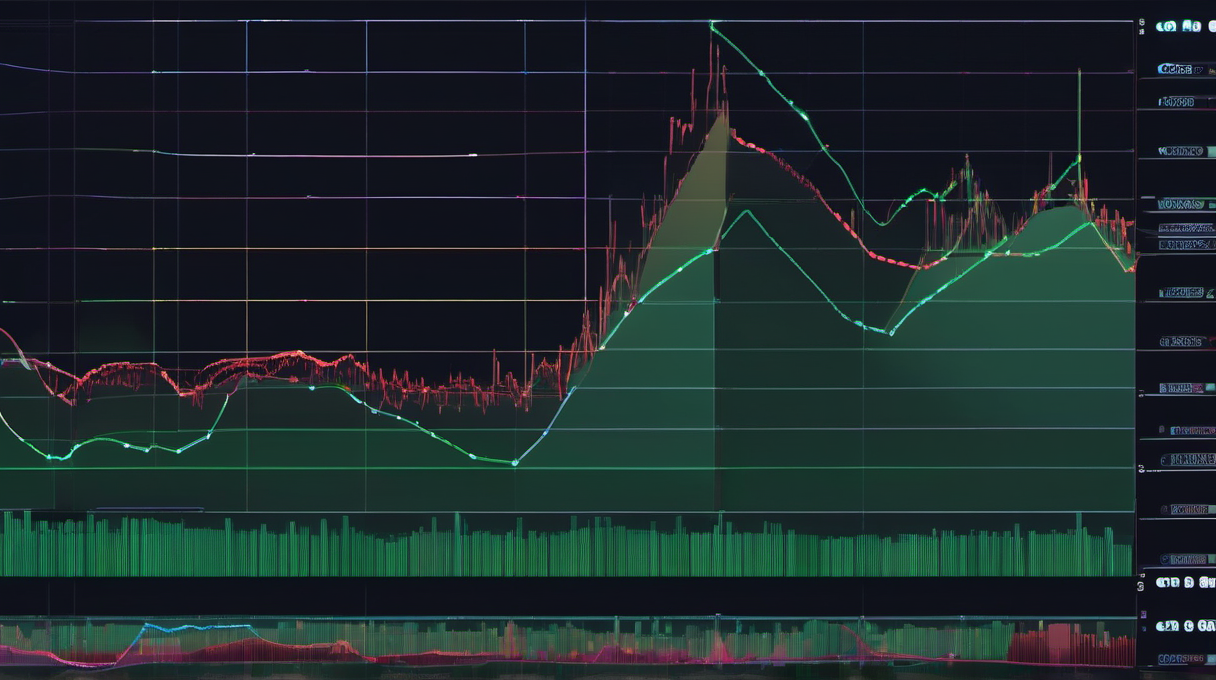
Momentum oscillators quantify the speed and magnitude of price changes. Unlike price charts that show direction, oscillators measure the rate of change and identify when prices may have moved too far, too fast.
These indicators oscillate between fixed boundaries (typically 0-100) or around a centerline. They help identify overbought conditions (potential selling opportunities) and oversold conditions (potential buying opportunities).
Relative Strength Index (RSI)
Developed by J. Welles Wilder in 1978, RSI measures the magnitude of recent gains versus losses over a specified period.
RSI Formula
Step 1: Calculate average gain and average loss over n periods (typically 14)
Average Gain = Sum of gains over n periods / n Average Loss = Sum of losses over n periods / n
Step 2: Calculate Relative Strength (RS)
RS = Average Gain / Average Loss
Step 3: Calculate RSI
RSI = 100 - (100 / (1 + RS))
RSI Worked Example
Calculate 5-period RSI using these daily closing prices:
| Day | Close | Change | Gain | Loss |
|---|---|---|---|---|
| 1 | $50.00 | — | — | — |
| 2 | $51.00 | +$1.00 | $1.00 | $0.00 |
| 3 | $50.50 | -$0.50 | $0.00 | $0.50 |
| 4 | $52.00 | +$1.50 | $1.50 | $0.00 |
| 5 | $51.75 | -$0.25 | $0.00 | $0.25 |
| 6 | $53.00 | +$1.25 | $1.25 | $0.00 |
For Day 6 (using Days 2-6):
- Total Gains: $1.00 + $1.50 + $1.25 = $3.75
- Total Losses: $0.50 + $0.25 = $0.75
- Average Gain: $3.75 / 5 = $0.75
- Average Loss: $0.75 / 5 = $0.15
- RS: $0.75 / $0.15 = 5.0
- RSI: 100 - (100 / (1 + 5.0)) = 100 - 16.67 = 83.33
RSI Thresholds
| RSI Value | Condition | Implication |
|---|---|---|
| Above 70 | Overbought | Price may be extended; potential for pullback |
| 50 | Neutral | No directional bias |
| Below 30 | Oversold | Price may be depressed; potential for bounce |
Important: RSI above 70 does not mean price will fall. In strong uptrends, RSI can remain above 70 for extended periods. The threshold indicates elevated momentum, not a guaranteed reversal.
Stochastic Oscillator
Developed by George Lane in the 1950s, the Stochastic measures where the current close sits within the recent high-low range.
Stochastic Formulas
%K (Fast Stochastic): %K = ((Current Close - Lowest Low) / (Highest High - Lowest Low)) × 100
Where Lowest Low and Highest High refer to the lookback period (typically 14 periods)
%D (Signal Line): %D = 3-period SMA of %K
Stochastic Worked Example
Calculate %K using 5-period lookback:
| Day | High | Low | Close |
|---|---|---|---|
| 1 | $51.00 | $49.00 | $50.00 |
| 2 | $52.00 | $50.00 | $51.50 |
| 3 | $52.50 | $50.50 | $51.00 |
| 4 | $53.00 | $51.00 | $52.50 |
| 5 | $54.00 | $52.00 | $53.50 |
Day 5 %K calculation:
- Highest High (Days 1-5): $54.00
- Lowest Low (Days 1-5): $49.00
- Current Close: $53.50
%K = (($53.50 - $49.00) / ($54.00 - $49.00)) × 100 %K = ($4.50 / $5.00) × 100 = 90.0
This indicates the close is 90% of the way from the lowest low to the highest high—near the top of the recent range.
Stochastic Thresholds
| %K Value | Condition | Implication |
|---|---|---|
| Above 80 | Overbought | Price near top of recent range |
| Below 20 | Oversold | Price near bottom of recent range |
Signal generation: A common signal occurs when %K crosses above %D from below 20 (potential buy) or when %K crosses below %D from above 80 (potential sell).
Moving Average Convergence Divergence (MACD)
Developed by Gerald Appel in the 1970s, MACD measures the relationship between two exponential moving averages.
MACD Formulas
MACD Line: MACD = 12-period EMA - 26-period EMA
Signal Line: Signal = 9-period EMA of MACD Line
MACD Histogram: Histogram = MACD Line - Signal Line
MACD Worked Example
Given these EMA values:
- 12-period EMA: $52.50
- 26-period EMA: $51.00
MACD Line = $52.50 - $51.00 = +$1.50
If the 9-period EMA of the MACD Line (Signal Line) = $1.25:
Histogram = $1.50 - $1.25 = +$0.25
Interpretation:
- Positive MACD ($1.50): Short-term momentum exceeds long-term momentum (bullish)
- Positive Histogram ($0.25): MACD is above its signal line (bullish confirmation)
MACD Signal Types
| Signal | Condition | Implication |
|---|---|---|
| Bullish Crossover | MACD crosses above Signal Line | Upward momentum increasing |
| Bearish Crossover | MACD crosses below Signal Line | Downward momentum increasing |
| Zero Line Cross (Bull) | MACD crosses above zero | Short-term EMA > Long-term EMA |
| Zero Line Cross (Bear) | MACD crosses below zero | Short-term EMA < Long-term EMA |
Divergence Analysis
Divergence occurs when price and an oscillator move in opposite directions, potentially signaling a trend weakening.
Bullish Divergence Example
| Observation | Price | RSI |
|---|---|---|
| Low 1 (March 10) | $45.00 | 25 |
| Low 2 (April 15) | $43.00 | 32 |
Price made a lower low ($43.00 < $45.00), but RSI made a higher low (32 > 25). This bullish divergence suggests selling momentum is decreasing despite lower prices.
Bearish Divergence Example
| Observation | Price | RSI |
|---|---|---|
| High 1 (May 5) | $60.00 | 78 |
| High 2 (June 10) | $62.00 | 71 |
Price made a higher high ($62.00 > $60.00), but RSI made a lower high (71 < 78). This bearish divergence suggests buying momentum is weakening despite higher prices.
Divergence limitations: Divergences can persist for extended periods without price reversing. They indicate weakening momentum, not guaranteed reversals.
Combining Multiple Oscillators
Using multiple oscillators can filter signals:
Confirmation approach:
- Primary signal: RSI crosses above 30 from oversold
- Confirmation: Stochastic %K crosses above %D
- Context: MACD histogram turning positive
All three aligning provides stronger evidence than any single indicator.
Example setup:
| Indicator | Reading | Signal |
|---|---|---|
| RSI (14) | 28 → 35 | Crossed above 30 (bullish) |
| Stochastic %K | 18 → 25 | Crossed above %D (bullish) |
| MACD Histogram | -0.15 → +0.05 | Turned positive (bullish) |
Three bullish signals occurring simultaneously suggest higher probability of upward price movement than a single signal.
Practical Limitations
Overbought can stay overbought: In strong trends, oscillators can remain at extreme readings for weeks or months. A stock rising consistently may show RSI above 70 for 30 consecutive trading days.
Oversold can stay oversold: Declining stocks can maintain oversold readings during extended downtrends. Buying solely because RSI dropped below 30 may result in catching a falling knife.
Whipsaw in ranging markets: When prices move sideways, oscillators generate frequent crosses through thresholds, producing numerous false signals.
Parameter sensitivity: Results vary based on lookback periods. A 7-period RSI behaves differently than a 14-period RSI. There is no universally optimal parameter.
Lagging indicators: All three oscillators derive from historical price data. They describe current momentum but do not predict future price movement.
Standard Parameters and Variations
| Indicator | Standard Parameters | Common Variations |
|---|---|---|
| RSI | 14 periods | 7, 9, 21 periods |
| Stochastic | 14, 3, 3 (%K, %K smoothing, %D) | 5, 3, 3 (fast); 21, 3, 3 (slow) |
| MACD | 12, 26, 9 (fast EMA, slow EMA, signal) | 8, 17, 9 (faster); 19, 39, 9 (slower) |
The CMT Association curriculum covers these standard parameters, though practitioners often customize based on specific markets and timeframes.
Next Steps
-
Calculate RSI manually for 14 consecutive trading days using actual closing prices from a stock you follow, then compare your result to a charting platform's RSI reading.
-
Identify one bullish divergence and one bearish divergence on a historical chart, noting the specific price levels and oscillator values at each point.
-
Track how long RSI remains above 70 or below 30 during a strong trending period to understand that extreme readings do not immediately produce reversals.
-
Compare signals from RSI, Stochastics, and MACD on the same chart to observe when they align versus when they conflict.
-
Document five trades based on oscillator signals (paper trading or historical analysis), recording entry price, signal type, outcome, and whether the signal was profitable.
Related Articles
Market Breadth Indicators to Watch
Learn how advance-decline lines, McClellan Oscillator, and new highs/lows reveal whether market rallies have broad participation or narrow leadership.

Average True Range and Volatility Stops
Learn to measure volatility with ATR and set stops that adapt to market conditions, avoiding exits triggered by normal price noise.

Corporate Investor Relations Playbook
Public companies maintain investor relations departments to control their narrative with shareholders and analysts. Understanding how IR operates helps investors distinguish genuine transparency from strategic communication.