Federal Reserve Bank Structure and Voting Rotation
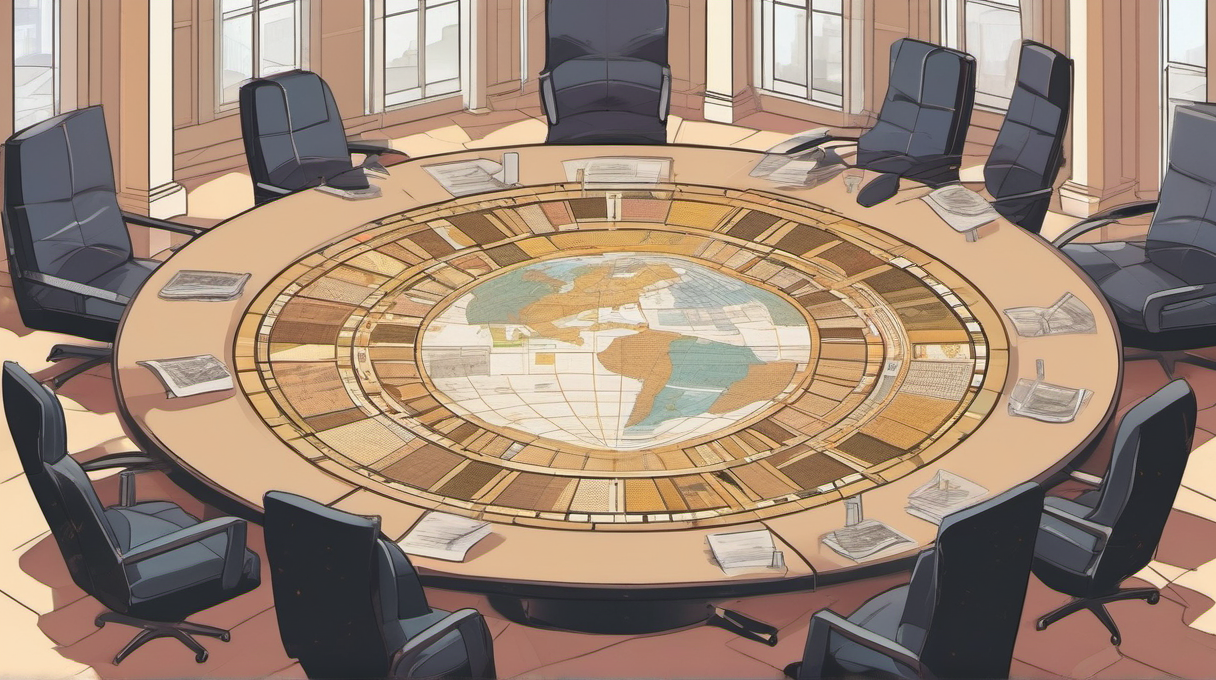
Every January, four names rotate onto the Federal Reserve's rate-setting committee and four rotate off. That single roster change can shift the balance between hawks and doves before a single vote is cast. In 2026, the arrival of Lorie Logan (Dallas), Beth Hammack (Cleveland), Neel Kashkari (Minneapolis), and Anna Paulson (Philadelphia) tilted the perceived lean of the committee more hawkish than the prior year, complicating expectations for rate cuts. The practical point isn't memorizing every name on the list. It's understanding how the Fed's two-part structure and annual rotation create predictable shifts in policy bias that you can track, anticipate, and position around.
Two Components, One System (And Why the Split Matters)
The Federal Reserve is not a monolithic institution. It's a system with two distinct halves, and that architecture is deliberate.
The Board of Governors sits in Washington, D.C. Seven members (when fully staffed), each appointed by the President and confirmed by the Senate. They serve 14-year staggered terms, designed so that no single president can pack the Board during one administration (though vacancies often accelerate turnover in practice). The Chair and Vice Chair hold 4-year renewable appointments layered on top of their governor terms.
Twelve Regional Reserve Banks span the country, each covering a numbered district. These banks are technically private corporations owned by member commercial banks in their districts, but they operate in the public interest and remit their profits to the U.S. Treasury. Each employs its own research staff, monitors its regional economy, and develops perspectives that often diverge from Washington's view.
The pattern that holds: this two-part design ensures that monetary policy reflects both national priorities and ground-level economic conditions. A Fed that only listened to Washington or only listened to Wall Street would miss critical signals from agriculture, energy, housing, and manufacturing across the country.
The FOMC: Where 12 Votes Set the Cost of Money
The Federal Open Market Committee meets 8 times per year (roughly every six weeks) and sets the federal funds target rate. Only 12 members vote at each meeting, but the composition is deliberately asymmetric:
| Category | Who | Count |
|---|---|---|
| Permanent voters | All seated Board of Governors members | Up to 7 |
| Permanent voter | President of the New York Fed | 1 |
| Rotating voters | 4 of the remaining 11 regional presidents | 4 |
The New York Fed president always votes because the New York Fed's trading desk executes the Committee's decisions through open market operations (buying and selling Treasury securities to move rates toward the target). If you control the mechanism, you get a permanent seat at the table.
Why this matters: the remaining 11 regional presidents rotate through just 4 voting slots, grouped into fixed rotation pools. That rotation is the single most predictable variable in FOMC composition each year, and markets price it in before January arrives.
The Four Rotation Groups (Your Annual Cheat Sheet)
The 11 non-New York regional banks divide into four groups. One president from each group votes per year:
| Group | Banks | Pattern |
|---|---|---|
| Group 1 | Boston, Philadelphia, Richmond | Three-year cycle |
| Group 2 | Cleveland, Chicago | Alternate years |
| Group 3 | Atlanta, St. Louis, Dallas | Three-year cycle |
| Group 4 | Minneapolis, Kansas City, San Francisco | Three-year cycle |
In 2025, the rotating voters were Susan Collins (Boston), Austan Goolsbee (Chicago), Alberto Musalem (St. Louis), and Jeff Schmid (Kansas City). That lineup was notably polarized: Goolsbee leaned dovish while Musalem and Schmid leaned hawkish, with Collins near center.
In 2026, the rotation brought in Anna Paulson (Philadelphia), Beth Hammack (Cleveland), Lorie Logan (Dallas), and Neel Kashkari (Minneapolis). Logan and Hammack have both expressed concern that inflation remains above the 2% target, making them reluctant to support cuts. Kashkari has stressed the "twin threat" to the Fed's dual mandate (balancing inflation against employment). Paulson has signaled that the labor market shouldn't prevent rate cuts and sees inflation moderating.
The point is: you don't need insider access to gauge where the committee leans. The rotation schedule is public, the groups are fixed, and each incoming voter's speeches telegraph their likely stance months before they cast a single vote.
The Board of Governors (Who Holds the Permanent Votes)
The Board's composition matters more than any rotation because governors hold permanent votes for as long as they serve. As of early 2026, the Board looks like this:
| Position | Name | Key Date |
|---|---|---|
| Chair | Jerome Powell | Chair term expired May 2026 |
| Vice Chair | Philip Jefferson | Vice Chair term through ~2027 |
| Vice Chair for Supervision | Michelle Bowman | Took office June 2025 |
| Governor | Michael Barr | Stepped down as Vice Chair Feb 2025; remains governor |
| Governor | Lisa Cook | Term expires Jan 2038 |
| Governor | Christopher Waller | Term expires Jan 2030 |
The Chair sets the meeting agenda, drafts the initial policy statement, and speaks at the post-meeting press conference. That agenda-setting power is enormous (the Chair effectively frames every debate), but the Chair gets one vote, same as every other governor. A determined majority can outvote the Chair, and the threat of dissent constrains what the Chair proposes.
The practical point: when headlines say "the Fed decided," they mean 12 specific people voted. Knowing who those people are and where they lean gives you more signal than any pundit's prediction.
Hawks, Doves, and the Spectrum Between (Reading Policy Leanings)
Every FOMC participant develops a reputation on the hawk-dove spectrum based on their speeches, published research, and voting history:
- Hawks prioritize price stability over maximum employment. They worry about inflation becoming entrenched and prefer tighter policy (higher rates, slower balance sheet growth).
- Doves prioritize employment and growth. They worry about overtightening choking off the economy and prefer accommodation.
- Centrists shift based on data, making them the swing votes that determine outcomes.
These aren't fixed ideologies. A dove during low inflation can sound hawkish when prices surge (and vice versa). The test: read a participant's three most recent speeches and note whether they emphasize inflation risks (hawkish signal) or labor market softening (dovish signal). The ratio tells you more than any label.
The 2026 hawk-dove dynamic illustrates this well. Logan and Hammack anchor the hawkish end, both citing inflation persistence. Paulson anchors the dovish end, arguing that rate adjustments are warranted as inflation moderates. Kashkari occupies the middle, acknowledging both sides. That spread means close votes are likely, and the Chair's ability to build consensus becomes the decisive variable.
A useful causal chain: Rotation roster (known in advance) → hawk-dove tilt (estimated from speeches) → market rate expectations (priced immediately) → actual policy decisions (confirmed or surprised)
Non-Voters Still Move Markets (The 19-Person Committee)
All 12 regional bank presidents plus all seated governors attend every FOMC meeting, whether or not they're voting that year. That means 19 participants (when the Board is fully staffed) contribute to the discussion, submit economic projections, and shape the "dot plot."
Three reasons non-voters matter more than you'd expect:
They fill out the dot plot. The Summary of Economic Projections includes rate forecasts from all 19 participants. Markets parse the median and distribution of those dots obsessively. A non-voter projecting three cuts when voters project one still moves the narrative.
They vote next year. A non-voting president building a public case for a policy shift in speeches is telegraphing what happens when their rotation comes. Markets listen because the future composition is already knowable.
They supply regional intelligence. When the Kansas City Fed president describes deteriorating agricultural credit conditions or the San Francisco president flags a housing slowdown, that data enters the committee's deliberations regardless of voting status. Information doesn't need a vote to influence outcomes.
The lesson worth internalizing: tracking only the 12 voters misses half the signal. The full 19-person committee shapes expectations, and expectations are what actually move bond yields and equity valuations in real time.
Regional Perspectives (Why Geography Creates Information Diversity)
Each regional Fed bank maintains its own research division studying the local economy. That geographic diversity is a feature, not a quirk:
- Dallas and Kansas City monitor energy markets and agricultural conditions (when oil spikes, their presidents feel it first)
- San Francisco tracks technology sector dynamics and West Coast housing (the most expensive housing market in the country shapes their inflation lens)
- Minneapolis follows agriculture, mining, and timber across the upper Midwest
- New York watches financial market plumbing, credit conditions, and global capital flows
- Atlanta covers the fast-growing Southeast, including real estate, logistics, and population migration trends
The practical antidote to treating the Fed as a single mind is recognizing that 12 districts produce 12 different economic pictures. When energy prices surge, the Dallas Fed president's concern about inflation will be visceral and data-rich in ways that a Washington-based governor might not fully internalize. That tension is productive, and the rotation ensures every perspective gets a vote eventually.
Reading the Composition Like a Practitioner
Before each FOMC meeting, professionals run a quick assessment. You should too. Here's the decision framework:
Step 1: Count the voters. Are there any Board vacancies reducing the governor bloc below 7? Fewer governors means the 4 rotating regional votes carry more relative weight (moving from 4-of-12 toward 4-of-11 or even 4-of-10).
Step 2: Map the hawk-dove tilt. Classify each voter as hawk, dove, or centrist based on their last 2-3 speeches. Count the balance. If you see 7+ hawks among 12 voters, rate cuts become unlikely regardless of data.
Step 3: Watch for dissents. A single dissent is normal (it happens in roughly half of all meetings). Two or more dissents signal genuine internal disagreement and often precede a policy shift within 1-2 meetings.
Step 4: Read the Chair's framing. The post-meeting press conference reveals whether the Chair is building consensus (emphasizing agreement) or managing division (hedging language, acknowledging "a range of views"). Division language is the market-moving signal.
The point is: you're not predicting the vote. You're estimating the probability distribution of outcomes, which lets you assess whether bond and equity prices already reflect the likely decision.
Your FOMC Composition Checklist (Tiered)
Essential (high ROI — do this every January)
These four steps prevent most surprises:
- Identify the four rotating regional voters for the year and note their group
- Read one recent speech from each new voter to classify hawk/dove/center
- Check for Board vacancies that change the permanent-to-rotating vote balance
- Compare this year's tilt to last year's (is the committee shifting hawkish or dovish?)
Before each meeting (systematic tracking)
For investors who want to stay ahead of the statement:
- Review speeches from voting members in the two weeks before the meeting (the "blackout period" starts the Saturday before, so speeches cluster in the prior week)
- Note economic conditions in voting members' districts (regional Beige Book data helps)
- Check the CME FedWatch tool for market-implied probabilities and compare to your assessment
After each meeting (post-game analysis)
If you want to build pattern recognition over time:
- Count dissents and note which direction they pushed (hawkish dissent = "wanted tighter policy")
- Compare the statement language to the previous meeting's statement word-by-word (the Fed communicates through precise language changes)
- Review the dot plot distribution if it's a projection meeting (March, June, September, December)
Put This Into Practice (Your Next Step)
Go to federalreserve.gov/monetarypolicy/fomc.htm and pull up the current list of FOMC participants. Identify the four rotating voters for 2026 (Paulson, Hammack, Logan, Kashkari) and find one recent speech from each on the Fed's website.
How to read each speech:
- Search for the words "inflation," "employment," and "risk" — count which appears most
- Note whether the president describes the current rate level as "appropriate," "restrictive," or "accommodative"
- Look for any explicit statement about the direction of the next move
Interpretation:
- Inflation-focused + "appropriate" or "restrictive": Hawkish lean — expects rates to stay high or go higher
- Employment-focused + "accommodative": Dovish lean — expects rates should come down
- Balanced language: Centrist — will follow the data and likely follow the Chair
Action: If two or more rotating voters lean hawkish and the Board already has hawkish members, expect the committee to hold rates longer than futures markets price. If the tilt is dovish, watch for language softening in the next statement — that's your early signal before any actual cut.
This exercise takes about 30 minutes and gives you a framework you can reuse every January for the rest of your investing career. The rotation schedule never changes, only the names do.
Related Articles

Open Market Operations and Repo Facilities
On September 17, 2019, the overnight repo rate spiked from 2.43% to 10% in a matter of hours—a five-standard-deviation event that briefly froze the plumbing connecting every bank, money fund, and dealer in the U.S. financial system. The cascade cost dealers hundreds of millions in unexpected fund...
Emergency Lending Powers: Section 13(3)
Understand the Federal Reserve's emergency lending authority under Section 13(3), including historical examples, post-crisis constraints, and how these backstops affect market confidence.
Macro Drivers of USD Strength or Weakness
Analyzing the fundamental factors that determine dollar trends, including interest rates, risk appetite, trade balances, and fiscal policy, with historical context on USD cycles.