Geopolitical Risks in Energy Markets
Why Geopolitics Matters for Energy
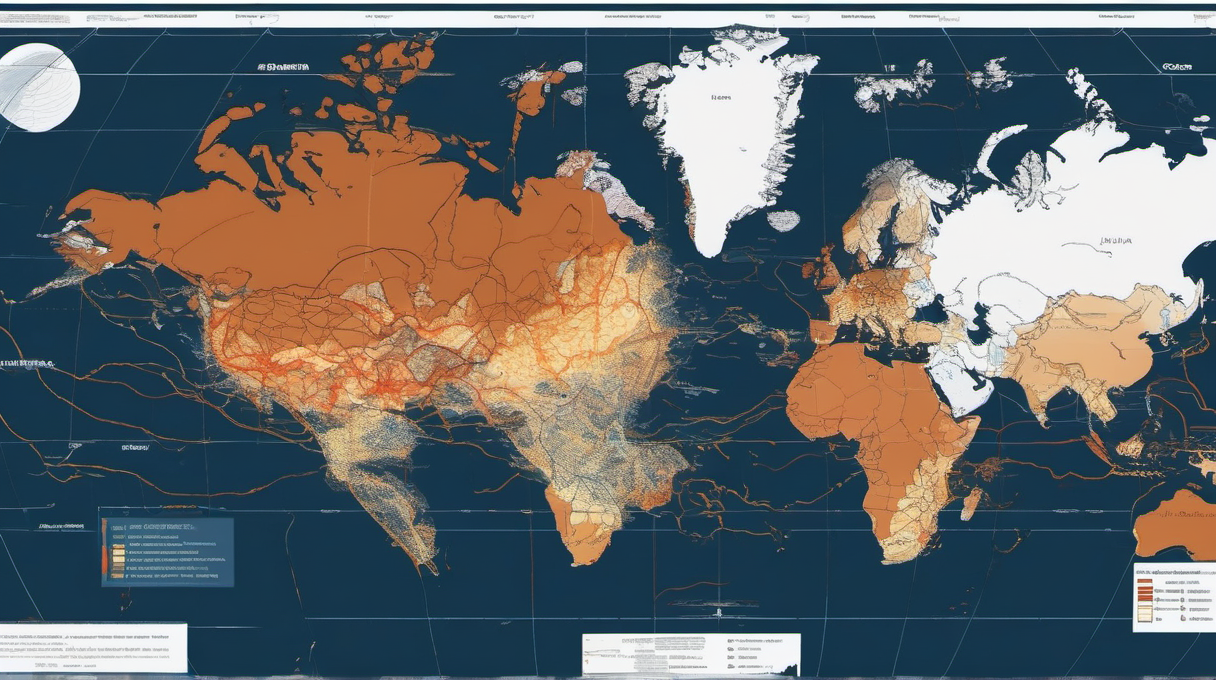
Energy markets are uniquely sensitive to geopolitical events. Oil and natural gas supply chains span continents, pass through narrow shipping lanes, and depend on political stability in producing regions. A disruption anywhere in this system can affect prices globally within hours.
Typical geopolitical supply shocks move oil prices by $10 to $30 per barrel, depending on the severity and duration of the disruption. Some events cause brief spikes followed by reversion to prior levels; others fundamentally shift supply dynamics and sustain higher prices for months or years.
Key Chokepoints
Global energy trade depends on several geographic bottlenecks. A blockage or conflict at any of these points can disrupt millions of barrels of daily oil flow.
Strait of Hormuz
The Strait of Hormuz connects the Persian Gulf to the Arabian Sea and handles approximately 20% of global oil trade. Key facts:
- Width: 21 miles at narrowest point
- Daily flow: 17-21 million barrels of crude oil
- Key exporters: Saudi Arabia, Iraq, UAE, Kuwait, Iran
- Risks: Iranian military activity, regional conflict, mine threats
A closure of Hormuz would immediately remove roughly one-fifth of global oil supply from the market. Even credible threats to shipping through the strait cause price spikes.
Strait of Malacca
This 550-mile passage between Malaysia and Indonesia connects the Indian Ocean to the Pacific. Characteristics:
- Daily flow: 16 million barrels of oil
- Primary destination: China, Japan, South Korea
- Width: 1.7 miles at narrowest navigable channel
- Risks: Piracy, regional territorial disputes
Suez Canal
The Suez Canal connects the Mediterranean Sea to the Red Sea, eliminating the need to route tankers around Africa. Data points:
- Daily flow: 4-5 million barrels of oil equivalent
- Also handles LNG shipments to Europe
- Alternative route adds 10-14 days to transit time
- Risks: Regional instability, canal blockages
The 2021 Ever Given blockage demonstrated how a single incident can disrupt global shipping. Energy flows through Suez include both crude oil and refined products.
Bosphorus Strait
The Bosphorus connects the Black Sea to the Mediterranean through Istanbul. Significance:
- Daily flow: 3 million barrels of oil
- Primary source: Russian and Caspian exports
- Width: 0.5 miles at narrowest point
- Risks: Turkish policy changes, congestion, accidents
| Chokepoint | Daily Oil Flow | % of Global Trade | Primary Risk Factors |
|---|---|---|---|
| Strait of Hormuz | 17-21 million bbl | ~20% | Iran tensions, regional war |
| Strait of Malacca | 16 million bbl | ~18% | Piracy, territorial disputes |
| Suez Canal | 4-5 million bbl | ~5% | Blockages, regional conflict |
| Bosphorus | 3 million bbl | ~3% | Turkish policy, congestion |
Sanctions Impacts
Economic sanctions can remove significant supply from global markets, affecting prices even when physical infrastructure remains intact.
Russia (2022-Present)
Following the invasion of Ukraine, Western nations imposed unprecedented sanctions on Russian energy exports:
- EU banned Russian crude imports by sea (December 2022)
- G7 implemented price cap on Russian oil ($60/barrel)
- Russian natural gas pipeline flows to Europe dropped by over 80%
- European gas prices spiked from approximately $10/MMBtu to over $60/MMBtu
The sanctions fundamentally restructured global energy trade flows, with Russia redirecting exports to China and India at discounted prices while Europe sourced replacement supply from the US, Middle East, and other sources.
Iran
US sanctions on Iran have fluctuated with policy changes:
- Maximum pressure campaign (2018-2020) removed 1.5-2 million barrels/day from official markets
- Iranian exports partially recovered through sanction evasion and gray market sales
- Potential sanctions relief or tightening creates ongoing price uncertainty
Venezuela
US sanctions on Venezuela's state oil company PDVSA combined with operational decline:
- Production fell from 2.5 million barrels/day (2016) to under 800,000 (2020)
- Heavy crude supply shortage affected US Gulf Coast refiners
- Partial license grants have allowed some trade resumption
Supply Disruption Scenarios
Beyond chokepoints and sanctions, several scenarios can disrupt energy supply:
Armed Conflict
Military conflict in producing regions can damage infrastructure, halt production, and prevent exports:
- Iraq War (2003): Oil prices rose from $25 to $37/barrel in two months
- Libyan Civil War (2011): Removed 1.5 million barrels/day, prices spiked $15-20/barrel
- Attacks on Saudi facilities (2019): Temporarily halved Saudi production, prices jumped $8/barrel overnight
Terrorism and Sabotage
Critical infrastructure remains vulnerable to targeted attacks:
- Pipeline bombings in Nigeria have repeatedly disrupted exports
- Drone and missile attacks on Saudi facilities demonstrated vulnerability
- Cyber attacks on pipeline systems (Colonial Pipeline 2021) can halt distribution
Political Instability
Leadership changes, civil unrest, or policy shifts can affect production:
- Venezuelan political crisis contributed to production collapse
- Nigerian election-related unrest affects output
- Resource nationalism and contract renegotiations create uncertainty
Price Reaction Patterns
Energy prices respond to geopolitical events in two general patterns:
Spike and Reversion
Short-term disruptions or threats typically cause immediate price spikes followed by gradual return to prior levels. Characteristics:
- Duration: Days to weeks
- Magnitude: $5-15/barrel for oil
- Examples: Temporary chokepoint threats, quickly resolved conflicts
- Market behavior: Initial panic buying, then reassessment of actual impact
Sustained Shift
Longer-term supply changes or fundamental shifts in trade patterns sustain elevated prices:
- Duration: Months to years
- Magnitude: $15-30/barrel or more for oil
- Examples: Russian sanctions, prolonged regional conflicts
- Market behavior: New equilibrium pricing, structural demand/supply adjustment
| Event Type | Typical Price Impact | Duration | Recovery Pattern |
|---|---|---|---|
| Threat/rhetoric | $3-8/barrel | Days | Quick reversion |
| Temporary disruption | $5-15/barrel | Weeks | Gradual normalization |
| Infrastructure damage | $10-20/barrel | Months | Depends on repair time |
| Sanctions/trade restructuring | $15-30/barrel | Years | New equilibrium |
Spare Capacity as a Buffer
Spare production capacity provides a cushion against supply disruptions. Saudi Arabia maintains the world's largest spare capacity:
- Typical range: 1.5-3 million barrels/day of idle capacity
- Can be activated within 30-90 days
- Serves as global supply insurance
- Low spare capacity increases price sensitivity to disruptions
When global spare capacity falls below 2 million barrels/day, markets become more vulnerable to price spikes. OPEC+ production decisions directly affect available spare capacity and thus market stability.
Monitoring Checklist
For investors tracking geopolitical energy risks:
- Monitor Strait of Hormuz shipping and Iranian military activity
- Track sanctions implementation and enforcement
- Follow OPEC+ spare capacity estimates
- Watch for infrastructure attacks in producing regions
- Review EIA short-term energy outlook geopolitical sections
- Track tanker traffic data through key chokepoints
- Monitor political stability in major producing countries
- Follow insurance rates for tanker shipping (war risk premiums)
Key Takeaways
Energy prices are highly sensitive to geopolitical events because supply chains depend on vulnerable chokepoints and politically unstable regions. The Strait of Hormuz alone handles 20% of global oil trade.
Sanctions can remove significant supply from markets even without physical disruption. The 2022 Russian sanctions demonstrated how quickly energy trade patterns can restructure.
Price reactions follow two patterns: spike-and-reversion for temporary disruptions, and sustained shifts for fundamental supply changes. Typical disruption shocks range from $10 to $30 per barrel depending on severity.
Spare production capacity, primarily held by Saudi Arabia, provides a buffer against disruptions. When spare capacity is low, markets are more vulnerable to price volatility from geopolitical events.
Related Articles
Regulatory Environment for US Commodities
The key regulators, position limits, and reporting requirements governing US commodity futures and physical energy markets.

Contango vs. Backwardation Explained
Understand futures curve shapes, how contango and backwardation affect roll yield, and what drives each market condition.
Dollar Index Composition and Signals
Understand the DXY dollar index structure, currency weights, historical ranges, and what index movements signal for global markets and portfolio positioning.