Building a Risk Event Dashboard
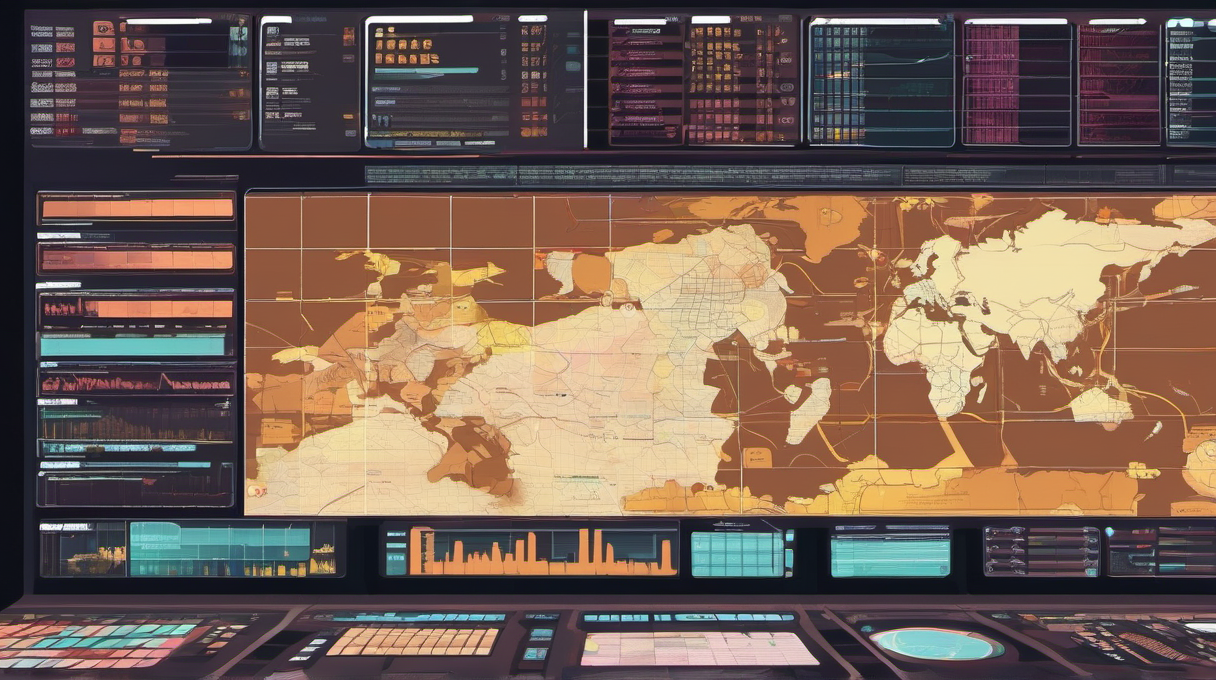
Most investors get blindsided by geopolitical events not because the events are unpredictable, but because they have no systematic way to track escalation. When Russia invaded Ukraine in February 2022, the S&P 500 dropped 11.5% from peak to trough over the following month. When Trump declared "Liberation Day" tariffs in April 2025, the VIX skyrocketed from under 17 to above 60 in just eight trading sessions, and the S&P 500 suffered a 10%+ two-day decline (one of its worst since the 1987 crash). Managers with systematic monitoring processes underperformed benchmarks by 1.2% less during geopolitical stress periods compared to those relying on ad-hoc news scanning (CFA Institute, 2021). The fix isn't predicting world events. It's building a dashboard that converts noise into signal before events become headlines.
Why Most Investors Monitor Risk Badly (And What Actually Works)
Here's the typical approach to geopolitical risk: you scroll Twitter, catch a headline about trade tensions, feel a wave of anxiety, check your portfolio, and do nothing. Rinse and repeat until something actually blows up, at which point you panic-sell near the bottom. The point is: reactive monitoring is just anxiety with extra steps.
A proper risk event dashboard does three things. First, it provides early warning by tracking indicators that move before markets fully price in a risk event (giving you hours or days of lead time, not seconds). Second, it delivers severity scoring so you can distinguish between noise and genuine threats using consistent metrics (not gut feeling). Third, it sets action triggers with pre-defined thresholds that tell you exactly when to act and what to do (removing emotion from the equation entirely).
What a dashboard is not: a crystal ball. You're not forecasting whether China will invade Taiwan. You're detecting whether the probability is rising based on measurable signals, and you're deciding in advance what you'll do at each escalation level.
Risk signal (input) -> Severity score (assessment) -> Threshold breach (trigger) -> Pre-defined action (response)
That chain is the entire architecture. Everything else is implementation detail.
What to Monitor (The Seven Risk Channels That Move Markets)
Not all risks deserve dashboard real estate. You want categories that map to distinct market transmission channels (because each one moves different assets in different ways).
| Category | What Moves | Key Indicator |
|---|---|---|
| Geopolitical Conflict | Energy, defense stocks, gold | GPR Index, Oil Volatility (OVX) |
| Trade Policy | Sector equities, FX, supply chains | Economic Policy Uncertainty Index |
| Monetary Policy | Rates, duration-sensitive equities | Fed funds futures, MOVE Index |
| Political Transition | Country-specific equities, sovereign debt | Prediction markets, sovereign CDS |
| Natural Disaster / Pandemic | Insurance, commodities, regional equities | Cat bond pricing, WHO alerts |
| Cyber / Infrastructure | Affected companies, cybersecurity sector | CIBR/HACK ETF performance |
| Regulatory | Targeted sectors, compliance-heavy industries | Legislative calendars, court filings |
The rule that survives: you don't need to monitor everything. Pick the three or four categories most relevant to your portfolio's actual exposures and go deep. A tech-heavy portfolio needs trade policy and regulatory channels front and center. An energy-weighted allocation prioritizes geopolitical conflict and monetary policy. Trying to track all seven with equal intensity guarantees you'll do none of them well.
Choosing Indicators That Actually Lead (Not Lag)
The difference between a useful dashboard and a decorative spreadsheet comes down to indicator quality. Most investors track lagging indicators (index returns, headline sentiment) when they should be watching leading ones.
Four criteria for good indicators:
- Timely -- available before or concurrent with the market reaction (not after)
- Objective -- based on measurable data, not pundit opinion
- Actionable -- a change in the indicator suggests a specific portfolio response
- Accessible -- available through free or low-cost sources (you shouldn't need a Bloomberg terminal for basic risk monitoring)
Here are the indicators worth tracking for the two most common risk channels:
Geopolitical conflict indicators:
- Geopolitical Risk Index (GPR) from the Federal Reserve Bank of Dallas -- the gold standard, updated daily, based on newspaper text analysis. In 2024 alone, the GPR recorded 15 spikes (days when the index surged more than 100%), driven by the Russia-Ukraine war and Middle East escalations.
- Oil implied volatility (OVX) -- energy is the primary transmission channel for most geopolitical conflicts.
- Gold price vs. 20-day moving average -- gold above its 20-day MA by more than 3% signals safe-haven demand is active (not just noise).
- Sovereign CDS spreads for affected countries -- the bond market's real-time vote on default risk.
Trade policy indicators:
- Economic Policy Uncertainty Index (trade component) -- tracks newspaper coverage of trade policy uncertainty.
- Container shipping rates -- the physical economy moves slower than financial markets, but shipping rate spikes often precede tariff impacts by weeks.
- Sector-specific tariff announcements -- track the Federal Register and USTR statements directly (not media summaries, which lag and distort).
The point is: each indicator should tell you something the market hasn't fully priced yet. If you're tracking the S&P 500 as your "risk indicator," you're just watching the scoreboard instead of the game.
The Scoring System (Turning Noise Into Numbers)
Raw indicators are useless without a framework to interpret them. You need a consistent scoring system that converts qualitative events into quantitative severity levels.
Three-tier severity framework:
| Factor | Green (1-3) | Yellow (4-6) | Red (7-10) |
|---|---|---|---|
| Geographic scope | Single locality | Regional / multi-country | Global or major economy |
| Sector breadth | Single company | Single sector | Multiple sectors or systemic |
| Duration expectation | Days | Weeks to months | Months to years |
| Market reaction | Less than 1% index move | 1-3% index move | Greater than 3% index move |
| VIX level | Below 20 | 20-30 | Above 30 |
| Media intensity | Minor coverage | Major story | Dominant narrative |
How to calculate: Average the factor scores, weighting by relevance to your specific portfolio. If you hold 40% in energy stocks, the sector breadth and geographic scope factors for energy-related events get double weight. If you're a bond-heavy retiree, duration expectation and VIX level matter more.
Why this matters: the scoring forces you to assess severity before you feel the emotion. When the VIX spiked to 45.3 on April 4, 2025 after China's retaliatory tariffs, investors without a framework panicked. Investors with a scoring system calmly noted "Red level, trade policy channel" and executed their pre-defined response (which, for most, meant modest hedging -- not liquidating everything).
Setting Alert Thresholds (Your Early Warning System)
Each indicator needs two thresholds: yellow (elevated attention) and red (active response). Setting these correctly is the difference between a dashboard that cries wolf and one that saves you real money.
| Indicator | Yellow Alert | Red Alert | Free Source |
|---|---|---|---|
| VIX | Close above 25 | Close above 35 OR single-day jump of 5+ points | CBOE (15-min delay) |
| GPR Index | Above 120 | Above 150 | Dallas Fed website |
| OVX | Above 40 | Above 60 | CBOE |
| 2s10s Yield Spread | Below 25 bps or inverted | Inverted for 5+ consecutive days | FRED (free) |
| Gold vs. 20-day MA | More than 3% above | More than 5% above | Yahoo Finance |
The fix: start with wide thresholds and tighten over time. If your VIX yellow alert triggers weekly during calm markets, your threshold is too low. If it never triggers during periods you later identify as genuinely elevated risk (like August 2024's yen carry-trade unwind, when the VIX jumped from 23.4 to 38.6 in a single day), your threshold is too high. Calibration takes about a month of daily tracking.
Example alert protocol for VIX:
- Yellow (VIX above 25): Review portfolio exposures to the triggering event. Increase monitoring to daily. Confirm your hedge positions are sized correctly.
- Red (VIX above 35): Execute pre-defined hedge (e.g., buy protective puts, reduce position sizes by a set percentage). Monitor intra-day. Activate your communication plan (so you're not fielding panicked calls without a prepared response).
Building It Without a Bloomberg Terminal (The Free-Tier Approach)
You don't need institutional-grade tools to build a functional risk dashboard. BlackRock's Geopolitical Risk Dashboard (which scrapes analyst reports and social media for keyword frequency and sentiment across their top-10 risks) is freely available online. The IISS Geopolitical Risk Dashboard provides quantitative metrics across G20 nations. And the Dallas Fed's GPR Index is a direct download.
For individual investors, a Google Sheets dashboard with daily manual updates takes five minutes per day (and that discipline is actually a feature, not a bug -- the daily ritual forces you to look at the numbers instead of the news).
The minimum viable dashboard:
- One spreadsheet with columns for: indicator name, current value, one-day change, status (green/yellow/red), and threshold values
- Five indicators covering your top two or three risk channels
- A separate tab logging active events with severity scores and review dates
- Conditional formatting that turns cells yellow or red at your thresholds (the visual cue matters more than you think)
For investors who want more automation, tools like Orion Risk Intelligence and CWAN offer real-time portfolio risk analytics with stress testing across 100+ scenarios. BlackRock's Aladdin platform manages risk across $21 trillion in assets -- but that's institutional-grade pricing. The free tier (GPR Index, FRED data, CBOE delayed quotes, Yahoo Finance) gets you 80% of the signal at 0% of the cost.
The Maintenance Ritual (Why Dashboards Die and How to Keep Yours Alive)
The number one reason risk dashboards fail isn't bad indicator selection. It's abandonment. You build it during a crisis, maintain it for two weeks, then forget about it during the next calm period -- which is precisely when you should be updating thresholds and adding emerging risks to your watchlist.
Daily ritual (5 minutes):
- Update volatility indicators (VIX, MOVE, OVX)
- Check for threshold breaches
- Scan for new events that deserve watchlist status
- Note anomalies (an indicator moving without an obvious catalyst is often the most important signal)
Weekly review (15 minutes):
- Update all indicators including slower-moving data (GPR, credit spreads)
- Re-score any active events based on new developments
- Add or remove watchlist items
Monthly audit (30 minutes):
- Review false positive rate (too many yellow alerts that led nowhere?)
- Review false negative rate (events that blindsided you despite the dashboard?)
- Adjust thresholds based on the previous month's performance
- Update indicator weights if your portfolio allocation has changed
The lesson worth internalizing: the dashboard's value compounds with consistency. After three months of daily updates, you'll develop an intuitive sense for what "normal" looks like in your indicators -- and deviations from normal will jump out at you before they make headlines.
Dashboard Setup Checklist (Tiered by Impact)
Essential (high ROI, prevents 80% of surprises)
These five items are your minimum viable dashboard:
- Select your top 3 risk categories based on actual portfolio exposure (not what's exciting in the news)
- Identify 2-3 leading indicators per category with free data sources
- Set yellow and red thresholds for each indicator based on historical ranges
- Build the spreadsheet with conditional formatting (one hour of setup, maximum)
- Commit to the daily 5-minute update ritual for at least 30 consecutive days
High-impact (systematic protection)
For investors who want institutional-grade discipline:
- Add a severity scoring system with the six-factor framework
- Create pre-defined action protocols for each alert level (write them down before you need them)
- Set up email or SMS alerts for red-level threshold breaches
- Log historical dashboard readings for pattern analysis (your own backtesting data)
Optional (for the dedicated risk analyst)
If geopolitical risk is a core part of your investment thesis:
- Subscribe to the BlackRock Geopolitical Risk Dashboard for their BGRI readings
- Track prediction market probabilities for major geopolitical scenarios (where legally available)
- Build a second dashboard layer for sector-specific risk (energy supply disruption, semiconductor supply chain, etc.)
- Conduct quarterly "dashboard retrospectives" benchmarking your alerts against actual market events
Next Step (Put This Into Practice Today)
Open a new spreadsheet and build a five-indicator dashboard in the next 30 minutes. Here's exactly how:
Step 1: Go to the CBOE website and record today's VIX and OVX closing values.
Step 2: Visit the Dallas Fed's GPR Index page and download the latest daily reading.
Step 3: Pull the 2-year/10-year yield spread from FRED (search "T10Y2Y" -- it's a single click).
Step 4: Check gold's current price against its 20-day moving average on Yahoo Finance.
Step 5: Set your thresholds (start with VIX yellow at 25, red at 35; GPR yellow at 120, red at 150) and add conditional formatting.
Interpretation:
- All green: Normal monitoring. Update daily, review weekly.
- One or two yellow: Identify the triggering event. Review your portfolio's exposure to that specific risk channel. Increase monitoring frequency.
- Any red: Execute your pre-defined response. If you don't have one yet, that's your weekend project.
Action: If you complete this setup and update it daily for 30 days, you'll have caught at least one developing risk event before it hit mainstream headlines. That single early warning will pay for the time investment many times over.
Related Articles

Election Cycles and Market Volatility
Elections create policy uncertainty that affects market volatility and sector performance. Understanding historical patterns and policy uncertainty indicators helps investors navigate election periods.
Cybersecurity Threats to Financial Infrastructure
Cyberattacks on financial infrastructure don't just steal data -- they freeze the plumbing that moves money. When the world's largest bank by assets (ICBC) got hit with ransomware in November 2023, it couldn't settle U.S. Treasury trades, and repo fails spiked to $62.2 billion in a single day. Th...

Dollar Index Composition and Signals
Understand the DXY dollar index structure, currency weights, historical ranges, and what index movements signal for global markets and portfolio positioning.