Climate Policy and Transition Risks
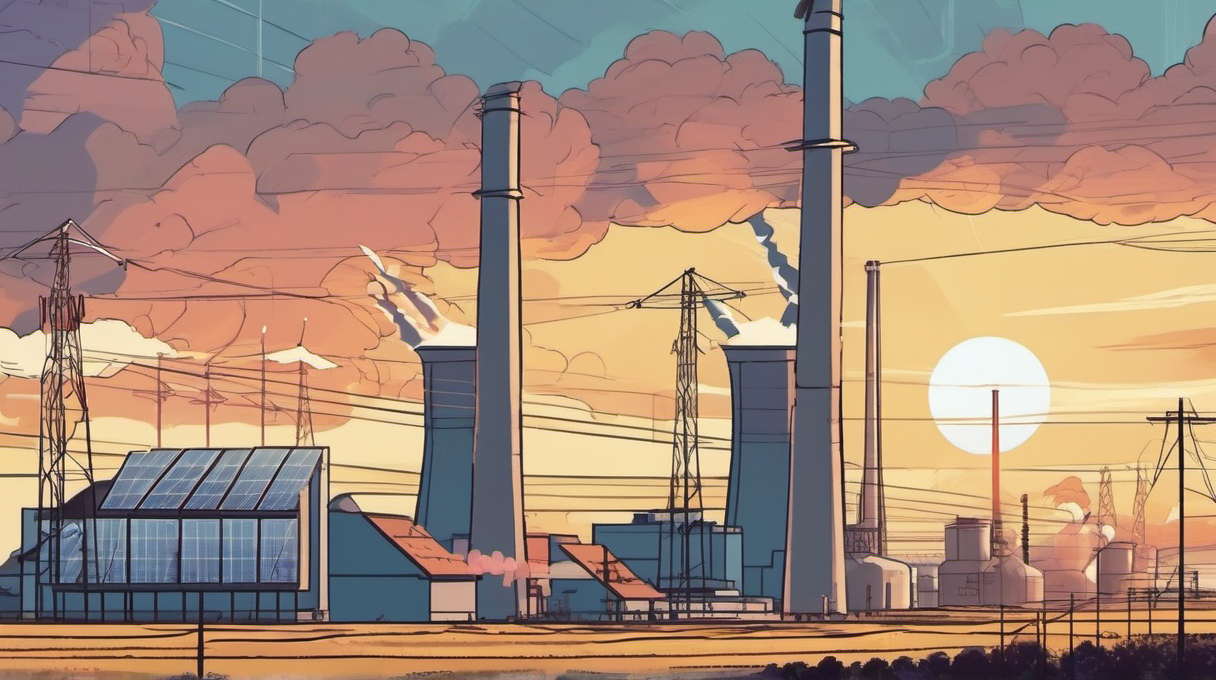
Every portfolio holds climate transition risk whether you manage it or not. The shift to a lower-carbon economy creates winners, losers, and a shrinking middle ground as policy, technology, and capital flows realign around decarbonization. Since the Inflation Reduction Act passed in 2022, companies have announced over $380 billion in new U.S. clean energy investments alone, while EU carbon prices climbed 30% year-over-year to roughly EUR 84/tonne by late 2025. The practical focus for investors is not predicting which climate bill passes next. It is mapping where your holdings sit on the transition spectrum and monitoring the policy signals that accelerate or delay the repricing.
What Transition Risk Actually Means (And Why Physical Risk Is the Wrong Focus)
Transition risk is the financial exposure that comes from the response to climate change, not from climate change itself. Storm damage, sea-level rise, and crop failures are physical risks. Transition risk comes from policy changes, technology disruptions, shifting consumer preferences, and capital reallocation triggered by the collective effort to reduce emissions.
A useful causal chain:
Climate policy (driver) → Carbon costs rise (mechanism) → High-emitters lose margin (impact) → Capital migrates to low-carbon alternatives (repricing) → Stranded assets for laggards (outcome)
The point is: you do not need to have an opinion on climate science to care about transition risk. You need to recognize that governments, regulators, and capital allocators are acting on it (whether you agree with the science or not), and those actions move prices.
Here is where the four dimensions of transition risk show up in portfolios:
| Risk Type | What It Looks Like | Portfolio Signal |
|---|---|---|
| Policy risk | Carbon taxes, emissions caps, fossil fuel restrictions | Rising operating costs for carbon-intensive holdings |
| Technology risk | Solar/wind cost declines, EV adoption curves | Obsolescence of incumbent business models |
| Market risk | ESG fund flows, corporate net-zero pledges, consumer shifts | Demand erosion and capital access tightening |
| Reputation risk | Stakeholder pressure, litigation, talent flight | Brand impairment and license-to-operate challenges |
The key insight: these four dimensions compound. A coal utility does not just face a carbon tax. It faces a carbon tax plus cheaper renewable alternatives plus ESG-driven capital flight plus recruitment challenges. Compound transition exposure is the real threat, not any single policy headline.
The Policy Toolkit (What Governments Actually Deploy)
Governments use a surprisingly small set of tools to drive decarbonization. Understanding these mechanisms tells you exactly how costs transmit to specific sectors.
Carbon Pricing: The Direct Cost Channel
The EU Emissions Trading System covers roughly 40% of EU greenhouse gas emissions today (expanding to 78% by 2027 with the addition of ETS2 for buildings and transport). EU carbon allowances traded between EUR 60 and EUR 80 per tonne through most of 2025, with Bloomberg NEF forecasting prices hitting EUR 149/tonne by 2030 and potentially EUR 400-630/tonne by 2050.
Here is the math that matters. At EUR 75/tonne, coal-fired power generation costs roughly EUR 75/MWh more than it otherwise would (coal emits approximately 1 tonne of CO2 per MWh). Gas-fired generation adds about EUR 30/MWh (at roughly 0.4 tonnes CO2/MWh). That differential alone makes coal uncompetitive against renewables in most European markets.
Why this matters: if you hold European utilities with significant coal exposure, the carbon price trajectory from EUR 75 today toward EUR 149 by 2030 represents a doubling of your holdings' carbon cost burden in under five years. That is not a tail risk. That is a baseline scenario.
Carbon Border Adjustment (The Trade Dimension)
The EU's Carbon Border Adjustment Mechanism entered its definitive phase on January 1, 2026, after a transitional reporting period from 2023 to 2025. CBAM covers imports of cement, iron and steel, aluminum, fertilizers, electricity, and hydrogen, requiring importers to purchase certificates matching the embedded carbon in their goods.
The practical impact: non-EU producers exporting to Europe now face the same carbon costs as domestic producers. If you hold emerging-market steel or aluminum companies with significant EU export revenue (and many do without realizing it), CBAM directly compresses their margins. The EU has already proposed extending CBAM to downstream products by 2028, widening the net further.
The point is: carbon costs are becoming borderless. The old playbook of relocating production to jurisdictions without carbon pricing (what economists call "carbon leakage") is closing. CBAM makes carbon cost a global competitiveness factor, not just a European one.
Clean Energy Subsidies: The IRA Effect
The U.S. Inflation Reduction Act deployed approximately $370 billion in climate provisions over ten years. Through Q1 2025, $321 billion has been invested in manufacturing, clean electricity, and industrial facilities, with $522 billion in outstanding commitments still in the pipeline. Q1 2025 alone saw $67.3 billion in clean energy investment, a 6.9% increase year-over-year.
Key IRA incentives still reshaping capital flows:
- Investment Tax Credit (ITC): 30% for solar, storage, and clean energy projects
- Production Tax Credit (PTC): $27.50/MWh for wind and solar electricity
- EV tax credits: Up to $7,500 per qualifying vehicle
- Clean hydrogen credits: Up to $3/kg for production
The lesson worth internalizing: subsidies do not just help clean energy companies. They accelerate the timeline for incumbents to become uncompetitive. Every dollar of IRA subsidy that makes solar cheaper also makes an unhedged natural gas utility less competitive. Think of subsidies as transition risk accelerants for the sectors they displace.
How to Assess Your Portfolio's Exposure (The Sector Map)
Not all sectors face transition risk equally, and not all companies within a sector face it the same way. Here is a practical exposure framework.
High Exposure (Requires Active Monitoring)
Oil and gas exploration and production carries the most concentrated stranded-asset risk. The IEA's net-zero pathway calls for no new oil and gas field development beyond projects already committed. Recent research shows that over 50% of global fossil fuel assets could strand by 2034 under a net-zero scenario, with upstream oil and gas alone facing $1.4 trillion in potential stranded value. And here is the disclosure gap that should worry you: analysis of 209 oil company financial reports found that only four highlighted stranded-asset risks (a staggering 98% non-disclosure rate).
Coal mining is the most exposed sector, period. Coal demand must decline 90%+ by 2050 under any credible net-zero pathway. Major coal companies have seen market capitalization declines exceeding 80% from 2010 peaks. If you still hold pure-play coal, you are not taking a contrarian position. You are betting against the disclosed plans of essentially every major economy.
Traditional automotive faces a hard deadline. The EU mandates 100% zero-emission new vehicles by 2035. California mirrors that timeline. Automakers without credible EV transition plans face the equivalent of a product-line extinction event (with a known date).
Moderate Exposure (Monitor and Adjust)
Utilities vary enormously by generation mix. A coal-heavy utility at EUR 75/tonne carbon faces generation cost increases of EUR 75/MWh on its coal fleet. A diversified utility with 50%+ renewables may actually benefit from transition dynamics through expanding its competitive advantage. Same sector label, completely different risk profile.
Heavy industry (cement, steel, aluminum) faces process emissions that cannot be solved by switching fuel sources alone. Decarbonization requires entirely new production technologies (hydrogen-based steel, carbon capture for cement). CBAM now prices this risk for any producer exporting to Europe.
Airlines have limited near-term alternatives for long-haul flight. Sustainable aviation fuel mandates create compliance costs, and viable electric or hydrogen aviation remains a decade or more away (making airlines a rare sector where transition risk is real but slow-moving).
The Company-Level Variation That Sector Labels Hide
Consider two European utilities in your portfolio:
Utility A (coal-heavy): 45% coal, 30% gas, 20% renewables. At EUR 75/tonne carbon, coal generation costs rise EUR 75/MWh. This utility faces plant retirement write-downs, massive capital expenditure for replacement capacity, and a shrinking competitive position as renewable competitors expand.
Utility B (diversified): 10% coal, 50% renewables, 25% gas, 15% nuclear. Carbon cost impact is a fraction of Utility A's. Capital expenditure goes toward expanding an already competitive renewable fleet. Transition dynamics work in its favor.
The point is: transition risk exposure within the same sector varies by 5-10x depending on generation mix and jurisdiction. Sector-level screening is a starting point (useful but insufficient). You need company-level carbon intensity data to understand actual exposure.
The Disclosure Landscape (Fragmented but Expanding)
Climate disclosure rules are diverging globally, creating both opportunity and confusion for investors.
In the EU: The Corporate Sustainability Reporting Directive was delayed by two years (the "Stop-the-Clock" mechanism), with first reporting now applying for FY 2027 for EU companies and FY 2028 for non-EU parents. Thresholds were raised substantially, reducing covered companies by roughly 85-90%. Still, the direction of travel is toward mandatory, auditable climate disclosure.
In the U.S.: The SEC's climate disclosure rule is effectively dead. In March 2025, the SEC voted to end its defense of the rule in court. State-level rules are filling the gap (New York now requires heavy emitters to disclose greenhouse gas emissions), but there is no federal mandate on the horizon.
Globally: Nearly 40 jurisdictions have adopted or are planning climate disclosure frameworks aligned with the ISSB's standards, making ISSB the emerging global baseline.
Why this matters: disclosure fragmentation means you cannot passively rely on standardized data to assess transition risk across a global portfolio. U.S. holdings may provide less climate data than European peers. You will need to actively seek company-level emissions data (from CDP reports, sustainability filings, and third-party providers) rather than waiting for regulators to deliver it.
Scenario Analysis (How the Professionals Stress-Test)
Institutional investors assess transition risk through scenario analysis, typically using IEA or NGFS pathways. You can apply the same logic at a simpler scale.
| Scenario | Temperature Outcome | Transition Pressure | Stranded Asset Risk |
|---|---|---|---|
| Stated Policies (STEPS) | ~2.5 degrees C | Gradual, policy-driven | Low near-term, rising after 2035 |
| Announced Pledges (APS) | ~1.7 degrees C | Moderate, accelerating post-2030 | Material for coal, moderate for oil |
| Net Zero 2050 (NZE) | 1.5 degrees C | Aggressive, immediate | High across fossil fuels, autos, heavy industry |
The real play is not picking the "right" scenario (nobody knows which path the world takes). It is stress-testing your portfolio against all three and asking: how much do I lose under the aggressive transition, and can I tolerate that?
A simple five-step stress test:
- Map your holdings to emissions-intensive sectors (energy, utilities, materials, transport)
- Apply carbon price assumptions from each scenario to estimate cost impact
- Assess revenue exposure to declining-demand products (thermal coal, ICE vehicles)
- Estimate capital expenditure required for each company's transition
- Calculate the implied valuation hit under each pathway
The critical point: the biggest risk is not any single scenario materializing. It is policy uncertainty itself, which creates a valuation discount on exposed companies that may or may not be warranted. If you can identify companies where the market overestimates transition risk (the policy uncertainty premium), you have found a genuine investment edge.
Policy Timeline Patterns (What Moves Markets and When)
Policy does not move markets in a single moment. It follows a predictable sequence that creates distinct trading windows:
Announcement effect: proposals trigger immediate repricing. The EU Fit for 55 package in 2021 moved automotive stocks before final legislation passed. You get punished for waiting until implementation.
Implementation lag: regulations typically include 3-10 year compliance timelines. The EU 2035 ICE vehicle ban gave automakers 13 years to adjust. This lag creates a window where transition plans separate winners from losers.
Enforcement risk: announced policies face delays, legal challenges, and political reversals. U.S. climate policy has shifted materially across the last three administrations. Do not assume announced equals enacted (especially in politically polarized jurisdictions).
Ratchet effect: climate targets rarely weaken over time. The EU's new 2040 target of 90% emissions reduction versus 1990 levels shows the trajectory. Even when implementation slows, each policy cycle sets a more ambitious floor than the last.
The point is: the transition does not proceed in a straight line, but it does proceed. Betting on permanent policy reversal has been a losing strategy over any 10-year window in every major economy.
Transition Risk Monitoring Checklist (Tiered)
Essential (high ROI, quarterly review)
These four actions prevent most of the damage from policy surprises:
- Track carbon prices in major markets (EU ETS, California cap-and-trade, UK ETS) and flag moves exceeding EUR 15/tonne in any quarter
- Review TCFD-aligned disclosures from your top 10 holdings during each earnings season (look for carbon intensity trends and transition capital expenditure)
- Check IEA World Energy Outlook updates annually for revised scenario assumptions
- Calculate your portfolio's weighted-average carbon intensity and compare to your benchmark
High-impact (event-driven workflow)
For deeper analysis when material events occur:
- Major climate legislation (new IRA-scale bills, EU Fit for 55 revisions, CBAM scope expansion)
- Carbon price breakouts (sustained moves above EUR 100/tonne in EU ETS fundamentally change sector economics)
- Industry transition announcements (ICE phase-out dates, refinery closures, major capex pivots)
- Court rulings on climate liability or regulatory authority (especially in the U.S. where litigation shapes policy)
Optional (for concentrated exposure portfolios)
If more than 15% of your portfolio sits in high-exposure sectors:
- Oil and gas: monitor reserve replacement rates and capital allocation split between hydrocarbons and low-carbon projects
- Utilities: track generation mix evolution quarterly and compare to jurisdictional decarbonization timelines
- Automotive: assess EV sales mix trends and progress toward emissions compliance in target markets
- Industrials: evaluate CBAM exposure for holdings with material EU export revenue
Detection Signals (How You Know Transition Risk Is Affecting Your Portfolio)
Your portfolio likely has material transition risk exposure if:
- More than 20% of holdings sit in high-exposure sectors (oil and gas, coal, traditional automotive OEMs) without credible transition plans
- Your portfolio-weighted carbon intensity exceeds your benchmark by 30% or more
- Major holdings have not disclosed TCFD-aligned scenario analysis (the 98% non-disclosure rate in oil and gas is not an outlier across all sectors, but it is the worst)
- You hold companies operating primarily in jurisdictions with aggressive decarbonization targets but without transition capital expenditure to match
- Your thesis for holding carbon-intensive names is "the transition will take longer than people think" (which may be true, but is not an investment thesis)
The test: can you articulate, for each of your top five carbon-intensive holdings, what their transition plan is and whether it aligns with their operating jurisdiction's policy timeline? If you cannot, you are carrying unquantified risk.
Your Next Step (Put This Into Practice)
Calculate the carbon intensity of your equity portfolio. For institutional investors, MSCI Carbon Portfolio Analytics and Sustainalytics provide direct data. For individual investors, check your top 10 holdings on CDP's free disclosure platform (cdp.net) and estimate portfolio-weighted emissions intensity.
How to do it:
- List your top 10 holdings by portfolio weight
- Look up each company's Scope 1 and 2 emissions intensity (tonnes CO2e per $1 million revenue) on CDP or company sustainability reports
- Weight by portfolio allocation to get your portfolio-level intensity
- Compare to a broad market benchmark (the MSCI ACWI carbon intensity is a reasonable starting point)
Interpretation:
- Below benchmark: Your portfolio is relatively positioned for transition. Monitor for changes.
- Within 30% of benchmark: Moderate exposure. Identify the specific holdings driving intensity and assess their transition plans.
- More than 30% above benchmark: Material exposure. Review whether you are being compensated for this risk (through higher expected returns) or simply carrying unpriced downside.
Action: If your portfolio carbon intensity exceeds your benchmark by more than 30%, pick the single highest-intensity holding and read its most recent sustainability report. Does it have a credible, funded transition plan? If not, that is the position to re-evaluate first.
Related Articles

Geopolitical Intelligence Sources to Monitor
Most investors encounter geopolitical risk the same way they encounter earnings misses — after the move has already happened. You read about a sanctions escalation on Bloomberg, check your portfolio, and discover your emerging market ETF dropped 3% before breakfast. The pattern repeats: conflict ...
Humanitarian Crises and Market Sentiment
When a humanitarian disaster dominates headlines, your portfolio feels it before the economic data catches up. Implied volatility typically surges 15-40% above baseline within the first week of a major crisis, even when the affected region represents less than 2% of global GDP (Baker, Bloom & Dav...

Political Risk Insurance Tools
Understand how political risk insurance protects investments abroad, covering expropriation, currency controls, and political violence.