Global Conflict Scenarios and Energy Markets
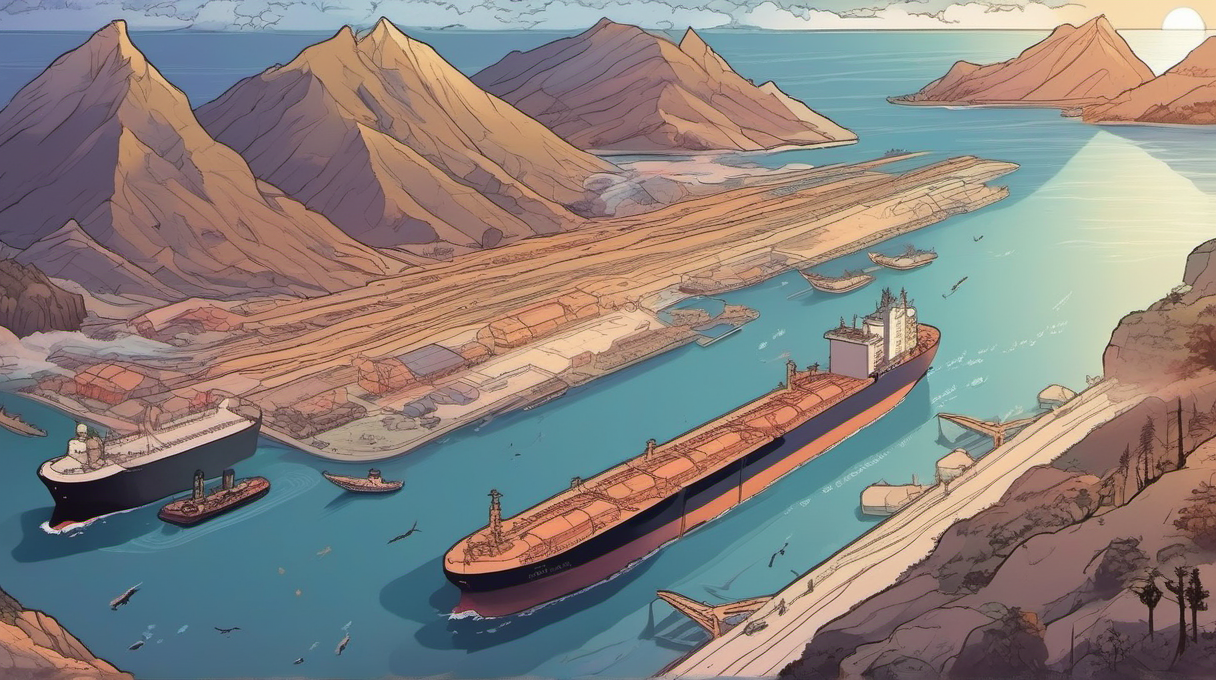
Energy markets are the fastest, most brutal transmission channel between geopolitical conflict and your portfolio. When missiles fly near oil-producing regions, crude prices can spike 20-30% within days--not weeks, not months. Brent surged from $97 to $128 in three weeks after Russia invaded Ukraine in February 2022. Yet when Israel and Iran exchanged aerial bombardments in June 2025, WTI climbed from $67 to $76 and then retreated to pre-conflict levels within days of a ceasefire. The signal worth remembering: not all conflict events produce the same price signature. Learning to distinguish a risk-premium spike from a genuine supply disruption is the skill that separates reactive panic from informed positioning.
Why Energy Is the Primary Conflict Transmission Channel
Conflict event --> Supply channel disruption --> Physical supply/demand shift --> Price adjustment --> Downstream cascade (chemicals, transport, manufacturing, inflation)
That chain operates through four distinct channels, and each one behaves differently in your portfolio:
| Channel | How It Works | Speed | Typical Duration |
|---|---|---|---|
| Production disruption | Physical damage to fields, facilities, workforce evacuation | Days | Weeks to months |
| Transit disruption | Blocked shipping lanes, pipeline sabotage, forced rerouting | Days to weeks | Weeks to months |
| Sanctions & trade restrictions | Legal prohibition on purchases or sales | Immediate (announcement) | Months to years |
| Risk premium adjustment | Market pricing future supply uncertainty | Immediate | Variable (sentiment-driven) |
The point is: production and transit disruptions remove actual barrels from the market. Sanctions may or may not reduce physical supply (depending on enforcement and the creativity of workarounds--Russia redirected millions of barrels to India and China after 2022 sanctions). Risk premium adjustments move prices even when not a single barrel has gone offline. You need to know which channel is driving the move before you react.
The Chokepoint Map (Where Conflicts Matter Most)
Global oil and gas flows funnel through a handful of geographic chokepoints. Conflict at these locations has outsized market impact--everything else is noise by comparison.
| Chokepoint | Daily Oil Flow | Share of Seaborne Trade | Key Risk Scenario |
|---|---|---|---|
| Strait of Hormuz | ~20 million bbl/day | ~31% | Iran-related tension, regional escalation |
| Strait of Malacca | ~16 million bbl/day | ~16% | Extremely low conflict probability |
| Bab el-Mandeb / Red Sea | ~8.8 million bbl/day (pre-crisis) | ~9% | Houthi attacks, Yemen conflict |
| Suez Canal / SUMED | ~9 million bbl/day | ~9% | Regional instability, vessel targeting |
| Turkish Straits | ~3 million bbl/day | ~3% | Russia-Turkey tensions |
The Strait of Hormuz is the single most consequential chokepoint on the planet. Roughly 20 million barrels per day of oil transit this 21-mile-wide passage between Iran and Oman. In late February 2026, after U.S. and Israeli strikes on Iran, reports emerged of Iran's Revolutionary Guards broadcasting radio warnings that "no ship is allowed to pass the Strait of Hormuz." Analysts immediately warned that a prolonged closure could push oil into triple digits and guarantee a global recession.
The lever you control isn't memorizing every chokepoint. It's understanding that three locations--Hormuz, Malacca, and Bab el-Mandeb--account for over 55% of seaborne oil trade. If conflict erupts anywhere else, your portfolio probably has time to breathe.
Four Scenarios That Actually Move Prices
Not all conflicts are created equal. Here's how to think about supply disruption magnitude--and what each scenario actually does to crude.
Scenario 1: Secondary producer disruption (the "manageable" shock)
Think Libya, Nigeria, or Ecuador civil unrest. Supply at risk: 0.5-1.5 million barrels per day. Price impact: +$5-15 per barrel (roughly 5-15% on an $80 base). These events generate headlines but rarely sustain elevated prices beyond a few weeks. OPEC spare capacity can absorb the gap, and markets know it.
Scenario 2: Major producer sanctions or export halt (the "structural" shift)
This is what happened with Russia in 2022 and Iran in 2012-2015. Supply at risk: 1-4 million barrels per day. Price impact: +$20-50 per barrel initially, with gradual normalization as trade reroutes. Russia's oil didn't disappear after Western sanctions--it found new buyers. China's imports of Russian crude rose to 2.4 million barrels per day by 2024, and India's surged from roughly 100,000 barrels per day pre-war to 2 million by 2023. The takeaway: sanctions shift trade flows more than they reduce total supply (at least initially).
Scenario 3: Chokepoint transit disruption (the "systemic" risk)
A Strait of Hormuz closure scenario puts up to 20 million barrels per day at temporary risk. Price impact: +$30-100 per barrel in the initial spike, with some stabilization as alternatives establish. Saudi Arabia and the UAE have bypass pipeline capacity of about 2.6 million barrels per day--a fraction of normal Hormuz traffic. This is the scenario that keeps energy strategists awake at night (and the one markets have consistently priced as improbable--until February 2026).
Scenario 4: Critical infrastructure attack (the "precision" shock)
The 2019 Abqaiq drone attack temporarily knocked out 5.7 million barrels per day of Saudi processing capacity--roughly 5% of global supply. Brent jumped 15% in a single day. But repairs took weeks, not months, and prices returned to pre-attack levels within a month. Why this matters: infrastructure attacks produce dramatic spikes but short durations, unless the damage is truly catastrophic.
The Red Sea Crisis (A Live Case Study in Transit Disruption)
The Houthi campaign against Red Sea shipping that began in late 2023 offers a textbook example of how transit disruption ripples through energy markets--and how those ripples sometimes surprise you.
Before Houthi attacks, roughly 8.8 million barrels per day passed through the Bab el-Mandeb Strait. By mid-2024, that number had dropped to 4 million barrels per day. The number of ships transiting the Suez Canal fell from 2,068 in November 2023 to roughly 877 by October 2024. By mid-2025, the crisis escalated further: 95% of container ships were rerouting around Africa, and container spot rates from Shanghai to Europe had surged 256% from pre-crisis levels.
Yet here's the counterintuitive part (and the part most investors miss): the oil price impact was modest. The Red Sea risk premium added roughly $2-4 per barrel to crude--far less than you'd expect from a disruption affecting 8-10% of global seaborne oil shipments. The reason? Oil tankers rerouted successfully. The Cape of Good Hope route adds 10-14 days of transit time and higher freight costs, but it doesn't reduce total supply. The barrels still arrive--just later and more expensively.
The practical point: transit disruptions that reroute supply behave very differently from disruptions that destroy supply. Rerouting raises costs. Destruction raises prices. You need to distinguish between the two within hours of a headline, not days.
Price Reaction Patterns (The Three-Phase Playbook)
Conflict-driven energy price moves follow a remarkably consistent pattern. Understanding this sequence prevents you from buying the spike or selling the recovery.
Phase 1: The Spike (Day 1-3) Prices jump 5-20% on initial headlines. Futures curves backwardate (near-term prices exceed deferred prices, signaling acute tightness). Volatility indices spike. This phase is driven by uncertainty and position covering, not physical supply assessment. You feel urgency to act (that's the risk premium talking, not fundamentals).
Phase 2: The Assessment (Day 3-14) The initial spike partially reverses if physical damage is limited. Markets assess actual supply impact versus pure risk premium. Alternative supply and rerouting options get evaluated. Prices settle at a "post-event baseline" that incorporates new information. This is where informed investors make their moves.
Phase 3: Normalization or New Equilibrium (Week 2+) If supply impact is temporary (Abqaiq 2019), prices return toward pre-event levels. If supply impact is structural (Russia-Ukraine 2022), prices establish a new, higher equilibrium. Demand destruction begins at elevated price levels (consumers drive less, factories cut shifts, airlines hedge forward).
| Event | Initial Spike | 1-Week Settlement | 1-Month Settlement |
|---|---|---|---|
| Abqaiq attack (2019) | +15% (1 day) | +5% from pre-event | Near pre-event |
| Russia-Ukraine onset (2022) | +32% (3 weeks) | +25% | +40% (sustained) |
| U.S.-Iran tensions (2020) | +4% (1 day) | Pre-event level | Pre-event level |
| Israel-Iran exchange (2025) | +13% (1 week) | Near pre-event | Pre-event level |
| Red Sea crisis (2023-24) | +$2-4 risk premium | Sustained premium | Sustained premium |
What the data confirms: initial spikes almost always overstate sustained price impact unless physical supply is genuinely offline. The June 2025 Iran-Israel exchange proved this emphatically--a $9 per barrel spike that evaporated within days of a ceasefire because no oil infrastructure was damaged.
Natural Gas (Why Geography Changes Everything)
Natural gas markets are more regionally segmented than oil markets, which means conflict impacts vary dramatically depending on where you sit.
The 2022 European gas crisis is the defining example. European TTF prices rose 400% from pre-conflict levels as Russian pipeline flows collapsed. Henry Hub prices in North America rose roughly 50%--painful but manageable. The reason: pipeline gas doesn't reroute the way tanker-borne oil does. When Gazprom turned off the taps (and Nord Stream was sabotaged), Europe couldn't simply order replacement molecules from a different pipeline.
Europe adapted, but it took time. European LNG imports increased by roughly 60% over 2022-2023, requiring massive infrastructure buildout (new regasification terminals, long-term LNG contracts, demand rationing). By 2024, Russian pipeline gas exports to Europe had fallen to below one-quarter of pre-war levels--a decline now widely regarded as structural, not cyclical.
Why this matters for your portfolio: if you hold European equities, your energy cost exposure is fundamentally different from a U.S.-focused portfolio. European industrial companies still face structurally higher energy input costs than their American competitors (a gap that compounds over years, not quarters).
The Market's Evolving Information Edge
One reason conflict-driven price spikes have been more contained in recent years (the 2024-2025 period being a prime example): markets now have better real-time intelligence than at any point in history. Tanker-tracking data, satellite surveillance of production facilities, export terminals, pipelines, and storage tanks--all available to traders within hours of any disruption.
When Israel struck Iran in June 2025, traders could verify within hours that no oil infrastructure had been damaged. That's why the spike was modest and short-lived. Compare this to the 1990 Iraqi invasion of Kuwait, when markets operated on rumors for days.
The point is: the "fog of war" premium in energy markets has shrunk (though it hasn't disappeared). Modern surveillance compresses the assessment phase, which means Phase 1 spikes are shorter and sharper, and the window for reactive trading is narrower than ever.
Detection Signals (How You Know You're Exposed)
You're carrying unmanaged conflict-energy risk if:
- Your portfolio holds European equities and you haven't assessed their energy cost sensitivity relative to pre-2022 baselines
- You can't name the three most important energy chokepoints or estimate their daily flows (even roughly)
- Your energy sector allocation doesn't reflect a conscious view on geopolitical risk (it's just whatever the index gives you)
- You don't know whether your largest holdings have operating exposure in conflict-prone regions
- Your response to every energy price spike is the same: reactive position-trimming with no pre-planned threshold
- You treat all conflict headlines as equal threats (ignoring the chokepoint hierarchy)
Conflict-Energy Risk Monitoring Checklist (Tiered)
Essential (high ROI)
These four items prevent 80% of surprise exposure:
- Know the major chokepoints and approximate daily flows (Hormuz ~20M bbl/day, Bab el-Mandeb ~9M, Malacca ~16M)
- Track Brent crude as your baseline geopolitical energy barometer--set alerts for >5% daily moves
- Understand your portfolio's energy sector weight and what it implies about your conflict sensitivity
- Check futures curve shape weekly (backwardation = near-term supply stress, contango = ample supply)
High-impact (workflow and automation)
For investors who want systematic early warning:
- Monitor TTF European gas prices if you hold European equities (the spread to Henry Hub signals regional stress)
- Track IEA and EIA monthly reports for supply/demand balance shifts
- Watch tanker freight rates (VLCC spot rates spike when rerouting begins)
- Set a backwardation threshold alert: if 1-month vs. 6-month spread exceeds $3/barrel, reassess exposure
Advanced (for active managers and energy-sensitive businesses)
If you run concentrated positions or manage operating cost exposure:
- Monitor real-time tanker tracking data for flow changes at key chokepoints
- Track refining margin differentials for downstream impact signals
- Model portfolio sensitivity to each of the four disruption scenarios above
- Consider tail-risk options strategies on energy ETFs (defined-risk protection for Scenario 3 events)
Your Next Step (Put This Into Practice)
Open your portfolio and calculate your total energy exposure--both direct (energy sector equities, commodity ETFs, energy MLPs) and indirect (airlines, chemicals, industrials, and any company where energy is more than 10% of input costs). For your three most energy-sensitive holdings, model the impact of a 30% oil price spike on their operating margins.
How to do it:
- Pull each company's energy cost as a percentage of revenue (check the 10-K's cost-of-goods-sold breakdown or the most recent earnings call transcript)
- Apply a 30% increase to that cost line and recalculate operating margin
- Compare the margin impact to the company's current P/E multiple--companies with thin margins and high energy sensitivity will see outsized earnings compression
Interpretation:
- If a 30% oil spike reduces operating margin by less than 1 percentage point: low conflict sensitivity (no action needed)
- If the reduction is 1-3 percentage points: moderate sensitivity (worth monitoring during active conflict periods)
- If the reduction exceeds 3 percentage points: high sensitivity (consider whether your position size reflects this risk)
Action: If any holding shows high sensitivity and you don't have a pre-planned response for a Scenario 2 or 3 event, write one now--before the next headline forces a decision under pressure.
Related Articles

Pandemic Preparedness and Market Response
The next pandemic won't surprise markets the way COVID-19 did -- but it will still punish unprepared portfolios. The S&P 500's 34% crash in 23 trading days (February 19 to March 23, 2020) followed by a full recovery in just 148 trading days taught investors a brutal lesson: pandemic selloffs comp...

Travel and Mobility Restrictions on Business
Travel and mobility restrictions hit business revenues faster than almost any other geopolitical channel. When borders close, visa programs freeze, or quarantine mandates kick in, the transmission to earnings is immediate and measurable — airlines lost $370 billion in passenger revenue during 202...

Capital Controls and Repatriation Rules
Learn how capital controls affect emerging market investments, common restriction types, repatriation timing, and due diligence for EM exposure.