Sanctions and Export Controls Impact
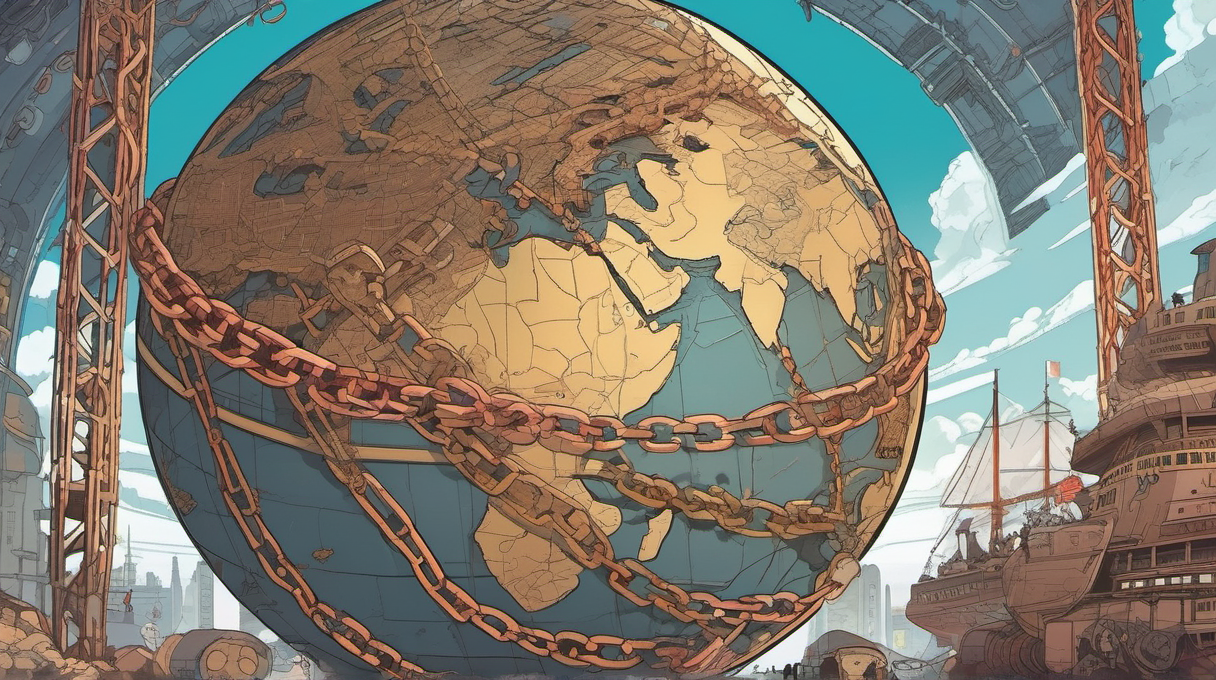
Sanctions and export controls have shifted from abstract foreign policy into the single fastest-moving risk factor in global equity portfolios. The OFAC Specially Designated Nationals list now exceeds 12,000 entries across more than 35 active U.S. sanctions programs, and OFAC enforcement penalties surged to over $265 million in 2025 alone (with a single action against GVA Capital Ltd. accounting for $216 million of that total). If you own international equities, sector ETFs, or any company with a global supply chain, sanctions risk is already in your portfolio. The real play isn't avoiding international exposure entirely. It's mapping your holdings to sanctions-sensitive regions and building a monitoring workflow before the next designation hits.
How Sanctions Actually Work (The Mechanisms That Move Markets)
You need to understand four distinct sanctions types, because each one hits your portfolio differently.
| Type | How It Works | Who Gets Hurt | Recent Example |
|---|---|---|---|
| Comprehensive | Blocks all transactions with target country | Any company with exposure | Cuba, North Korea, Iran |
| Sectoral | Restricts specific industries | Targeted sector players | Russian energy sanctions (2022-2025) |
| List-based (SDN) | Freezes assets of named entities | Direct counterparties | Individual oligarchs, designated companies |
| Secondary | Penalizes non-U.S. parties for dealings with targets | Foreign companies choosing dollar access | Iran secondary sanctions |
The signal worth remembering: secondary sanctions are the mechanism that makes U.S. sanctions globally binding. When the U.S. threatens to cut off non-U.S. entities from the dollar system, foreign banks and corporations almost always comply. In 2018, European companies including Total, Siemens, and Maersk exited Iran despite EU opposition to U.S. secondary sanctions. They chose dollar access over Iranian revenue (and it wasn't even close).
Export controls operate through a separate legal channel but create similar portfolio effects. The Bureau of Industry and Security (BIS) restricts transfers of dual-use technologies, advanced semiconductors, chip manufacturing equipment, and specific software. In December 2024, BIS added 24 types of semiconductor manufacturing equipment and 140 Chinese entities to the Entity List in a single action. That's not a gradual tightening. That's a supply chain earthquake announced on a Friday afternoon.
The point is: sanctions and export controls are two separate legal regimes that compound each other. A company can face OFAC restrictions on who it transacts with and BIS restrictions on what it can sell, simultaneously.
Where the Money Actually Disappears (Direct and Indirect Impact Channels)
Here's the chain reaction that sanctions trigger in your portfolio:
Sanctions announcement --> Direct entity impact --> Supply chain propagation --> Secondary exposure --> Sector repricing
When Russia was sanctioned in 2022, the direct impact was obvious (Russian equities became untradeable for Western investors). But the indirect impacts caught most investors off guard: European energy utilities lost access to cheap gas, U.S. chemical companies dependent on Russian feedstocks scrambled for alternatives, and global grain traders with Ukrainian and Russian exposure saw contracts become unenforceable.
Direct impact channels (the ones you see coming):
- Revenue loss: Companies lose access to sanctioned markets overnight
- Asset freeze: Holdings in sanctioned jurisdictions become inaccessible (sometimes permanently)
- Delisting: ADRs get halted, index providers remove names, liquidity vanishes
- Transaction blocking: Payments to and from sanctioned entities stop flowing
Indirect impact channels (the ones that actually hurt more):
- Supply chain disruption: Components sourced from sanctioned regions become unavailable, forcing expensive alternatives
- Banking access erosion: Companies with even tangential sanctions exposure face difficulty maintaining correspondent banking relationships (banks would rather lose a client than risk an OFAC action)
- Compliance cost escalation: Enhanced due diligence requirements increase operating expenses by $2-5 million annually for mid-cap companies with international operations
- Insurance and financing gaps: Lenders and insurers pull back from sanctions-adjacent transactions
Why this matters: the indirect channels typically represent 3-5x the portfolio impact of direct exposure. You might own zero Russian equities and still take a meaningful hit through supply chain and financing propagation.
The Russia Sanctions Scorecard (What Three Years of Data Actually Shows)
Russia represents the largest natural experiment in modern sanctions history, and the results are more nuanced than either side claims.
Russia earned $235 billion from oil and gas exports in 2024, only 3.7% less than in 2021 (before the invasion). The price cap mechanism largely failed because Russia built a shadow fleet of tankers that operates outside Western jurisdiction. Oil export volumes remained remarkably stable as shipments rerouted from Europe to China and India.
But the cumulative pressure is mounting. Russian GDP growth forecasts for 2026 have dropped to 0.6-0.9%, down from over 4% in 2023-2024. In January 2026, Russian state oil and gas tax revenues fell to 393 billion rubles, down from 1.12 trillion rubles in January 2025 (a 65% year-over-year collapse). The Trump administration's sanctions on Rosneft and Lukoil in late 2025, combined with the EU's ban on fuel refined from Russian crude, appear to be closing the loopholes that kept revenues flowing.
What the data confirms: sanctions work on a lag, not a switch. The initial market reaction (panic selling of anything Russia-adjacent) was overdone. The long-term economic damage (supply chain restructuring, technology degradation, brain drain) was underdone. If you're investing around sanctions, think in years, not weeks.
Sector Exposure (Where Your Portfolio Is Most Vulnerable)
Different sectors face radically different sanctions risk profiles. Here's how to think about your holdings:
| Sector | Primary Risk | Why It Matters for Your Portfolio |
|---|---|---|
| Semiconductors | Technology controls, Entity List additions | NVIDIA took a $5.5 billion hit from tightened China export rules in 2025 |
| Energy | Geographic concentration, shadow fleet dynamics | European utilities repriced 30-40% on Russia exposure |
| Financials | Transaction facilitation, correspondent banking | Banks face up to $330,947 per violation in civil penalties |
| Defense/Aerospace | Export licenses, dual-use technology transfer | Revenue concentration in allied nations only |
| Automotive | Rare earth sourcing, EV battery supply chains | China controls 60%+ of critical mineral processing |
The semiconductor case study deserves special attention. Following the October 2022 export controls on China, NVIDIA lost access to roughly $400 million in quarterly China data center revenue for restricted chips. By 2025, cumulative lost revenue exceeded $5.5 billion. Applied Materials reported $2.5 billion in annual China revenue at risk. ASML (a Dutch company that faced U.S. pressure to restrict lithography equipment sales) saw an estimated $2 billion in annual revenue threatened.
Then the policy whipsawed. In August 2025, the U.S. government reversed course and allowed NVIDIA and AMD to sell certain advanced AI chips to China under licensing conditions (with the government taking a revenue share). NVIDIA's CEO announced the company would stop including China in its forecasts entirely, given the regulatory unpredictability.
The point is: export control policy is now a quarterly earnings variable for major tech companies. If you own semiconductor ETFs without tracking BIS announcements, you're flying blind on a material revenue driver.
What OFAC Enforcement Means for Your Portfolio (The Compliance Reality)
OFAC isn't just going after sanctioned entities. It's increasingly targeting advisers, intermediaries, and gatekeepers who facilitate access to sanctioned assets or markets. In 2025, eight of 14 enforcement actions related to Russia sanctions violations, and the targets included investment advisers, real estate managers, and attorneys.
The numbers tell the story: U.S. financial regulators issued $4.6 billion in total penalties worldwide in 2024, with bank penalties surging 522% to $3.65 billion. Transaction monitoring violations alone exceeded $3.3 billion (a 100% year-over-year increase). OFAC-specific penalties in 2025 topped $265 million, anchored by the $216 million GVA Capital enforcement action against a venture capital firm that knowingly managed investments for a sanctioned Russian oligarch.
Investor compliance exposure points:
| Where You're Exposed | What Can Happen | What To Do |
|---|---|---|
| Direct SDN holdings | Assets frozen, trading halted | Screen holdings against OFAC list quarterly |
| Fund holdings | ETFs may inadvertently hold restricted securities | Review fund compliance disclosures |
| Non-U.S. companies | Secondary sanctions risk if they maintain sanctioned relationships | Check geographic revenue breakdowns |
| Custodian/broker risk | Your broker's compliance failure becomes your problem | Verify your custodian's sanctions screening process |
The counter-move: you don't need to become a sanctions lawyer. You need to know which of your holdings have material exposure to sanctions-sensitive regions and whether those companies have disclosed their compliance posture in regulatory filings.
Early Warning Signals (How to See Sanctions Coming)
Sanctions rarely arrive without warning. The legislative process and diplomatic signaling typically provide weeks to months of lead time for investors monitoring the right channels.
The signal chain that precedes most sanctions:
Congressional hearings --> Executive order directing review --> Allied government coordination --> Formal designation
Track these early warning indicators:
- Congressional hearing calendars (sanctions legislation gets previewed here, often months before passage)
- Executive orders directing sanctions review (these almost always precede formal designation)
- Allied government coordination announcements (when the U.S., EU, and UK announce joint action, implementation follows within days)
- Think tank publications from CSIS, Atlantic Council, and Brookings (these organizations often have advance insight into policy direction)
- Legal firm alerts from sanctions-focused practices (they publish rapid analysis because their corporate clients need it)
Why this matters: the biggest portfolio losses from sanctions come from surprise, not from the sanctions themselves. The Russia sanctions of 2022 were telegraphed for months through troop movements, diplomatic failure, and increasingly specific legislative proposals. Investors who tracked the signals had time to reduce exposure. Those who waited for the formal announcement were selling into the crash.
Detection Signals (You're Exposed If...)
You're carrying unrecognized sanctions risk if:
- Your portfolio holds ADRs or foreign securities and you've never screened against the OFAC SDN list (it's free at Treasury.gov)
- You can't name the top three countries by revenue for your five largest equity holdings
- You own semiconductor, energy, or financial sector ETFs without tracking BIS or OFAC announcements
- Your international holdings include companies with significant Russia, China, or Iran exposure and you haven't reviewed their sanctions risk factor disclosures
- You assume your broker handles all sanctions compliance (they screen transactions, but they don't manage your portfolio-level exposure)
The test: pull up your largest international holding right now. Can you identify what percentage of its revenue comes from sanctions-sensitive regions? If not, you have a gap.
Sanctions Risk Monitoring Checklist (Tiered)
Essential (high ROI)
These four steps prevent 80% of sanctions-related portfolio surprises:
- Screen current holdings against the OFAC SDN list (free search at sanctionssearch.ofac.treas.gov)
- Review geographic revenue disclosure for your top 10 equity holdings (10-K filings, annual reports)
- Identify which sectors in your portfolio carry elevated sanctions sensitivity (semiconductors, energy, financials, defense)
- Set up alerts for OFAC press releases and BIS Entity List additions (both publish via Federal Register)
High-impact (workflow and automation)
For investors who want systematic sanctions monitoring:
- Track pending sanctions legislation on Congress.gov (filter by "sanctions" in bill text)
- Monitor earnings call transcripts for sanctions risk factor language changes quarter over quarter
- Review ETF prospectuses for sanctions compliance policies (especially for emerging market and international funds)
- Assess non-U.S. holdings for secondary sanctions exposure by mapping their disclosed customer and supplier geographies
Advanced (for active managers and concentrated portfolios)
If you run concentrated positions in sanctions-sensitive sectors:
- Build a watchlist of companies with >10% revenue from China semiconductor sales and track BIS Entity List changes weekly
- Develop scenario playbooks for escalation in key programs (Russia, China, Iran) with pre-defined position adjustment triggers
- Monitor European and Asian company statements on sanctions compliance posture (non-compliance signals secondary sanctions risk)
- Track shadow fleet vessel movements and commodity routing changes as leading indicators of sanctions effectiveness
Your Next Step (Put This Into Practice)
Pull your portfolio's geographic revenue exposure this week. Most brokerage platforms and fund managers provide country-level breakdowns. If yours doesn't, check your top five holdings' most recent 10-K filings (search for "geographic" or "revenue by region" in the document).
How to do it:
- List your five largest equity positions (or your three largest ETFs)
- For each, find the percentage of revenue from Russia, China, Iran, and other countries with active OFAC programs
- Flag any holding where sanctions-sensitive revenue exceeds 15% of total revenue
Interpretation:
- Below 5% exposure: Low immediate risk (but monitor for supply chain propagation)
- 5-15% exposure: Moderate risk (review the company's sanctions risk factor disclosure in their latest 10-K)
- Above 15% exposure: Elevated risk (understand the specific sanctions program, track policy developments actively, and have an exit plan)
Action: If any holding exceeds 15% sanctions-sensitive revenue and you can't articulate the company's compliance strategy, either research it thoroughly or reduce the position. The worst outcome isn't sanctions themselves. It's sanctions you didn't see coming in a position you sized without accounting for the risk.
Related Articles
Mapping Geopolitical Risk to Asset Classes
Geopolitical risks transmit to different asset classes through distinct channels. Understanding these transmission mechanisms helps investors map portfolio exposures and prepare for scenario-specific responses.
Global Conflict Scenarios and Energy Markets
Energy markets are the fastest, most brutal transmission channel between geopolitical conflict and your portfolio. When missiles fly near oil-producing regions, crude prices can spike 20-30% within days--not weeks, not months. Brent surged from $97 to $128 in three weeks after Russia invaded Ukra...
Dollar Index Composition and Signals
Understand the DXY dollar index structure, currency weights, historical ranges, and what index movements signal for global markets and portfolio positioning.