Tracking WTO and Geopolitical Developments
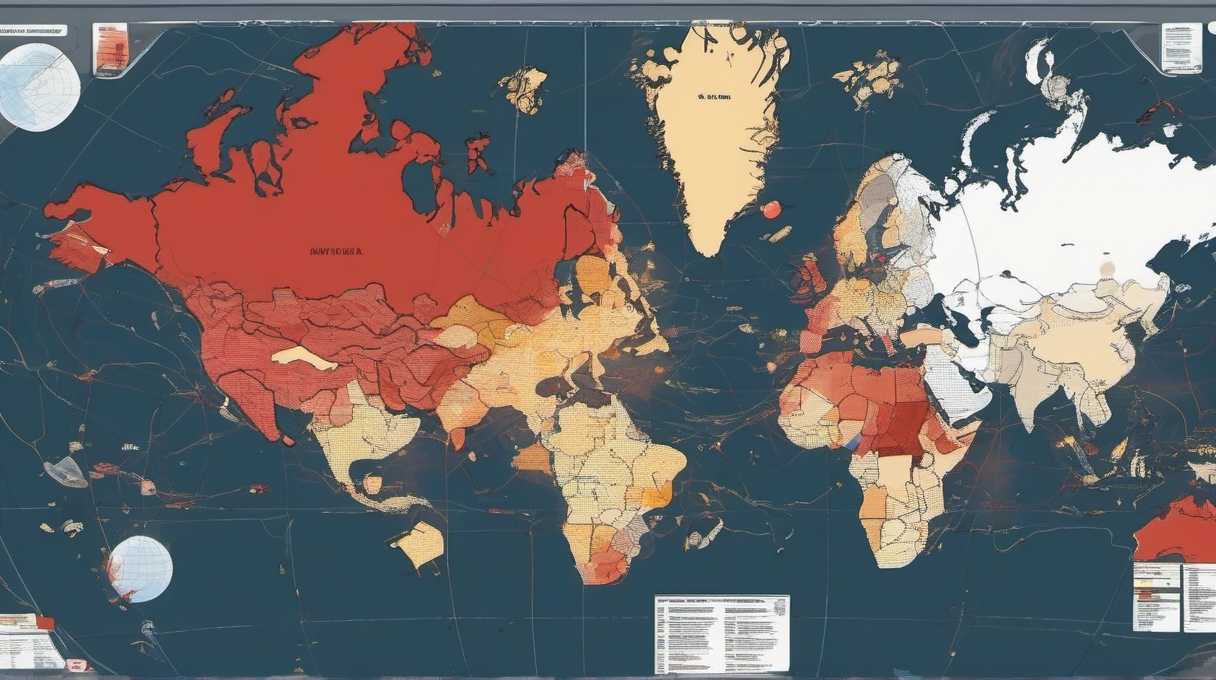
Why Trade-Policy Monitoring Is a Portfolio Discipline, Not a News Habit
Trade policy is now a first-order driver of country-specific equity returns, not the slow-moving background variable it was for thirty years. Since January 2025, Section 301 escalations on China, expanded Section 232 coverage on metals, and the IRA/CHIPS subsidy fight with the EU have repriced supply-chain resilience across industrials, semiconductors, autos, and consumer hardware — sectors where a single Federal Register notice can move a name 8–15% intraday. The lever you control: build a tariff-exposure map for every position before the next escalation, not after.
The point is — when the rules-based order fragments, country-of-origin and HS-code exposure become as load-bearing as duration or beta. The WTO still matters, but for a different reason now: it tells you which measures will not be quietly walked back, because the dispute mechanism that used to force compliance is broken.
The 2025–2026 Trade Order: What Actually Changed
Three structural shifts have hardened since this article was last current, and every one of them is investor-relevant.
1. The WTO Appellate Body Is Still Paralyzed (And Now It's Permanent-Adjacent)
The Appellate Body has been non-functional since December 2019, when the US (under Trump-1) blocked judge appointments and the Biden administration declined to unblock them. As of early 2026, the WTO has logged 640+ disputes since 1995, and any case appealed since late 2019 sits in what members politely call "the void" — a permanent legal limbo where panel rulings can be appealed into nothing.
The workaround is the Multi-Party Interim Appeal Arbitration Arrangement (MPIA), which now has 26+ members including the EU, China, Canada, Australia, and the UK. The US is not a member and will not be. Why this matters: for any dispute involving the US as respondent, a losing panel ruling is effectively unenforceable through WTO channels. Retaliation happens unilaterally or through bilateral pressure, not Geneva.
The durable lesson: stop treating WTO panel timelines as binding. Treat them as signaling devices for which trade measures will face political headwind, not as deadlines for compliance.
2. Section 301 Tariffs on China Have Compounded, Not Receded
Biden retained nearly all Trump-1 Section 301 tariffs through his term and selectively raised them in 2024 on EVs (to 100%), lithium-ion batteries, semiconductors, solar cells, and critical minerals. Trump-2 has escalated further in 2025, with broad-based tariff increases and a tightening of the exclusion-process aperture (fewer carve-outs, shorter review windows).
The investor read: the bipartisan consensus on China decoupling is now structural, not cyclical. Any thesis that prices in tariff rollback as a base case is mispriced. Companies with deep China-component dependence in consumer electronics, autos, and industrial machinery are repricing supply chains — and the capex required is being absorbed in margin, not passed cleanly to consumers.
3. Section 232 Has Expanded Beyond Steel and Aluminum
Section 232 (national-security tariffs) originally covered steel and aluminum at 25%/10% from 2018. Under Trump-2, the scope and rates have broadened to additional metals and downstream products, with renewed leverage over derivative goods and country-specific exemptions used as bilateral negotiating chips. Add the IRA/CHIPS Act subsidy regime — which the EU has formally challenged as discriminatory — and you have a transatlantic industrial-policy dispute that's quietly the most important trade story of 2025.
Meanwhile, CPTPP added the UK in late 2024, RCEP continues to deepen intra-Asia trade flows, and the US sits outside both. The map of who trades freely with whom is being redrawn without Washington at the table.
What to Monitor (And Where the Signal Actually Lives)
The structural framework still works. The sources have just gotten more important.
Primary Sources (Daily Signal)
| Source | What It Tells You | Why It Matters |
|---|---|---|
| USTR Federal Register notices | New Section 301/232 actions, exclusion grants/denials, investigation initiations | Most market-moving single source; published before equity-research desks digest |
| Federal Register tariff actions (Treasury/CBP) | HS-code-level rate changes, effective dates | Tells you exactly which products and entry dates are affected |
| WTO Dispute Settlement Gateway | Filings, panel composition, ruling dates | Signals which measures will face years of pressure vs. quiet acceptance |
| Commerce BIS entity list updates | Export-control additions, technology-transfer restrictions | Leading indicator for semiconductor, AI, and aerospace supply chains |
| Treasury OFAC sanctions updates | New designations, general-license changes | Direct revenue-exposure risk for any holding with affected counterparties |
What to Track Inside Each Source
The framework is HS-code-level discipline, not headline-level reaction:
- HS-code-level tariff changes — The 6- and 10-digit codes determine which specific products get hit. A "tariff on semiconductors" can mean three HS codes or thirty. Read the annex, not the press release.
- Tariff exclusion processes — USTR's exclusion windows are the only legal off-ramp for affected importers. Track which categories are accepting petitions and which are closed; the closure itself is a signal.
- Section 301 review cycles — Statutory four-year reviews trigger formal reassessment. The 2024 review cycle locked in most existing tariffs; the next inflection is the 2028 review, but interim modifications happen continuously.
- Country-specific exclusions — Section 232 metal tariffs apply differently to allies vs. China vs. Mexico; the exclusion grid changes with bilateral negotiations.
The point is: a tariff headline is a starting question. The HS code, exclusion status, and effective date are the answer.
Detection Signals: You're Underweight Trade-Policy Risk If…
You're likely under-monitoring trade-policy exposure if you catch yourself thinking or saying:
- "Tariffs are mostly priced in" — they aren't, because the next escalation hasn't happened yet, and the market consistently underprices the speed of executive action.
- "This company is domestic, so trade doesn't matter" — check the bill-of-materials; a US-listed company can have 60% China-sourced components.
- "The WTO will sort this out" — it won't. The appellate void is a structural feature, not a temporary outage.
- "I'll react when it hits the news" — by the time Reuters publishes, the move is mostly done; the signal is in the Federal Register notice three days earlier.
- "USMCA/CPTPP/RCEP membership doesn't really change valuations" — it changes where future capacity gets built, which compounds into 5–10 year earnings paths.
If two or more of these sound familiar, you're treating trade policy as macro background. It's now sector- and security-specific.
The Tiered Monitoring Checklist
Essential (the four items that prevent 80% of surprises)
- USTR Federal Register email subscription (free, daily) — every Section 301/232 action lands here first
- Tariff-exposure map for every position — revenue origin + COGS origin + competitor origin, updated quarterly
- OFAC sanctions email alerts — auto-screen holdings against new designations
- HS-code list for top-10 holdings — so when a tariff annex drops, you can match in minutes
High-Impact (workflow + automation)
- WTO Dispute Settlement Gateway weekly scan for cases involving major holdings' jurisdictions
- Commerce BIS entity-list alerts (critical if you hold semiconductor, AI, or aerospace names)
- USITC trade-remedy investigation tracker for active anti-dumping/countervailing-duty cases
- Quarterly review of tariff exclusion-petition outcomes for affected positions
Optional (for concentrated international or thematic books)
- Peterson Institute trade-policy monitor (free, high-quality analytical)
- Inside U.S. Trade or World Trade Online subscription (paid, granular)
- Country-specific trade ministries (EU DG Trade, METI, MOFCOM) for non-US measures
The Test: Is Your Portfolio Actually Mapped?
Pick one position. Can you answer these four questions in under sixty seconds, without opening a 10-K?
- What percent of revenue comes from countries currently subject to active US tariff measures (or vice versa)?
- What percent of COGS is sourced from those same countries?
- Which HS codes dominate the company's import bill, and are any on active 301/232 lists?
- What's the substitution path — and what's the capex and timeline to execute it?
If you can't answer in sixty seconds for your top ten holdings, you don't have a tariff-exposure map. You have a watchlist with a story attached.
Your Next Step
Today, pick your single largest international or supply-chain-exposed holding and build the four-line tariff card:
- Revenue origin mix (top 3 countries, percent each) — pull from segment reporting in the latest 10-K
- COGS / supplier origin mix (top 3 countries, percent each) — pull from supply-chain disclosure or industry-standard estimates
- Active tariff exposure — list any Section 301, 232, or country-specific measures touching those origins, with HS-code references where you can find them
- Substitution status — has the company disclosed reshoring, nearshoring, or supplier diversification? Capex committed?
Do this for one name today. Add one name per week. In ten weeks, you have a tariff-exposure book for your core portfolio — built before the next Federal Register notice forces a rushed read.
Trade policy moves slowly until it moves quickly. The discipline is having done the mapping before the market needs you to have done it.
Sources: WTO Dispute Settlement Body annual reports (1995–2025); USTR Section 301 Four-Year Review Report (2024); US Federal Register, Section 232 proclamations (2018–2025); WTO MPIA member list (current); CPTPP accession announcements (2024); Peterson Institute for International Economics, US-China Trade War Tariffs database.
Related Articles
Using Trade Data Dashboards
Learn how to build and use trade data dashboards to monitor imports, exports, and global trade flows that affect your investment portfolio.
Nearshoring and Manufacturing Relocation
Explore how nearshoring is reshaping global supply chains, benefiting Mexico and Southeast Asia, and affecting key US industry sectors.
Carry Trade Mechanics and Risks
How currency carry trades work, the math behind borrowing in low-yield currencies to invest in high-yield ones, and why these strategies can unwind violently.