Regional Fed Surveys (Empire, Philly, etc.)
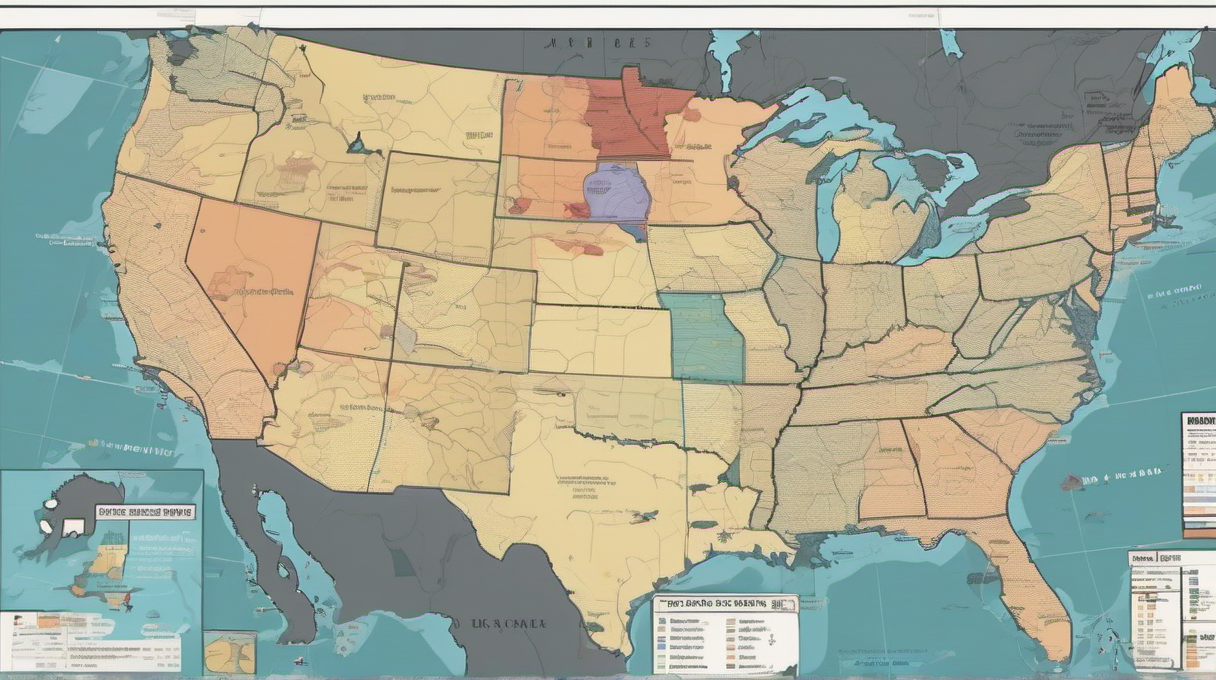
Five Federal Reserve district banks publish monthly manufacturing surveys that hit trading screens days before the national ISM Manufacturing PMI. For macro-focused investors, these regional readings represent one of the few genuinely leading indicators available in real time. The Empire State and Philadelphia Fed surveys alone explain roughly 60-70% of month-to-month ISM variation (based on historical regression analysis). The practical value isn't treating any single survey as gospel. It's combining early regional signals into a weighted forecast that positions you ahead of the crowd waiting for ISM.
TL;DR: Regional Fed surveys (especially Empire State and Philly Fed) release mid-month and serve as leading indicators for the national ISM Manufacturing PMI. Learning to read and weight them gives you an informational edge on manufacturing trends, inflation pressures, and employment shifts before the headline data drops.
What Regional Fed Surveys Actually Measure (And Why They Matter)
Five Federal Reserve banks survey manufacturers in their districts each month, asking about current business conditions and expectations six months ahead. Each survey produces a diffusion index — a net reading that tells you whether conditions are expanding or contracting across the district.
The diffusion index calculation:
Index = (% reporting increase) − (% reporting decrease)
A reading of +15 means 15 percentage points more firms reported improvement than reported deterioration. A reading of -10 means deterioration dominated. Zero is the dividing line — not growth, not contraction, just no change on net.
Here are the five surveys and their release timing:
| Survey | Fed District | Typical Release | Industrial Focus |
|---|---|---|---|
| Empire State (NY Fed) | New York | Mid-month (first regional) | Diverse manufacturing |
| Philadelphia Fed | Philadelphia | Mid-month (shortly after Empire) | Chemicals, machinery, industrial |
| Richmond Fed | Richmond | Late month | Aerospace, furniture, defense |
| Kansas City Fed | Kansas City | Late month | Food processing, machinery, agriculture |
| Dallas Fed | Dallas | Late month | Energy, technology |
The point is: Empire State and Philly Fed release before ISM (which drops on the first business day of the following month). That timing gap is your informational edge. The late-month surveys (Richmond, Kansas City, Dallas) still add value, but by the time they print, the market has already digested the early signals.
Each survey asks manufacturers a common set of questions:
- New orders: Higher, same, or lower than last month?
- Shipments: Higher, same, or lower?
- Employment: Increasing, stable, or decreasing?
- Prices paid and prices received: Higher, same, or lower?
- Future expectations: What do you expect six months from now?
These components matter individually (prices paid signals inflation; employment signals payrolls), but the headline general business conditions index is what moves markets on release day.
Empire State Manufacturing Index (The First Signal Each Month)
The NY Fed's Empire State survey is the most watched regional survey because it releases first — typically around the 15th of each month. That makes it the opening act for the month's manufacturing data cycle.
Interpretation thresholds:
| Reading | What It Signals |
|---|---|
| Above +20 | Strong expansion — manufacturing is firing |
| +5 to +20 | Moderate expansion — steady growth |
| -5 to +5 | Roughly flat — no clear direction |
| -5 to -20 | Moderate contraction — watch for follow-through |
| Below -20 | Significant contraction — broad manufacturing weakness |
Why this matters: Empire State has a ~0.5 correlation with ISM on its own. That's not strong enough to trade blindly, but it's strong enough to shift your ISM forecast meaningfully when the reading surprises.
The Empire survey covers a diverse manufacturing base (New York state includes everything from food processing to electronics), which makes it a reasonable proxy for national conditions — though the sample size is smaller than ISM's national panel, so individual readings can be noisy.
Philadelphia Fed Survey (The Confirmation Signal)
The Philly Fed survey covers manufacturers in Pennsylvania, southern New Jersey, and Delaware. It typically releases a day or two after Empire State, and the combination of the two is where the real predictive power lives.
Key features of the Philly Fed:
- Longest-running regional series — continuous data since 1968 (over five decades of history for backtesting)
- Manufacturing-heavy region — chemicals, machinery, and industrial equipment dominate, making it sensitive to capital spending cycles
- Broad component coverage — general activity, new orders, shipments, employment, prices paid, prices received, and six-month expectations
The point is: When you combine Empire State and Philly Fed, the correlation with ISM jumps to approximately 0.7. That's a meaningful upgrade from Empire alone and gives you a reasonable forecast two to three weeks before ISM prints.
Worked Example: Forecasting ISM from Regional Signals
Here's how this works in practice with real-style numbers.
Your situation: It's mid-October. You're tracking manufacturing momentum to gauge whether the economy is slowing. ISM Manufacturing won't release until the first business day of November. But Empire State just printed this morning.
Step 1 — Empire State releases (October 15):
- General Business Conditions: -11.9 (contraction)
- New Orders: -10.2 (weakening demand)
- Shipments: -2.4 (slight drag)
- Employment: -5.1 (net layoffs)
- Prices Paid: +23.4 (moderate input cost pressure)
- Future Expectations (6-month): +38.7 (firms expect recovery)
Your initial read: Current conditions are contracting, but firms remain optimistic about the next six months. This divergence (weak present, strong expectations) suggests firms see the weakness as temporary.
Step 2 — Philly Fed releases (October 17):
- General Activity: -2.3 (mild contraction, better than Empire)
- New Orders: +4.1 (slight expansion — diverges from Empire)
- Employment: -1.8 (roughly flat)
- Prices Paid: +27.6 (similar inflation signal to Empire)
Step 3 — Combine the signals:
A simple weighted approach (roughly equal weight, adjusted for historical bias):
Estimated ISM direction = average of Empire (-11.9) and Philly (-2.3) = -7.1
This suggests ISM Manufacturing will likely print below 50 (contraction territory). Historical bias adjustment matters here — Empire tends to run slightly more negative than ISM in weak periods — so your adjusted ISM estimate might be around 48-49 (assuming prior month was 49.5).
Step 4 — Check the subcomponents:
Both surveys show prices paid above +20, which signals input cost pressures are building despite weak demand. This combination (weak activity + rising costs) is a stagflationary signal worth noting for inflation expectations.
Both surveys show negative employment readings, which suggests manufacturing payrolls in the next employment report will be soft — potentially a drag of -10,000 to -20,000 manufacturing jobs.
The practical point: You didn't need to wait for ISM. By October 17, you had a reasonable forecast of sub-50 ISM, rising cost pressures, and weak manufacturing employment. That's three weeks of lead time for positioning.
Sample revision context: Regional Fed surveys themselves don't get revised (they're survey snapshots), but ISM — the target you're forecasting — revises its seasonal adjustment factors annually. These revisions can shift historical ISM readings by 0.5 to 1.5 points, which means your regional-to-ISM model should account for a margin of error of at least ±1 point.
Prices Paid Subindex (The Inflation Early Warning)
Each regional survey includes a prices paid component that deserves separate attention because it leads CPI goods inflation by approximately 3-6 months.
| Prices Paid Reading | What It Signals |
|---|---|
| Above +40 | Significant cost increases — inflation pressure building |
| +20 to +40 | Moderate increases — watch for pass-through to CPI |
| -10 to +20 | Minimal pressure — inflation contained |
| Below -10 | Costs declining — disinflationary signal |
Why this matters: When both Empire and Philly prices paid readings are above +30 simultaneously, goods inflation has historically accelerated in the following quarter. When both are below -10, goods deflation is likely. This is one of the few timely, forward-looking inflation indicators available outside of commodity prices.
The connection to GDP and broader macro: Rising prices paid combined with falling new orders signals margin compression for manufacturers. That combination historically precedes below-trend GDP growth in the manufacturing sector within two quarters (based on BEA data for manufacturing value added).
Employment Subindex (Payrolls Preview)
The employment component across regional surveys gives you an early read on manufacturing hiring before the Bureau of Labor Statistics employment report.
Reading the signal:
- Positive readings across multiple surveys: Net hiring is occurring — expect modest manufacturing payroll gains
- Negative readings across multiple surveys: Net layoffs — expect manufacturing payrolls to drag on the headline number
- Large negative readings (below -15) in multiple surveys: Significant manufacturing job losses likely — could subtract 20,000-40,000 jobs from the employment report
Worked example: If Empire employment reads -15 and Philly reads -12 in the same month, that's a consistent signal of manufacturing weakness. You should expect the upcoming BLS employment report to show manufacturing payrolls declining, which often translates to a softer-than-expected headline nonfarm payrolls number (since manufacturing job losses signal broader industrial weakness).
Future Expectations Component (The Leading Edge of the Leading Indicator)
Each survey asks firms about expected conditions six months ahead. This expectations component often leads actual conditions by 2-4 months, making it a leading indicator within a leading indicator.
Four combinations to watch:
| Current Conditions | Future Expectations | Signal |
|---|---|---|
| Strong positive | Strong positive | Sustained expansion ahead |
| Weak/negative | Strong positive | Expected recovery — firms see light ahead |
| Strong positive | Weak/negative | Peak warning — firms sense deterioration coming |
| Weak/negative | Weak/negative | Prolonged weakness — no recovery in sight |
The core principle: The most actionable signal is the divergence between current and expectations. When current conditions are deeply negative but expectations surge above +30, firms are telling you they see a bottom forming. When current conditions are solid but expectations collapse, they're warning you the cycle is turning. Pay attention to these shifts — they often precede ISM turning points by one to two months.
Regional Variation (Why Geography Matters)
Not all regional surveys measure the same thing. Each district has a different industrial composition, which means they respond to different economic drivers.
The practical insight: If Dallas is contracting while Philly is expanding, don't average them and call it neutral. Investigate the why. Dallas weakness likely reflects falling oil prices or energy capex cuts. Philly strength likely reflects industrial capital spending. These are different economic stories, and understanding the divergence tells you more than the average does.
When Kansas City is weak alongside Dallas, that's an energy-and-agriculture story. When Empire and Philly are both weak, that's a broad industrial story with stronger national implications. The composition of weakness matters as much as the level.
Risks, Limitations, and Common Pitfalls
Regional Fed surveys are valuable, but they come with real limitations you need to respect:
- Small sample sizes relative to ISM. Each regional survey covers a few hundred firms in one district. ISM surveys thousands nationally. Individual monthly readings can be noisy — a single large firm's response can move the index. Don't overreact to one print.
- Diffusion indexes are not growth rates. A reading of +10 does not mean 10% growth. It means 10 percentage points more firms reported expansion than contraction. A reading can fall from +30 to +15 (still expansionary) while the narrative screams "collapse."
- Not all surveys are created equal. Empire and Philly have the most ISM predictive power due to timing and industrial diversity. Richmond, Kansas City, and Dallas add value for sector-specific signals but less for national forecasting.
- Special questions rotate monthly. Each Fed bank occasionally asks about topical issues (supply chains, AI adoption, inflation expectations). These qualitative insights are valuable but non-recurring — you can't build a time series from them.
- Seasonal adjustment differences. Regional surveys use their own seasonal adjustment methodologies, which don't perfectly align with ISM's. This can create apparent divergences that are purely methodological, not economic.
The point is: Use regional surveys as inputs to a forecast, not as the forecast itself. The signal-to-noise ratio improves dramatically when you combine multiple surveys rather than trading on any single reading.
Checklist for Regional Fed Survey Days
Essential (do these every month — high ROI)
These four steps capture most of the informational value:
- Note the Empire State headline vs. consensus. A surprise of ±5 points or more is meaningful. Check whether new orders confirmed or diverged from the headline.
- When Philly releases, compare it to Empire. Agreement between the two strengthens your ISM forecast. Divergence weakens it — widen your confidence interval.
- Check prices paid in both surveys. If both are above +30, flag rising inflation risk. If both are below -10, flag disinflation.
- Read the expectations component. A current-vs.-expectations divergence of 20+ points signals a potential turning point in the manufacturing cycle.
High-Impact (for systematic macro tracking)
For investors building a macro dashboard (see: Building a Macro Dashboard Spreadsheet):
- Calculate a weighted Empire + Philly average and log it alongside your ISM forecast each month. Track your forecast error over time.
- Cross-reference prices paid with Financial Conditions Indexes to see whether cost pressures are being driven by financial conditions or supply-side factors.
- Track the employment subindex against BLS manufacturing payrolls to build intuition for the employment-survey relationship.
Optional (for deep macro analysis)
- Monitor late-month surveys (Richmond, Kansas City, Dallas) for sector-specific signals, especially when energy or agriculture are in the news.
- Archive special question responses — they occasionally reveal shifts in business sentiment before they show up in the hard data.
Next Step
Track Empire State and Philly Fed readings alongside ISM Manufacturing for three consecutive months. Log each regional reading, calculate your own weighted average, and compare it to the actual ISM print. After three months, you'll have a calibrated sense of how much predictive value these surveys carry — and where your forecast needs adjustment. That hands-on calibration is worth more than any backtested model.
Related Articles
Building a Macro Dashboard Spreadsheet
How to create a practical economic indicator tracking system, including data sources, update frequency, and interpretation frameworks.

Leading vs. Lagging vs. Coincident Indicators
Leading indicators predict economic turns before they happen, lagging indicators confirm trends already underway, and coincident indicators reveal the economy's current state. Understanding which is which prevents costly mistiming.

Natural Gas Pricing Hubs and Seasonality
How natural gas pricing works across regional hubs, with seasonal patterns that create predictable price swings of $1-3/MMBtu between winter and summer.