Nearshoring and Manufacturing Relocation
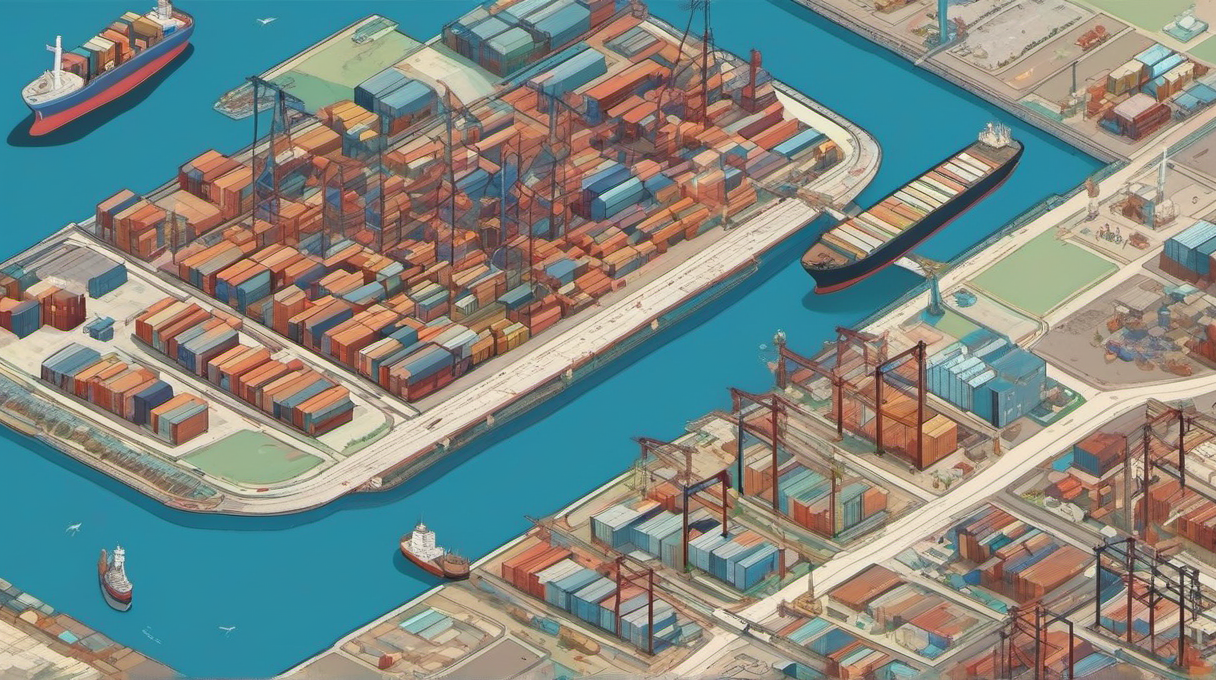
The pandemic-era supply chain chaos and rising US-China tensions have accelerated a fundamental shift in how companies think about manufacturing location. Nearshoring, the movement of production closer to end markets, represents one of the most significant structural changes in global trade flows since China joined the World Trade Organization in 2001. For US investors, understanding this transition helps identify both the beneficiaries and the sectors facing the most significant adjustments.
Defining the Terms: Nearshoring vs Reshoring vs Offshoring
These terms describe different strategies for manufacturing location, each with distinct cost and risk profiles:
Offshoring: Moving production to distant, typically lower-cost countries. This strategy dominated corporate thinking from the 1990s through the 2010s, with China becoming the world's factory floor.
Reshoring: Bringing production back to the home country. This approach prioritizes control and supply security over cost optimization. Apple's investment in US chip packaging and Intel's Arizona fabrication plants exemplify reshoring.
Nearshoring: Relocating production to nearby countries that offer cost advantages while reducing distance-related risks. For US companies, this typically means Mexico, Central America, or the Caribbean.
Friendshoring: A related concept emphasizing production in geopolitically aligned nations. This may involve longer distances but reduces exposure to adversarial trade actions.
| Strategy | Distance from US | Typical Cost Savings | Risk Profile |
|---|---|---|---|
| Offshoring (China) | 7,000+ miles | 40-60% labor cost advantage | Highest geopolitical, logistics risk |
| Nearshoring (Mexico) | 0-2,000 miles | 20-35% labor cost advantage | Moderate; tariff-free under USMCA |
| Reshoring (US) | 0 miles | No labor savings; automation focus | Lowest supply chain risk |
The Cost vs Risk Tradeoff
For decades, pure cost optimization drove location decisions. Labor arbitrage, the gap between US wages and those in developing countries, provided compelling economics. A manufacturing worker in China might earn $6-8 per hour compared to $25-35 for equivalent US labor.
However, several factors have shifted the calculation:
Rising Chinese Wages Chinese manufacturing wages roughly tripled between 2010 and 2022, from approximately $2 per hour to $6-8 per hour. The cost advantage, while still significant, has narrowed.
Logistics Costs and Variability Container shipping rates from Asia to the US West Coast averaged around $1,500 in 2019, spiked to over $20,000 in 2021, and have since normalized around $2,000-3,000. The volatility itself creates planning challenges beyond the absolute cost.
Inventory Carrying Costs Long supply chains require more inventory buffer stock. With interest rates rising from near-zero to 4-5%, the cost of carrying 60-90 days of ocean transit inventory has increased substantially.
Tariff Uncertainty Section 301 tariffs on Chinese goods remain at 25% for many categories. The threat of escalation creates ongoing uncertainty that offshore locations cannot hedge.
Geopolitical Risk Premium Companies increasingly assign explicit costs to concentration risk in China. The Taiwan semiconductor situation demonstrates how geopolitical events can threaten entire supply chains.
Comparative Wage Analysis:
| Country | Manufacturing Hourly Wage (2023) | % of US Wage |
|---|---|---|
| United States | $28-35 | 100% |
| Mexico | $4.50-6.00 | 15-18% |
| China | $6-8 | 20-25% |
| Vietnam | $3-4 | 10-13% |
| India | $2-3 | 7-10% |
Regional Winners: Mexico and Southeast Asia
Mexico: The Primary Nearshoring Beneficiary
Mexico's advantages for US-focused manufacturing include:
- USMCA tariff benefits: Goods meeting origin rules enter the US duty-free
- Geographic proximity: 2-5 day trucking to major US markets vs 25-35 day ocean transit from Asia
- Time zone alignment: Same-day communication with US headquarters
- Established industrial base: Decades of maquiladora experience created supplier ecosystems
- Labor availability: Large working-age population with manufacturing skills
The numbers reflect this positioning. US imports from Mexico grew 28% from 2019 to 2023, while imports from China declined 20% over the same period. Foreign direct investment into Mexico reached record levels in 2023, with particular strength in automotive and electronics.
Key Mexican Manufacturing Clusters:
- Monterrey region: Automotive, appliances, steel fabrication
- Tijuana/Mexicali: Electronics, medical devices
- Guadalajara: Electronics, technology hardware
- Bajio region (Queretaro, Aguascalientes): Automotive, aerospace
Southeast Asia: The China Alternative
Companies seeking lower labor costs than Mexico while diversifying away from China have invested heavily in Southeast Asia:
Vietnam: Electronics assembly, textiles, footwear. Samsung's smartphone production shifted substantially from China to Vietnam. Intel operates a major assembly and test facility.
Thailand: Automotive (particularly for Asia-Pacific markets), hard disk drives, food processing.
Indonesia: Resource processing, some electronics assembly, textiles.
Malaysia: Semiconductors, electronics, electrical equipment.
Comparative Shipping Costs to US:
| Route | Days in Transit | Container Cost (2023) |
|---|---|---|
| Shanghai to Los Angeles | 14-18 | $2,500-3,500 |
| Vietnam to Los Angeles | 18-22 | $2,800-3,800 |
| Monterrey to Dallas (truck) | 1-2 | $1,200-1,800 |
| Guadalajara to Los Angeles (truck) | 2-3 | $1,500-2,000 |
Key Sectors Affected
Automotive
The auto industry led early nearshoring efforts, with Mexican production growing from 1.9 million vehicles in 2010 to over 3.5 million in 2023. USMCA rules requiring 75% North American content for tariff-free treatment reinforce this trend.
Key developments:
- Tesla's Monterrey facility announcement (though delayed)
- BMW, Mercedes expanding Mexican operations
- Battery and EV component investments along the border
Electronics and Technology Hardware
Electronics present a mixed picture. Final assembly of consumer electronics increasingly occurs in Vietnam and India, while complex components often still require Chinese or Taiwanese manufacturing.
- Apple diversified iPhone assembly to India (growing from <5% to ~15% of production)
- Dell and HP shifted laptop assembly partially to Vietnam
- Server and data center equipment increasingly produced in Mexico and Taiwan
Medical Devices and Pharmaceuticals
Regulatory requirements and quality concerns favor nearshoring over lowest-cost offshoring. The Puerto Rico/Ireland legacy positions North America well.
- Medtronic, Abbott, BD maintain significant Mexican operations
- FDA-regulated production benefits from US proximity for inspections
- Sterile manufacturing complexity limits low-cost location options
Industrial Equipment
Heavy machinery and industrial equipment face high shipping costs relative to value, making nearshoring economically compelling.
- Caterpillar expanded Mexican production capacity
- Industrial automation equipment increasingly assembled in the Americas
- Custom fabrication returning to US/Mexico from China
Monitoring Signals
Investors can track nearshoring trends through several indicators:
Trade Data:
- US Census Bureau monthly trade statistics (Mexico share vs China share)
- Mexican export growth rates by sector
- Vietnam and India export growth to US
Investment Announcements:
- Foreign direct investment flows into Mexico
- Industrial real estate vacancy rates in Mexican manufacturing zones
- Announced factory investments and groundbreakings
Logistics Indicators:
- Cross-border trucking volumes (US-Mexico)
- Mexican port throughput (Lazaro Cardenas, Manzanillo)
- US West Coast port volumes relative to land border crossings
Company Disclosures:
- Supply chain diversification mentions in earnings calls
- Capital expenditure announcements by geography
- Inventory days trends (declining may indicate shorter supply chains)
Mexican Macro Indicators:
- Peso exchange rate (strong peso can signal capital inflows)
- Mexican manufacturing PMI
- Industrial production index by region
Investment Implications
The nearshoring trend creates identifiable winners and adjustment stories:
Potential Beneficiaries:
| Category | Examples | Thesis |
|---|---|---|
| Mexican industrials | CEMEX, Grupo Mexico | Infrastructure demand from factory construction |
| US industrials with Mexico ops | Emerson, Illinois Tool Works | Cost benefits, proximity advantages |
| Cross-border logistics | Kansas City Southern (CPKC), Landstar | Increased Mexico-US freight volumes |
| Industrial real estate | Prologis, FIBRA Prologis | Warehouse and factory demand in Mexico |
| Automation providers | Rockwell, Emerson | Nearshoring often paired with automation |
Adjustment Stories:
- Chinese exporters facing share loss
- US retailers with China-concentrated sourcing
- Companies with long-term fixed-cost arrangements in offshored locations
Geographic ETF Considerations:
- Mexico ETFs (EWW) as direct nearshoring exposure
- Vietnam ETFs (VNM) as Asia diversification beneficiary
- India ETFs (INDA, INDY) for long-term manufacturing growth
- Reduced China weighting in emerging market allocations
Challenges and Limitations
Nearshoring is not a panacea. Several constraints limit the pace and scope of transition:
Infrastructure Gaps: Mexican electricity grid reliability, water availability in northern regions, and highway capacity create bottlenecks. Vietnam faces similar infrastructure constraints.
Supplier Ecosystem Development: China's competitive advantage includes thousands of specialized suppliers within short distances. Building equivalent ecosystems elsewhere takes years.
Scale Limitations: China's manufacturing workforce exceeds 100 million. Mexico's entire labor force is approximately 60 million. Some industries simply cannot relocate at scale.
Skill Availability: Advanced manufacturing requires trained workers. Mexico produces roughly 130,000 engineering graduates annually compared to China's 1.2 million.
Cost Reality: Despite wage convergence, total landed cost from China often remains competitive for products with low shipping cost relative to value. Light, high-value goods face less compelling nearshoring economics.
Key Takeaways
Nearshoring represents a structural shift in global manufacturing location, driven by risk management as much as cost optimization. For US investors, the implications include:
- Mexico emerges as a primary beneficiary, with trade and investment data confirming the trend
- Southeast Asian nations, particularly Vietnam, capture share leaving China
- Key sectors (autos, electronics, medical devices) show the clearest movement
- Infrastructure, logistics, and industrial real estate names offer exposure
- The transition occurs over years, not quarters, with uneven progress across industries
Companies with flexible supply chains and diversified manufacturing footprints gain relative advantage over those locked into China-centric arrangements. The nearshoring trend, while not reversing globalization, meaningfully reshapes the map of global manufacturing in ways that affect corporate margins, trade flows, and regional economic performance for years to come.
Related Articles
Country Risk Assessment Framework
Country risk is the single biggest variable most emerging market investors underestimate—and the one that destroys portfolios fastest when it turns. Sri Lanka's 2022 default wiped out bondholders who ignored reserves dropping below $2 billion, fiscal deficits exceeding 10% of GDP, and a currency ...

Multinational Tax Changes and Trade
Understand how OECD global minimum tax rules affect corporate supply chains, investment decisions, and sector performance for US investors.

When to Hold Cash or Defensive Assets
Understand when to hold cash, Treasury bills, defensive stocks, or gold. Learn opportunity costs, regime triggers, and disciplined redeployment strategies.