Supply Chain Shocks and Reshoring Trends
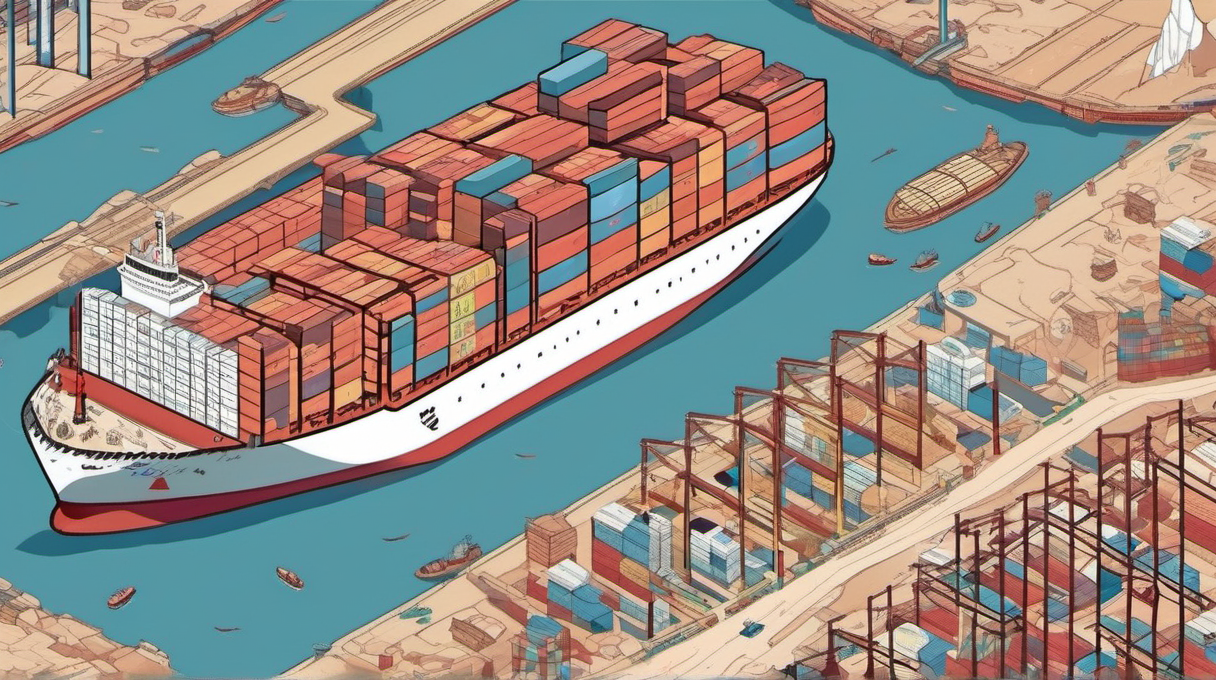
When the container ship Ever Given blocked the Suez Canal for six days in March 2021, it created $9.6 billion in delayed trade per day—a vivid demonstration of how concentrated global supply chains create systemic vulnerability. For investors, understanding supply chain shock dynamics and the corporate response through reshoring helps evaluate risk exposure and identify structural shifts in manufacturing investment.
Common Supply Chain Shock Types
Supply chain disruptions fall into several categories, each with different duration, predictability, and investor implications.
Pandemic and Health Crises
The COVID-19 pandemic produced the most severe supply chain disruption in modern history.
Impact sequence:
- Factory shutdowns (Q1-Q2 2020): Chinese manufacturing output fell 13.5% in February 2020
- Demand surge (Q3 2020-2021): US goods consumption rose 18% as consumers shifted from services to products
- Port congestion (2021-2022): Los Angeles/Long Beach backlog peaked at 109 vessels waiting offshore
- Component shortages (2021-2023): Semiconductor lead times extended from 12 weeks to 26+ weeks
Sector impacts:
- Automotive: Ford, GM, and Toyota lost 3.5-4 million vehicles of production in 2021 due to chip shortages
- Consumer electronics: PlayStation 5 and Xbox Series X faced 18+ months of supply constraints
- Medical equipment: Ventilator production required emergency government coordination
Duration: Full supply chain normalization took approximately 30-36 months.
Geopolitical Events
Trade restrictions, sanctions, and territorial disputes disrupt supply chains unpredictably.
Examples:
- US-China technology restrictions (2019-present): Huawei lost access to advanced semiconductors; US semiconductor equipment makers face export controls
- Russia-Ukraine conflict (2022): Neon gas supply disruption (Ukraine produced 50% of semiconductor-grade neon); palladium and nickel price spikes
- Taiwan tension risk: TSMC produces 90% of advanced semiconductors (<7nm); any production disruption would halt global electronics manufacturing
Investor implication: Geopolitical shocks often trigger immediate stock reactions followed by supply chain adaptation over 12-24 months.
Natural Disasters
Localized events can have global consequences when production is geographically concentrated.
Thailand flooding (2011):
- Flooded Western Digital and Seagate facilities
- Global hard drive production fell 28% for two quarters
- Hard drive prices doubled; PC makers shifted to solid-state drives faster
Japan earthquake and tsunami (2011):
- Disrupted automotive and electronics supply chains for 6-9 months
- Companies accelerated dual-sourcing policies afterward
Texas winter storm (2021):
- Shut down 80% of US petrochemical capacity for two weeks
- Plastic resin shortages persisted for 6 months
- Chemical company margins expanded as prices spiked
Key characteristic: Natural disaster impacts typically resolve within 3-12 months unless they destroy irreplaceable infrastructure.
Logistics Bottlenecks
Transportation capacity constraints amplify other disruptions.
2021-2022 container crisis:
- Shanghai-to-Los Angeles container rates peaked at $20,586 (September 2021), up from $1,500 pre-pandemic
- Average dwell time for containers at US ports: 8.7 days (vs. 3.5 days pre-pandemic)
- Chassis and warehouse capacity became binding constraints
Suez Canal blockage (March 2021):
- 6-day closure delayed $54 billion in trade
- Ripple effects lasted 3-4 weeks as schedules reset
Red Sea shipping disruption (2024):
- Houthi attacks forced rerouting around Cape of Good Hope
- Added 10-14 days to Asia-Europe transit times
- Container rates rose 300% from December 2023 lows
Reshoring and Nearshoring Drivers
Corporate responses to supply chain risk have accelerated manufacturing location decisions.
Defining the Terms
Reshoring: Returning production to the home country (e.g., manufacturing iPhones in the US instead of China)
Nearshoring: Moving production to nearby countries (e.g., shifting from China to Mexico for US-bound goods)
Friendshoring: Relocating to geopolitically aligned countries (e.g., moving from China to Vietnam or India)
Primary Drivers
1. Risk mitigation after COVID:
- Survey data (McKinsey, 2022): 93% of supply chain executives reported plans to increase resilience
- Investment commitments: US semiconductor construction spending rose from $12B (2020) to $73B (2024 projected)
2. Labor cost convergence: Chinese manufacturing wages have risen 12% annually over the past decade. Including logistics, quality control, and intellectual property risk, the total cost advantage has narrowed.
| Factor | China (2015) | China (2024) | Mexico (2024) |
|---|---|---|---|
| Manufacturing wage ($/hr) | $3.60 | $8.20 | $4.50 |
| Ocean freight (20ft container) | $1,200 | $3,500 | N/A (truck) |
| Transit time to US | 25-30 days | 25-30 days | 3-5 days |
| IP risk premium | High | High | Low |
3. Government incentives:
- CHIPS Act (2022): $52 billion for US semiconductor manufacturing
- Inflation Reduction Act (2022): EV battery production credits tied to North American sourcing
- State incentives: Texas, Arizona, Ohio offering billions in tax breaks for manufacturing investment
4. Tariff avoidance: Section 301 tariffs on Chinese goods (7.5-25%) make Mexican or US production more cost-competitive for some categories.
Sample Reshoring Announcements
| Company | Investment | Location | Products | Jobs |
|---|---|---|---|---|
| Intel | $20B (Phase 1) | Ohio | Advanced semiconductors | 3,000 |
| TSMC | $40B | Arizona | 4nm/3nm chips | 4,500 |
| Samsung | $17B | Texas | Advanced logic chips | 2,000 |
| Tesla | $10B | Texas/Nevada | EV batteries | 20,000+ |
| Hyundai | $5.5B | Georgia | EV production | 8,100 |
Total announced reshoring investment (2020-2024): Over $200 billion in semiconductor, battery, and manufacturing capacity.
Sector Exposure Analysis
Supply chain vulnerability varies significantly by industry.
High Exposure Sectors
Semiconductors:
- Taiwan concentration: 90% of advanced logic production
- Lead time sensitivity: 26-52 weeks for custom chips
- Single points of failure: ASML (only EUV lithography supplier), specialty gases, photoresists
Pharmaceuticals:
- Active pharmaceutical ingredient (API) sourcing: 80% from China and India
- Generic drug concentration: Few plants supply entire US market for some drugs
- 2019-2020 shortages demonstrated vulnerability
Consumer Electronics:
- Assembly concentration: 90%+ of smartphones assembled in China or Vietnam
- Component diversity: Single phone uses parts from 40+ countries
- Short product cycles require tight supply chain coordination
Moderate Exposure Sectors
Automotive:
- Regional supply chains (USMCA integration)
- Chip shortage exposed hidden concentration in tier 2/3 suppliers
- EV transition creating new battery supply chain dependencies (lithium, cobalt, nickel)
Industrial Equipment:
- Mix of domestic and imported components
- Longer production cycles allow more inventory buffer
- Custom specifications reduce substitution options
Lower Exposure Sectors
Food and Beverage:
- Mostly domestic/regional supply chains
- Commodity inputs with multiple sources
- Perishability limits globalization
Utilities:
- Local generation and distribution
- Equipment replacement cycles measured in decades
- Some transformer and switchgear import dependence
Cost vs. Risk Tradeoffs
Reshoring decisions involve explicit tradeoffs that affect corporate margins.
Cost Premiums for Reshoring
Labor cost differentials:
- US manufacturing wage: $28-35/hour fully loaded
- Mexico: $6-8/hour fully loaded
- China: $8-12/hour fully loaded (coastal regions)
Example calculation (electronics assembly):
- Product requiring 2 labor hours
- China cost: $16-24 labor
- Mexico cost: $12-16 labor
- US cost: $56-70 labor
- At 100,000 units: $4-5 million annual cost difference China vs. US
Risk Reduction Benefits
Avoided disruption costs:
- Lost sales during shortage
- Air freight premiums (10-20x ocean freight)
- Expediting fees and overtime
- Customer penalties for delayed delivery
Quantified example (automotive chip shortage):
- Ford lost 3.5 million units of production (2021-2022)
- Average vehicle profit margin: $5,000-7,000
- Estimated lost profit: $17-25 billion across major OEMs
The calculation: If reshoring adds 5% to production cost but avoids one major disruption per decade costing 50% of annual profit, the math often favors resilience investment.
Hybrid Strategies
Most companies are not fully reshoring but adopting "China plus one" or regional diversification strategies:
Dual sourcing: Qualifying second suppliers for critical components Regional hubs: Separate supply chains for Americas, Europe, and Asia markets Strategic inventory: Increasing buffer stock for critical items from 2-4 weeks to 8-12 weeks Vertical integration: Acquiring suppliers to control critical inputs
Monitoring Signals and Indicators
Investors can track leading indicators of supply chain stress and recovery.
Lead Time Indicators
ISM Manufacturing PMI - Supplier Deliveries Index:
- Reading above 50 = lengthening lead times (supply constraints)
- 2021 peak: 75.6 (severe constraints)
- 2024 average: 49-52 (normalized)
Industrial supply lead time surveys (monthly):
- Track by component type (semiconductors, electrical components, metals)
- Semiconductor lead times normalized from 26 weeks (2022) to 14 weeks (2024)
Shipping and Logistics Data
Container freight indices:
- Drewry World Container Index: Weekly composite rate
- Shanghai Containerized Freight Index (SCFI): China export rates
- Freightos Baltic Index (FBX): Real-time spot rates
Port congestion metrics:
- Vessel queue counts at major ports
- Average container dwell time
- Chassis availability
Current status (late 2024):
- Transpacific rates: $4,000-5,000/container (vs. $20,000+ peak)
- US port congestion: Minimal queues
- Lead times: Largely normalized except for specific components
Corporate Disclosure Signals
Earnings call language analysis: Monitor for keywords: "supply chain," "lead times," "inventory," "reshoring," "second source"
Inventory-to-sales ratios:
- Rising ratios may signal building buffer stock or weakening demand
- Automotive dealer inventory: Recovered from 25 days (2021) to 55 days (2024)
Capital expenditure announcements: Track manufacturing facility investments by location. SEC 8-K filings announce major commitments.
Worked Example: Evaluating Supply Chain Risk
Scenario: You're analyzing Apple (AAPL) supply chain exposure.
Step 1: Map supplier concentration
- Final assembly: Foxconn, Pegatron (China, transitioning some to India/Vietnam)
- Chips: TSMC Taiwan (A-series), Samsung Korea (memory)
- Display: Samsung, LG (Korea), BOE (China)
Step 2: Quantify geographic exposure Apple production by location (estimated):
- China: 85% of iPhone assembly
- Taiwan: 100% of advanced processor production
- Single points of failure: TSMC (processors), Foxconn Zhengzhou (40% of iPhones)
Step 3: Assess diversification progress
- India: iPhone 14 production began 2022; targeting 25% of iPhones by 2025
- Vietnam: Mac, iPad, AirPods production expanding
- US: Mac Pro assembly in Texas (minimal volume)
Step 4: Calculate scenario impact Taiwan semiconductor disruption scenario:
- Duration: 6-12 months to alternative qualification
- Revenue at risk: $200B+ iPhone revenue depends on TSMC
- No near-term mitigation possible for advanced chips
Investment implication: Apple's diversification reduces assembly concentration risk but cannot eliminate Taiwan semiconductor dependency in the medium term.
Key Takeaways
Supply chain shocks create both risk and opportunity for investors.
Understanding shock dynamics:
- Pandemic/health: Longest duration (24-36 months to normalize); affects all sectors
- Geopolitical: Least predictable; can become permanent restructuring
- Natural disaster: Usually 3-12 months; affects concentrated regions
- Logistics: Amplifies other shocks; normalizes when root cause resolves
Reshoring investment implications:
- Semiconductor and EV battery manufacturing investment creating new US industrial capacity
- Mexico benefiting from nearshoring; manufacturing wages rising
- China remains dominant but concentration is decreasing
- Reshoring adds costs but reduces tail risk
Monitoring framework:
- Track PMI supplier deliveries index for early stress signals
- Watch container freight rates for logistics conditions
- Review corporate disclosures for inventory and capex trends
- Follow major facility announcements by sector
Supply chain resilience has become a strategic priority that affects capital allocation, margins, and competitive positioning. Investors who understand these dynamics can better evaluate both disruption risk and the companies positioned to benefit from structural reshoring investment.
Sources:
Institute for Supply Management. 2024. PMI Survey Data. ISM Reports.
McKinsey Global Institute. 2022. Risk, Resilience, and Rebalancing in Global Value Chains.
Semiconductor Industry Association. 2024. State of the US Semiconductor Industry.
Drewry Maritime Research. 2024. Container Freight Rate Indices.
US Census Bureau. 2024. Construction Spending Data.
Related Articles

Trade Financing and Letters of Credit
Understand how trade finance works, the letter of credit workflow, and what it means for analyzing companies with significant international trade exposure.
Tracking WTO and Geopolitical Developments
Build a systematic workflow for monitoring WTO disputes and geopolitical trade developments that may affect your investment portfolio.
Measuring Trade-Weighted Exchange Rates
Understanding trade-weighted currency indexes including the Fed Broad Index, REER calculations, and how these measures differ from popular indexes like the DXY.