Tariff Structures and Trade Agreements
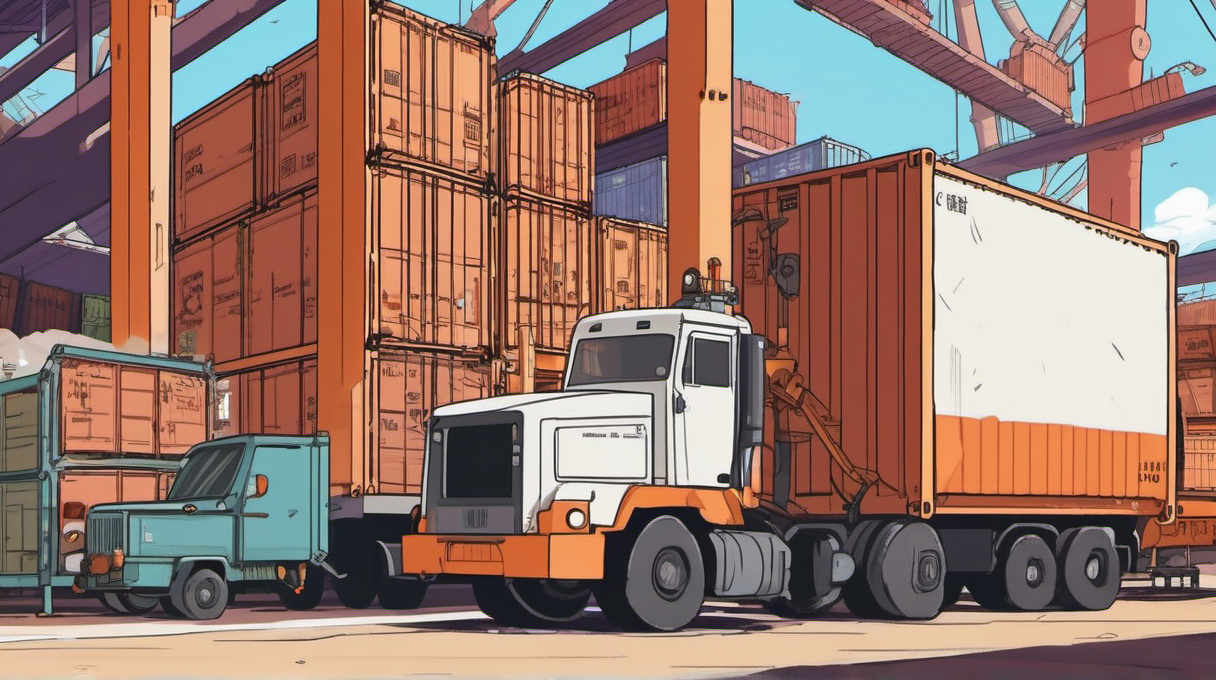
When the US imposed a 25% tariff on steel imports in 2018, the average price of hot-rolled coil steel rose 38% within six months—demonstrating how tariff structures directly affect input costs, supply chains, and corporate margins. For investors, understanding how tariffs work and how trade agreements modify them provides an essential framework for evaluating policy risk.
Tariff Basics: Ad Valorem vs. Specific Tariffs
Tariffs are taxes imposed on imported goods at the border. The two primary structures work differently and create different incentive effects.
Ad Valorem Tariffs
Ad valorem tariffs are charged as a percentage of the declared customs value of imported goods.
Formula: Tariff Amount = Declared Value x Tariff Rate
Example: A 10% ad valorem tariff on a $50,000 imported automobile results in a $5,000 tariff payment.
Characteristics:
- Most common tariff type globally
- Automatically adjusts with price changes (if import prices rise 20%, tariff revenue rises 20%)
- Requires accurate customs valuation (creates incentive for under-declaration)
- US average MFN (Most Favored Nation) ad valorem tariff: 3.4% (WTO, 2024)
Specific Tariffs
Specific tariffs are charged as a fixed dollar amount per unit of quantity (weight, volume, or count).
Formula: Tariff Amount = Quantity x Fixed Rate per Unit
Example: A specific tariff of $0.54 per liter on imported wine (regardless of whether the wine costs $10 or $100 per bottle).
Characteristics:
- Common for agricultural products and commodities
- Provides protection that increases as import prices fall (more protective during commodity downturns)
- Easier to administer (no valuation disputes)
- Can represent very high ad valorem equivalent rates on low-value goods
Compound and Mixed Tariffs
Some products face compound tariffs combining both types.
Example: Certain dairy products face "$1.104/kg plus 14.9% ad valorem"—both a specific rate and a percentage rate applied simultaneously.
Sample US Tariff Rates by Category
| Product Category | Tariff Type | Rate | Notes |
|---|---|---|---|
| Automobiles (passenger) | Ad valorem | 2.5% | Low by global standards |
| Light trucks | Ad valorem | 25.0% | "Chicken tax" from 1960s |
| Steel (HTS 7208) | Ad valorem | 0-25% | Section 232 tariffs added |
| Aluminum | Ad valorem | 10% | Section 232 tariffs |
| Footwear (athletic) | Ad valorem | 8-20% | Varies by material |
| Frozen orange juice | Specific | $0.0785/liter | Protects Florida citrus |
| Peanuts (shelled) | Ad valorem | 131.8% | Agricultural protection |
| Sugar | Tariff-rate quota | Variable | 1.5 cents/lb in-quota, 15.36 cents/lb over-quota |
How Tariff Rates Are Applied
The process of determining which tariff applies involves classification, valuation, and rules of origin.
Harmonized Tariff Schedule (HTS) Classification
Every imported product gets classified under a 10-digit HTS code. The classification determines:
- The applicable tariff rate
- Whether any trade agreement preferences apply
- Whether any quotas or special restrictions exist
Practical complication: Classification disputes are common. Is a "smart watch" a watch (higher tariff) or a computer (lower tariff)? Apple successfully argued that the Apple Watch should be classified as a computer device (0% tariff) rather than a traditional watch (6.4% tariff).
Customs Valuation
For ad valorem tariffs, the declared "transaction value" (price paid) determines the tariff base. Adjustments occur for:
- Shipping costs (US uses FOB—Free on Board—value, excluding ocean freight)
- Royalties and license fees included in the sale
- Related-party transactions (transfer pricing scrutiny)
Rules of Origin
Trade agreements provide preferential (lower) tariff rates—but only for products that genuinely originate in the partner country.
Key concept: Substantial transformation A product qualifies for preferential treatment if it was "substantially transformed" in the partner country. Mere assembly or transshipment doesn't qualify.
USMCA automotive rules (example):
- 75% of vehicle content must originate in North America
- 70% of steel and aluminum must be sourced regionally
- Core parts must be manufactured in the region
These rules prevent companies from shipping Chinese parts to Mexico for minor assembly and then importing them duty-free to the US.
Trade Agreement Frameworks
Trade agreements reduce or eliminate tariffs between member countries. The US participates in several types.
Bilateral Agreements
US-Korea Free Trade Agreement (KORUS):
- Effective 2012, with tariff phase-outs completed by 2022
- Korean automobiles: Tariff reduced from 2.5% to 0%
- US agricultural exports: Most tariffs eliminated
- Result: US-Korea goods trade deficit narrowed from $16.6B (2011) to $12.8B (2014) before widening again
US-Australia FTA:
- Nearly all tariffs eliminated
- Services trade significantly liberalized
Regional/Multilateral Agreements
USMCA (replaced NAFTA in 2020):
- Covers US, Mexico, and Canada
- Total trilateral trade: $1.5 trillion annually
- Key changes from NAFTA: Stricter automotive rules of origin, updated intellectual property provisions, digital trade chapter
Tariff elimination under USMCA: Most industrial goods trade duty-free. Some agricultural products have tariff-rate quotas (TRQs) with duty-free access up to quota limits.
WTO Most Favored Nation (MFN) Rates
When no preferential agreement exists, imports face MFN rates—the "default" tariff that WTO members must offer equally to all other WTO members.
US MFN rates:
- Simple average: 3.4% on all products
- Trade-weighted average: 2.2% (lower because high-volume imports often have low tariffs)
- Agricultural products average: 5.2%
- Industrial products average: 3.1%
These rates are relatively low by global standards—but specific products face much higher rates (peanuts at 131.8%, for example).
Sector-Specific Tariff Impacts
Tariff exposure varies dramatically by sector.
Automotive
Structure: 2.5% on passenger cars, 25% on light trucks
Impact: The "chicken tax" on light trucks (a 1960s retaliatory tariff) protects domestic truck manufacturing. Foreign automakers responded by building US plants (Toyota, Honda, BMW, Mercedes) rather than exporting.
2018-2019 tariff threats: Potential Section 232 auto tariffs of 25% were considered but not implemented. The threat alone caused BMW and Toyota to announce US production expansions.
Steel and Aluminum
Section 232 tariffs (2018): 25% on steel, 10% on aluminum—applied to most countries (with some exemptions and quotas for allies).
Impact:
- US steel prices rose 38% within 6 months
- Downstream users (auto, appliance, construction) faced higher input costs
- Domestic steel producer stocks (Nucor, US Steel) initially rallied 40-60%
- Retaliatory tariffs hit US agricultural exports
Technology and Electronics
Section 301 tariffs on China (2018-2020):
- List 1: $34B in goods at 25% (industrial machinery, aerospace)
- List 2: $16B in goods at 25% (semiconductors, plastics)
- List 3: $200B in goods at 10%, later raised to 25% (consumer electronics, furniture)
- List 4: Additional $300B at varying rates (smartphones, laptops initially exempted)
Corporate response: Companies including Apple, Dell, and HP announced supply chain shifts from China to Vietnam, India, and Mexico.
Agriculture
Highly protected: Sugar, dairy, peanuts face tariff-rate quotas with very high over-quota rates.
Retaliatory exposure: When the US raises tariffs, trading partners typically target US agriculture. China's retaliatory tariffs on soybeans (25%) cut US soybean exports to China from $12.3B (2017) to $3.1B (2018).
Monitoring Policy Changes
Tariff policy changes can affect company margins within weeks. Here's how to track developments.
Key Information Sources
US Trade Representative (USTR):
- Announces trade negotiations and agreement changes
- Publishes tariff exclusion decisions
- Federal Register notices for proposed actions
US International Trade Commission (USITC):
- Maintains the Harmonized Tariff Schedule
- Publishes trade injury investigations
- Economic analyses of tariff impacts
Customs and Border Protection (CBP):
- Operational guidance on tariff implementation
- Ruling database for classification decisions
Early Warning Indicators
-
Section 201/232/301 investigations: These legal authorities trigger potential tariff actions. Announcements appear in the Federal Register.
-
USTR public comment periods: Before implementing tariffs, USTR typically solicits public comments. Company filings reveal supply chain exposures.
-
Congressional testimony: Trade officials often preview policy direction in congressional hearings.
-
Bilateral tensions: Diplomatic disputes often precede trade actions. Watch for currency manipulation allegations, human rights concerns, or security disputes.
Corporate Disclosure Requirements
Public companies must disclose material tariff risks in SEC filings:
- 10-K Item 1A (Risk Factors): Tariff exposure descriptions
- 10-Q MD&A: Discussion of tariff impacts on margins
- Earnings calls: Management commentary on supply chain adjustments
Example disclosure (Apple, 10-K 2023): "Changes in US trade policy, including the imposition of tariffs on goods imported from China, could increase our costs and require us to raise prices or absorb costs..."
Worked Example: Evaluating Tariff Exposure
Scenario: You're evaluating Nike (NKE), which manufactures most products in Vietnam, China, and Indonesia.
Step 1: Identify tariff classification Athletic footwear: HTS 6404.11 (textile upper) faces 8-20% MFN tariffs depending on materials.
Step 2: Assess trade agreement status
- Vietnam: No FTA with US; MFN rates apply
- China: MFN rates plus Section 301 tariffs (List 4A: 7.5% additional)
- Indonesia: No FTA; MFN rates apply
Step 3: Calculate tariff impact If Nike imports a $30 (landed cost) sneaker:
- From Vietnam: ~$3.60 tariff (12% MFN)
- From China: ~$5.85 tariff (12% MFN + 7.5% Section 301)
On $15 billion in US footwear sales, this represents a meaningful cost difference driving Vietnam shift.
Step 4: Monitor for changes Track Indo-Pacific Economic Framework (IPEF) negotiations for potential Vietnam tariff reductions.
Key Takeaways
Tariff structures determine the cost of importing goods, and trade agreements modify those costs for partner countries.
For investors:
-
Classification matters: The same product can face dramatically different rates depending on how it's classified. Watch for classification disputes in sectors you follow.
-
Rules of origin create complexity: Trade agreements require genuine transformation in partner countries. Simple transshipment doesn't qualify.
-
Sector exposure varies: Light trucks (25%), sugar (high TRQ rates), and peanuts (131.8%) face far higher protection than passenger cars (2.5%) or most electronics (0-3.5%).
-
Policy changes require monitoring: Section 232/301 investigations, USTR announcements, and corporate disclosures provide early warning of tariff risk.
-
Supply chain responses take time: Companies need 18-36 months to shift production meaningfully. Announced tariffs affect stock prices immediately, but operational adjustments lag.
Understanding tariff mechanics helps investors evaluate trade policy headlines and assess which companies face meaningful exposure versus minimal impact.
Sources:
World Trade Organization. 2024. World Tariff Profiles. WTO Statistics Database.
US International Trade Commission. 2024. Harmonized Tariff Schedule of the United States.
Office of the US Trade Representative. 2024. Trade Agreements and Tariff Actions. USTR.gov.
US Customs and Border Protection. 2024. Trade Statistics and Rulings.
Related Articles

Emerging Market Debt vs. Equity Opportunities
Emerging market investing confronts you with a deceptively simple choice—bonds or stocks—that actually determines your currency exposure, your volatility budget, and whether you're betting on creditworthiness or earnings growth. The valuation gap tells a striking story: EM equities trade at rough...
Currency Pegs vs. Floating Regimes
Compare fixed and floating exchange rate systems, understand reserve requirements, and identify devaluation risks for emerging market investing.
Carry Trade Mechanics and Risks
How currency carry trades work, the math behind borrowing in low-yield currencies to invest in high-yield ones, and why these strategies can unwind violently.